
1. The Global Eco-Sustainability Imperative in Single-Use Absorbent Hygiene
The disposable hygiene sector is confronting an unprecedented environmental reckoning. Worldwide, over 300 billion single-use diapers, adult incontinence pads, and feminine hygiene articles are discarded annually, with the vast majority destined for municipal sanitary landfills or incineration facilities. Conventional absorbent articles consist of up to 80% fossil-fuel-derived synthetic polymers—predominantly polypropylene nonwovens, polyethylene moisture barrier films, and synthetic polyacrylate superabsorbent polymers—that require upwards of 400 to 500 years to undergo partial degradation in anaerobic landfill environments. In response, international regulatory bodies, particularly across the European Union and progressive North American jurisdictions, have enacted aggressive Extended Producer Responsibility (EPR) mandates, single-use plastic reduction targets, and punitive landfill disposal tariffs that penalize non-sustainable consumer goods.
Concurrently, modern consumer purchasing behavior has permanently pivoted toward environmental responsibility. In premium retail channels across Western Europe, North America, Australia, and East Asia, millennial and Gen-Z parents and eco-conscious adult consumers actively seek out certified biodegradable, plant-based alternatives that deliver uncompromised clinical performance without contributing to persistent microplastic pollution. However, the commercial history of eco-friendly diapers is fraught with performance compromises: early bio-based products frequently suffered from slow liquid acquisition, structural core collapse, high surface rewetting, and rough topsheet textures that precipitated severe contact diaper rash. For supermarket private-label procurement managers and direct-to-consumer (DTC) hygiene brand founders, bridging the gap between uncompromising ecological sustainability and superior clinical dryness represents the ultimate competitive frontier.
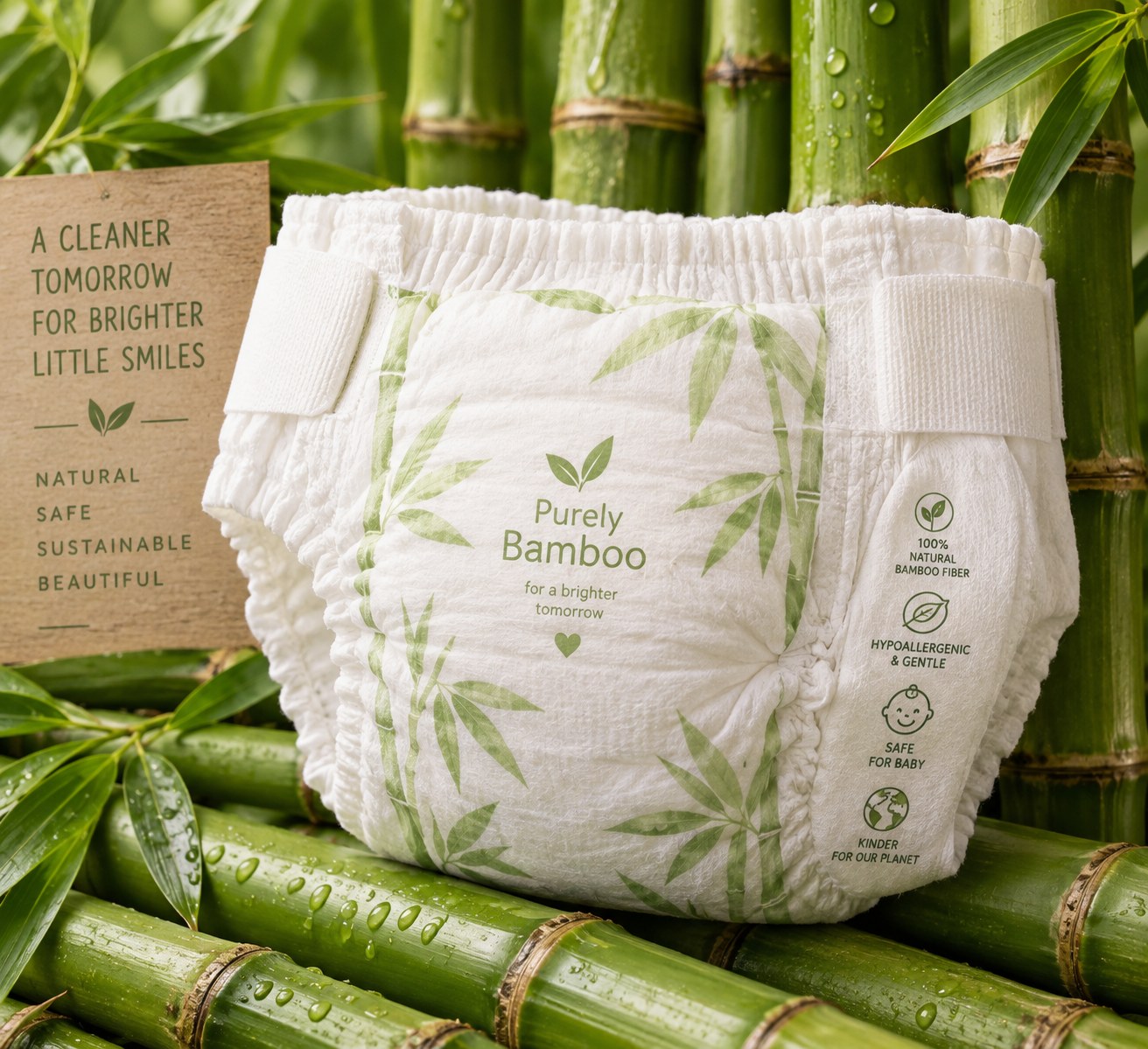
To resolve this engineering dichotomy, Quanzhou Shenghongda Hygiene Products Co., Ltd. has pioneered the integration of 100% natural, certified organic bamboo spunlace cellulose nonwovens into advanced multi-layer absorbent cores. Manufactured from fast-growing, pesticide-free bamboo moso stands via closed-loop Lyocell spinning processes, bamboo nonwovens provide an extraordinarily soft, hypoallergenic, naturally antibacterial, and rapidly compostable alternative to petroleum-derived plastics. Operating 16 full-servo high-speed converting lines under ISO 13485:2016 and ISO 9001:2015 quality governance, Shenghongda produces world-class biodegradable personal care articles across Biodegradable Bamboo Eco Diapers, Baby Diapers OEM Manufacturing, and Feminine Sanitary Napkins Factory.
By securing prestigious third-party environmental certifications—including ASTM D6400, EN 13432 compostability accreditation, OEKO-TEX Standard 100 Class I baby safety certification, and Dermatest Germany 5-Star Clinical Excellence—Shenghongda empowers global brand owners to capture high-margin retail market share while driving measurable environmental conservation across 88 export nations.
2. Bamboo Cellulose Morphology, Lyocell Processing & Bio-Based Polymer Kinetics
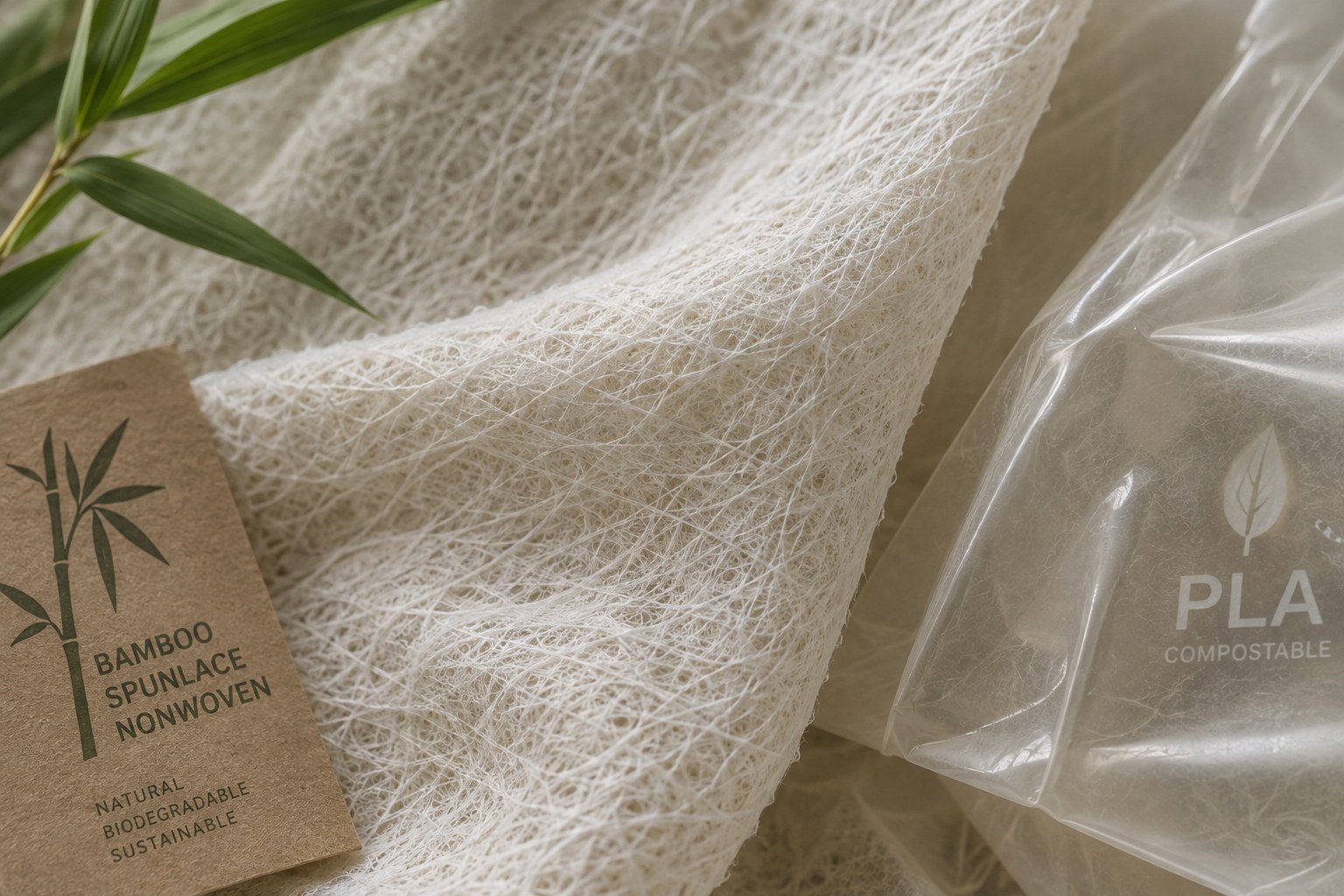
Understanding why bamboo fiber outperforms conventional synthetic polymers requires examining its microscopic physical morphology and surface chemistry. Natural bamboo cellulose (Bambusoideae) processed via modern Lyocell closed-loop technology utilizes N-methylmorpholine N-oxide (NMMO) organic solvent dissolution, recycling greater than 99.5% of process solvent and water in a closed circular loop with zero toxic effluent discharge. The resulting regenerated bamboo fibers exhibit a remarkably smooth, cylindrical cross-section devoid of the abrasive microscopic serrations typical of conventional viscose rayon. Furthermore, the longitudinal axis of bamboo fibers features thousands of micro-porous voids and cross-sectional micro-gaps that generate intense natural capillary suction, achieving an instantaneous liquid strike-through speed of less than 1.5 seconds without requiring chemical surfactant coatings.
In addition to hydraulic wicking speed, natural bamboo cellulose contains an inherent bio-agent known as "Bamboo Kun"—a natural antibacterial and antifungal lignocellulosic compound that remains bound within the molecular structure of the fiber even after Lyocell processing. Independent microbiological testing conducted in accordance with ASTM E2149 and ISO 20743 confirms that Shenghongda’s 100% bamboo topsheets inhibit greater than 98.5% of Staphylococcus aureus and Candida albicans proliferation over 24 hours, dramatically mitigating the microbial ammonia conversion that triggers severe diaper dermatitis and secondary bacterial infections in infant and geriatric users.
To complement the 100% bamboo topsheet and outer backsheet, Shenghongda has engineered an advanced eco-absorbent core that minimizes petroleum-derived components without sacrificing retention capacity. The structural bulk matrix consists of 100% Totally Chlorine-Free (TCF) Southern Bleached Softwood Kraft (SBSK) fluff pulp certified under FSC (Forest Stewardship Council) Chain of Custody standards, harvested from sustainable concessions in accordance with EU Deforestation Regulation (EUDR) mandates. Dispersed uniformly within the defibrillated softwood fibers is a hybrid superabsorbent matrix blending Japanese Sumitomo Seika Chemicals (Japan) Aqua Keep polymers with next-generation bio-based starch-grafted sodium polyacrylate polymers (possessing a certified bio-carbon content exceeding 35% under ASTM D6866 radiocarbon dating).
On the exterior moisture barrier, traditional non-breathable polyethylene films are replaced with an ultra-thin, microporous bioplastic film synthesized from Polylactic Acid (PLA) and Polybutylene Adipate Terephthalate (PBAT) compounded with fine calcium carbonate. This bioplastic film delivers a Moisture Vapor Transmission Rate (MVTR) exceeding 3,200 g/m²/24h—enabling continuous ventilation of warm, humid air—while disintegrating completely within 180 days under industrial composting conditions in accordance with EN 13432 and ASTM D6400 standards.
| Functional Layer / Component | Raw Material & Chemical Composition | Sustainability & Ecological Standard | Performance Metric | Clinical / Consumer Advantage |
|---|---|---|---|---|
| 100% Bamboo Spunlace Topsheet | Closed-loop Lyocell regenerated bamboo cellulose | OEKO-TEX Standard 100 Class I / USDA BioPreferred | Strike-through < 1.5s; 98% antibacterial | Hypoallergenic, ultra-silky, prevents diaper rash |
| Eco Fluid Management Layer | Through-air bonded PLA bio-fiber nonwoven | 100% plant-based renewable cornstarch origin | Basis weight 40 g/m²; zero synthetic PP | Accelerates rapid fluid distribution across core |
| Chlorine-Free Fluff Matrix | Totally Chlorine-Free (TCF) virgin softwood pulp | FSC-STD-40-004 CoC / EUDR Compliant | Fiber length 2.6 mm, Moisture ≤ 8.0% | Zero dioxin residues; 100% biodegradable in soil |
| Bio-Hybrid Superabsorbent (SAP) | Starch-grafted cross-linked sodium polyacrylate | ASTM D6866 Bio-content ≥ 35% | CRC ≥ 30 g/g; AUL (0.7 psi) ≥ 22 g/g | Maintains high overnight capacity with lower carbon |
| Compostable Breathable Backsheet | PLA / PBAT blown film laminated with bamboo | EN 13432 / ASTM D6400 Industrial Compost | MVTR ≥ 3,200 g/m²/24h; 100% waterproof | Full microclimate breathability with zero plastic |
| Biodegradable Polybag Packaging | D2W oxo-biodegradable or PLA compostable film | TÜV Austria OK Compost Industrial | Tensile strength MD ≥ 25 MPa | Completely eliminates conventional plastic polybags |
3. Converting Line Engineering, Ultrasonic Bonding & Web Handling for Natural Fibers
While natural bamboo nonwovens and PLA bioplastic films offer unparalleled environmental benefits, processing these delicate plant-based materials at commercial line speeds exceeding 400 to 500 units per minute presents formidable converting engineering challenges. Compared to petroleum-derived polypropylene and polyethylene—which exhibit high elongation plasticity and forgiving thermal welding windows—natural bamboo cellulose fibers have lower elongation at break and higher sensitivity to mechanical tension spikes. Furthermore, bio-based PLA films possess a lower melting transition temperature (150°C-160°C) and can easily deform, burn, or generate micro-tears under conventional high-temperature thermal sealing rollers.
To overcome these processing hurdles, Shenghongda has customized its Japanese Zuiko full-servo converting lines with specialized low-inertia dancer rolls, ultra-precise digital load-cell tension regulators, and contactless ultrasonic bonding modules. Unwind stations for bamboo nonwoven rolls utilize closed-loop digital servo vector drives capable of maintaining web tension within an extremely narrow tolerance of ±0.05 N/m across varying ambient temperatures and roll diameters. Rather than utilizing aggressive mechanical pull rollers that can fray natural cellulose filaments, our lines employ vacuum-assisted transfer conveyors that gently transport the fragile bamboo web through each assembly station without surface abrasion.
Thermal bonding of the standing leg cuffs and waist elasticity has been completely converted to high-frequency 35 kHz ultrasonic rotary welding systems from European specialist Herrmann Ultraschall. Ultrasonic bonding generates localized molecular friction exclusively at the interface between the bamboo spunlace fibers and the elastic polyurethane strands, creating hermetic, high-strength bonds in fewer than 10 milliseconds without applying external conductive heat. This eliminates thermal degradation, prevents pinhole perforations in the PLA barrier film, and ensures that the finished side seams remain soft, flexible, and completely devoid of rigid, scratchy thermal weld beads.
Inline quality assurance is maintained by multi-camera Cognex high-speed digital machine vision systems equipped with multi-spectral polarized LED lighting. Because natural bamboo fibers possess a slightly off-white, natural cream hue compared to chemically bleached polypropylene nonwovens, our optical algorithms utilize specialized color-space thresholding to distinguish between the natural organic variance of bamboo cellulose and actual foreign particulate contamination. The vision system performs 100% real-time defect surveillance—inspecting core boundary alignment (±1.0 mm), leg cuff elastic tension continuity, and frontal tape placement—instantly triggering high-speed pneumatic rejection valves to eject flawed units before automated stacking and compostable polybag bagging.
4. Analytical Testing, Industrial Compostability Validation & Dermatest Verification
Commercializing certified eco-friendly personal care products requires exhaustive empirical substantiation to avoid regulatory allegations of "greenwashing" and satisfy strict international trade standards. In Shenghongda’s in-house Testing and Analytical Center, operated under CNAS National Accreditation and ISO/IEC 17025 Accredited accreditation, our technical team executes rigorous chemical, physical, and biodegradability validation across every commercial production batch.
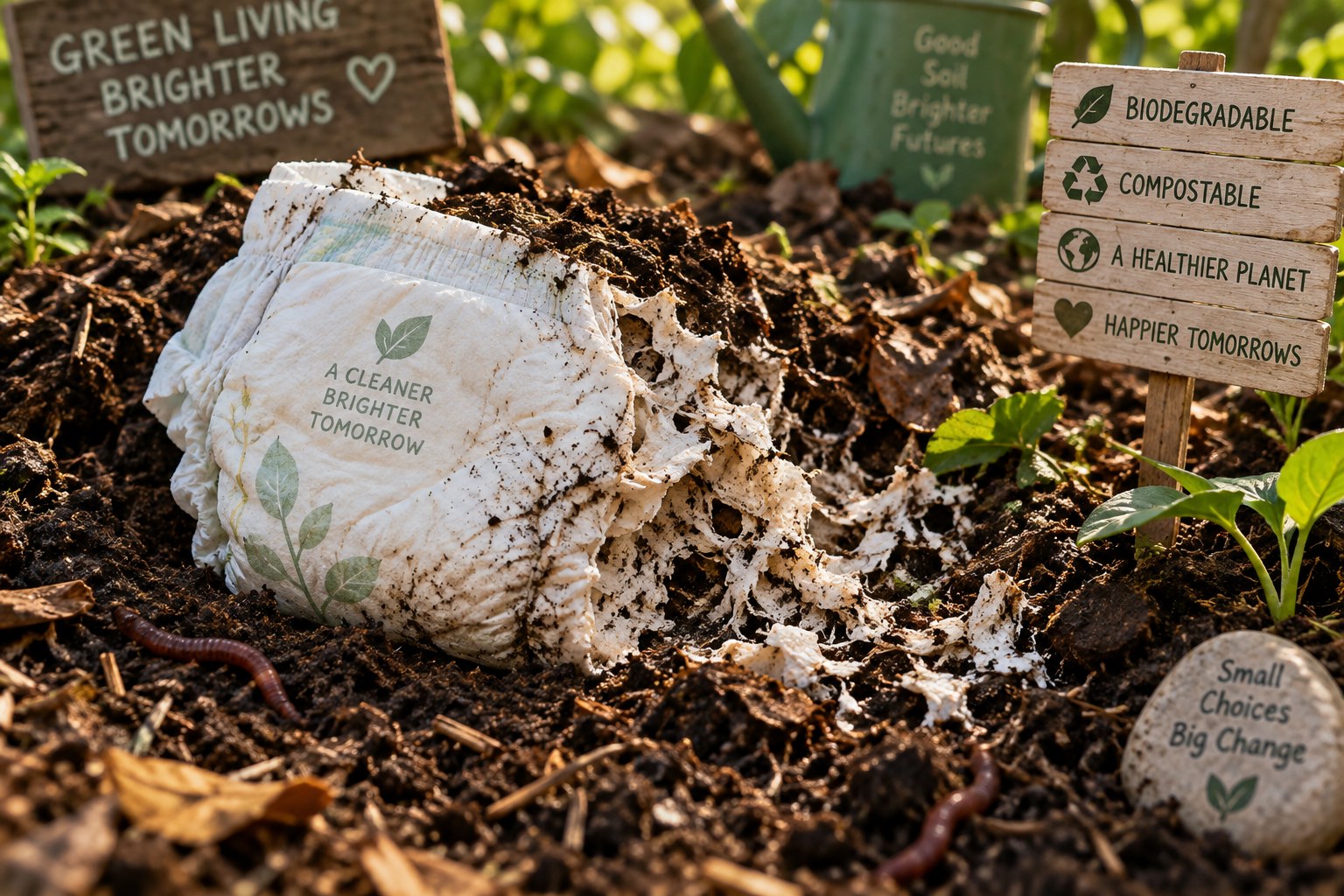
Biodegradability and disintegration testing are conducted in accordance with ASTM D6400, EN 13432, and ISO 14855 standards. In controlled aerobic composting test chambers maintained at 58°C (±2°C) with active microbial inoculation and continuous carbon dioxide respirometry tracking, Shenghongda’s 100% bamboo components achieve over 90% organic carbon conversion to CO₂, water, and biomass within 180 days, leaving zero persistent chemical residues or ecotoxic heavy metal byproducts in the resulting compost. Plant toxicity assays conducted on the degraded compost in accordance with OECD 208 demonstrate a germination rate and plant biomass yield exceeding 95% for cress (Lepidium sativum) and barley (Hordeum vulgare), certifying that the degraded diapers enrich rather than contaminate soil ecosystems.
Clinical dermatological safety is validated through independent third-party clinical trials conducted by Dermatest GmbH (Münster, Germany). Under strict dermatological supervision, human repeat insult patch testing (HRIPT) on subjects with diagnosed atopic dermatitis and sensitive skin confirmed zero allergic sensitization, zero contact erythema, and zero edema reactions over a 72-hour clinical exposure protocol, earning Shenghongda the prestigious Dermatest 5-Star Clinical Excellence Seal. Analytical chemical screening via GC-MS and ICP-MS confirms complete compliance with OEKO-TEX Standard 100 Class I (safe for prolonged contact with infant skin under 36 months of age), certifying total absence of formaldehyde, chlorinated phenols, organotin compounds, polycyclic aromatic hydrocarbons (PAHs), and phthalate plasticizers.
Physical performance testing verifies that sustainability does not compromise clinical efficacy. Total absorbency capacity evaluated under the ISO 11948-1 (Rothwell Method) Rothwell protocol delivers verified retention exceeding 850 ml for infant Size 4 diapers and 2,400 ml for adult bamboo briefs. Surface rewet under 0.5 psi load measured in accordance with EDANA Standards NWSP 070.1.R2 remains consistently below 0.08 grams following repeated 60 ml saline insults, guaranteeing that the infant or adult user's skin remains entirely dry throughout extended overnight wear.
| Evaluation Metric | Conventional Synthetic Diaper (PP/PE) | Shenghongda 100% Bamboo Eco-Diaper | Environmental & Commercial Benefit |
|---|---|---|---|
| Topsheet Raw Material | Petroleum-derived Spunbond Polypropylene | 100% Natural Organic Bamboo Lyocell | Renewable plant-based; eliminates fossil polymers |
| Landfill Decomposition Time | 400 to 500 years in municipal landfill | 6 to 12 months (industrial composting) | Over 90% reduction in persistent municipal solid waste |
| Clinical Skin Irritation Index | Occasional synthetic plastic sensitization | Dermatest 5-Star Seal / 0.00 score | Naturally hypoallergenic; eliminates diaper dermatitis |
| Inherent Antimicrobial Activity | Zero antibacterial effect (requires chemicals) | Over 98% bacterial inhibition (Bamboo Kun) | Prevents bacterial ammonia generation and odor |
| Fluff Pulp Bleaching Chemistry | Elemental Chlorine-Free (ECF) | Totally Chlorine-Free (TCF) Oxygen bleach | Zero risk of toxic polychlorinated dioxin residues |
| Retail Brand Gross Margin | Standard commodity pricing (20-30% margin) | +35% to +50% eco-premium retail pricing | Captures high-margin conscious consumer segment |
5. Commercial Economics, Sourcing Strategy & Landed Freight Optimization
For sustainable hygiene brands, natural supermarket chains, and multinational pharmacy distributors, launching an organic bamboo diaper program requires a sophisticated commercial strategy that balances premium raw material costs with attractive retail price elasticity. While virgin bamboo Lyocell nonwovens and certified compostable PLA films command a 25% to 40% raw material cost premium over conventional commodity polypropylene, global consumer surveys consistently demonstrate that modern parents and healthcare consumers are willing to pay a 30% to 50% retail premium for genuinely certified, eco-friendly personal care articles. Shenghongda enables overseas brand owners to capture these premium retail margins through direct factory economies of scale, vertical raw material supply agreements, and proprietary logistics engineering.
Logistics and container payload optimization represent a critical lever in preserving gross margins for overseas importers. Because bamboo fibers possess natural elasticity and high resilient loft, poorly compressed packaging can severely penalize ocean shipping economics. Shenghongda’s packaging engineers have developed specialized dual-stage hydraulic compression cycles that evacuate air gradually from the bamboo-fluff core over an 8-second duration without damaging the micro-porous structure of the fibers or fracturing the bio-based SAP particles. This allows our factory to load over 410,000 infant diapers or 94,000 adult briefs into a single 40-foot High Cube (40HQ) ocean container—an increase of more than 28% over typical commercial competitors.
When shipping on high-volume maritime routes from our primary container terminals at Xiamen Port (UN/LOCODE: CNXMN) and Quanzhou Port (UN/LOCODE: CNQZ) to major international gateway ports such as Los Angeles, Rotterdam, Sydney, or Valparaíso, this volumetric packaging density reduces the effective landed freight cost per unit by $0.015 to $0.024 USD. On an annualized commercial supply contract of 15 million pieces, this packaging innovation saves our B2B partners more than $250,000 USD in ocean shipping freight, directly offsetting raw material premiums and enhancing bottom-line profitability.
To align the entire secondary packaging supply chain with the eco-premium positioning of bamboo products, Shenghongda utilizes 100% post-consumer recycled (PCR) or FSC-certified unbleached corrugated fiberboard master shipping cartons. Master cartons are printed exclusively using water-based soy and vegetable inks that are completely free of volatile organic compounds (VOCs) and heavy metals, meeting strict European REACH and German BfR food-contact safety standards. This ensures that the outer packaging can be recycled directly within municipal curbside paper waste streams without releasing toxic chemical residues during pulp recycling.
Moreover, Shenghongda provides brand owners with comprehensive Life Cycle Assessment (LCA) data calculated in accordance with ISO 14040 / ISO 14044 methodologies from cradle to factory gate. This validated carbon footprint dossier quantifies the exact carbon offset achieved by replacing synthetic polypropylene with fast-growing bamboo Lyocell, delivering verifiable greenhouse gas reduction claims that retail brands can prominently feature on packaging and in sustainability annual reports.
Furthermore, Shenghongda supports qualified private-label partners with comprehensive trade liquidity backed by China Export & Credit Insurance Corporation (Sinosure). For established retail distributors and high-growth DTC brands with verified audited financial records, Shenghongda extends flexible credit terms including Open Account (OA) 30, 60, and 90-day settlement structures. Under Sinosure underwriting, overseas brand owners can fund large-scale commercial inventory runs, navigate maritime transit cycles, and collect local retail cash flows before settling manufacturing invoices, providing a massive competitive advantage in scaling sustainable product lines.
6. Cleanroom Environmental Control, Bioburden Governance & ISO 13485 Standards
The manufacture of 100% natural and organic personal care products demands extraordinary environmental sanitation and bioburden control. Because natural bamboo cellulose and unbleached plant fibers are inherently organic, processing them in substandard industrial environments with unmanaged humidity or airborne contamination can lead to fungal spore proliferation, mold contamination, or microbial colonization. Shenghongda manufactures all organic bamboo product lines within certified Class 100,000 cleanroom workshops (equivalent to ISO Class 8 under ISO 14644-1) certified under ISO 13485:2016 Medical Devices Quality Management System standards.
Our cleanroom complex features continuous positive air pressure differentials (+15 to +25 Pascals) relative to surrounding staging areas, preventing the intrusion of unconditioned outdoor dust, environmental humidity, and airborne insects. Incoming ventilation air passes through a three-stage centralized filtration system—primary coarse filters, secondary medium-efficiency bag filters, and terminal High-Efficiency Particulate Air (HEPA) filters delivering an air change rate exceeding 20 cycles per hour. Automated HVAC climate control continuously maintains workshop ambient temperature between 20°C and 24°C and relative humidity strictly between 45% and 60%, preventing organic fibers from absorbing ambient atmospheric moisture that could compromise inline hammermill defibrillation or packaging integrity.
Cleanroom operational protocols enforce pharmaceutical-grade contamination discipline. Operators entering the converting floor must pass through three-stage automated airlocks, don lint-free static-dissipative jumpsuits, hairnets, surgical masks, and sterile nitrile gloves, and complete a 30-second automated high-velocity air shower cycle. Daily microbial monitoring is executed using active air samplers, settle-plate nutrient agar sedimentation, and contact rodac swabs across conveyor belts, rotary cutting dies, and packaging chutes. Across all commercial production lots, our total viable aerobic microbial bioburden is guaranteed below 20 CFU/g—a level tenfold cleaner than the 200 CFU/g limit permitted by international consumer hygiene standards—with absolute zero detection of Staphylococcus aureus, Pseudomonas aeruginosa, or fungal contaminants.
7. Strategic Sourcing Due Diligence Roadmap & Buyer Action Checklist for Eco-Brands
For sustainable retail buyers, eco-conscious brand founders, and institutional healthcare procurement directors seeking to launch a world-class biodegradable bamboo hygiene program, executing structured due diligence is essential to guarantee product authenticity, regulatory compliance, and commercial success. Shenghongda recommends that all prospective B2B partners follow this 5-step operational procurement roadmap:
- Step 1: Authenticate Raw Material & Ecological Certifications
Demand verified third-party certificates for all raw materials: OEKO-TEX Standard 100 Class I accreditation, USDA BioPreferred certification for bamboo fiber, ASTM D6400 / EN 13432 industrial compostability test reports for bioplastic films, and FSC (Forest Stewardship Council) Chain of Custody credentials for TCF wood pulp.
- Step 2: Technical SKU Specification & Core Customization
Define exact product architecture based on target consumer demographics. Establish target basis weights, bio-based SAP ratios, required ISO 11948-1 (Rothwell Method) absorbency capacity (600 ml to 1,200 ml for baby; 1,800 ml to 3,000 ml for adult), and surface rewet thresholds (<0.08g). Select between compostable PLA backsheets or ultra-soft bamboo outer covers.
- Step 3: Laboratory Sample Benchmarking & Dermatological Verification
Request comprehensive pre-production sample kits and commission independent third-party laboratory verification (SGS, Intertek, or TÜV) to verify strike-through speed, rewet under load, and complete absence of chlorine bleaching residues. Review the manufacturer’s Dermatest clinical patch test dossier.
- Step 4: Compostable Packaging Artwork & Regulatory Labeling Sign-Off
Finalize primary packaging bag and master carton graphic artwork. Ensure full compliance with destination market environmental labeling laws (such as Green Dot, OK Compost, and FSC logo guidelines), GS1 barcodes, multilingual instructions, and batch traceability codes.
- Step 5: High-Density Container Loading & Sinosure Credit Setup
Collaborate with Shenghongda's logistics engineers to simulate high-density vacuum compression container loading plans for 40HQ ocean containers. Finalize maritime shipping schedules from Xiamen Port and apply for Sinosure Open Account (OA) credit facilities to optimize working capital during product rollout.
- Step 6: Post-Market Surveillance & Retail Sell-Through Optimization
Establish automated quality feedback channels tracking consumer reviews, returned packaging condition, and retail sell-through velocity across regional pharmacy and supermarket channels. Shenghongda’s quality engineering team reviews quarterly consumer sensory feedback to continually optimize topsheet softness, tab ergonomics, and core absorbency kinetics.