
1. The Global Customs Tariff Architecture for Sanitary Towels, Diapers & Incontinence Articles
In the multi-billion dollar international trade of disposable absorbent hygiene products, customs compliance, tariff classification, and trade documentation represent an indispensable pillar of commercial profitability. For international importers, private label brand owners, and medical supply distributors, customs duties and import taxes frequently comprise between 5% and 25% of total landed goods valuation. A miscalculated tariff classification, an improperly declared customs valuation, or an ineligible Free Trade Agreement (FTA) certificate can result in catastrophic financial penalties, retroactive duty assessments, and prolonged container detentions at destination ports.
Under the international Harmonized Commodity Description and Coding System (HS) administered by the World Customs Organization (WCO), absorbent hygiene products are governed by Harmonized System Heading 9619.00: "Sanitary towels (pads) and tampons, napkins and napkin liners for babies, and similar articles, of any material." Created in the 2012 HS nomenclature revision to unify previously scattered classifications across textile and paper chapters, Heading 9619 covers an enormous diversity of absorbent articles: infant diapers, adult incontinence briefs, clinical bed underpads, feminine sanitary napkins, and breast pads.
However, beneath the 6-digit international HS heading, individual sovereign nations and regional trade blocs apply complex 8-digit, 10-digit, and 12-digit national tariff lines that differentiate products based on constituent material (e.g., paper pulp versus textile fibers) and target clinical end-use (e.g., medical adult incontinence aids versus retail baby diapers). Quanzhou Shenghongda Hygiene Products Co., Ltd. provides international B2B partners with dedicated trade compliance support across its entire manufacturing portfolio, encompassing OEM Adult Diapers with Tapes, Baby Diapers OEM Manufacturing, Adult Incontinence Pull-Up Pants, and Disposable Hospital Bed Underpads.
The creation of HS Heading 9619.00 in the 2012 Harmonized System nomenclature represented a major milestone in global customs modernization. Prior to 2012, absorbent hygiene products were fragmented across Chapter 48 (paper and cellulose wadding) and Chapter 56 or 61/62 (textile wadding and sanitary garments). This fragmentation generated chronic classification disputes between customs authorities and international traders regarding whether a diaper composed of both fluff pulp and nonwoven fabric should be taxed as paper or as a textile garment. Heading 9619 resolved this ambiguity by establishing a unified heading for all absorbent hygiene articles "of any material," though national customs administrations continue to maintain granular subheadings with divergent duty rates based on predominant weight and functional characteristics.
Operating from Quanzhou, China since 2004, Shenghongda’s trade documentation specialists leverage preferential bilateral Free Trade Agreements (FTAs) and comprehensive customs dossiers under ISO 13485:2016 and ISO 9001:2015 standards, ensuring frictionless green-channel customs clearance across more than 88 export nations.
By pairing precision tariff classification with verified preferential rules of origin, Shenghongda empowers global buyers to legally eliminate or reduce import tariffs, saving tens of thousands of dollars per container and protecting operating margins against international trade volatility.
2. World Customs Organization (WCO) Explanatory Notes & Tariff Subheading Architecture (9619.00)
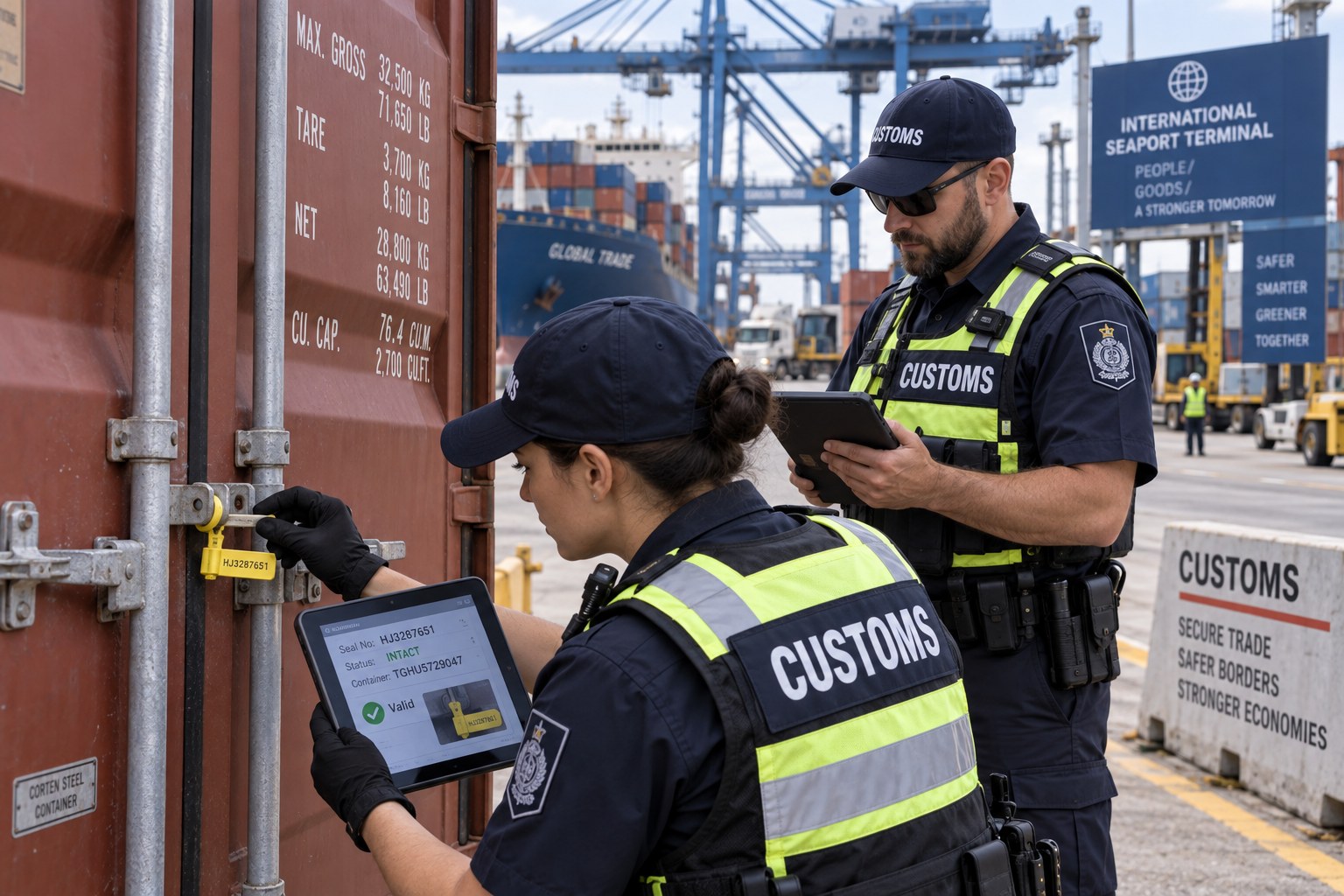
Mastering the legal classification of absorbent hygiene products requires analyzing the World Customs Organization (WCO) General Rules for the Interpretation (GRI) of the Harmonized System and the official Chapter 96 Explanatory Notes. Heading 9619.00 specifically covers disposable and reusable articles designed for hygiene or medical absorption, constructed from cellulose wadding, wood pulp, paper, or textile webs.
The international 6-digit structure divides Heading 9619 into distinct subheadings:
- HS 9619.00.10 / 9619.00.21 (Articles of Wood Pulp or Paper): Covers absorbent articles where the primary functional core comprises cellulose fluff pulp or tissue paper, traditionally categorized under Chapter 48 prior to 2012.
- HS 9619.00.20 / 9619.00.29 (Articles of Textile Wadding / Nonwovens): Covers products where the absorbent or barrier chassis is predominantly constructed from synthetic textile nonwovens (such as ultra-thin composite SAP-rich cores or 100% bamboo nonwoven articles), previously classified under Chapter 56 or 61/62.
- HS 9619.00.90 (Other Absorbent Articles): Residual subheading encompassing specialty items such as clinical breast pads, pet care training pads, and specialized surgical absorbent aids.
Crucially, in many major destination markets—including the United States, European Union, and Latin American nations—national tariff schedules draw a legal distinction between pediatric baby diapers and adult medical incontinence briefs. In the United States Harmonized Tariff Schedule (HTSUS), adult incontinence briefs and bed pads may qualify under preferential duty treatment as Class I medical devices under 21 CFR 880.5270. In the European Union Integrated Tariff (TARIC), adult incontinence briefs are classified under CN code 9619 00 81 (of textile materials) or 9619 00 71 (of paper pulp), subject to distinct autonomous duty rates and statistical surveillance.
Customs classification jurisprudence in key import jurisdictions—such as the United States Customs and Border Protection (CBP) Rulings Database (CROSS) and European Union Court of Justice precedent—relies heavily on the General Rules of Interpretation (GRI). Under GRI 3(b), composite goods consisting of different materials are classified according to the component that imparts their "essential character." In modern disposable diapers, the absorbent core (fluff pulp and superabsorbent polymer) provides the essential character of fluid absorption, while the nonwoven topsheet and PE backsheet serve supporting carrier roles. Shenghongda provides clients with fully authenticated Bill of Materials (BOM) percentage breakdowns by weight and function, allowing customs brokers to decisively prove essential character and defend against erroneous textile reclassification.
Shenghongda’s trade compliance specialists conduct rigorous pre-shipment tariff mapping for every customer SKU, providing customized technical composition certificates (BOM breakdown by weight and percentage) that clearly demonstrate core material dominance. This precise documentary substantiation defends our clients against customs re-classification audits and guarantees that the lowest legal duty rate is applied upon port entry.
| Import Jurisdiction & Region | National HS Tariff Line | Product Category Description | Standard MFN Duty Rate | Preferential FTA Duty Rate (Shenghongda) |
|---|---|---|---|---|
| United States (USITC / CBP) | 9619.00.11 / 9619.00.21 | Baby & Adult Diapers of Paper / Pulp | 0.0% (Free) | 0.0% (Subject to Section 301 rules) |
| European Union (TARIC) | 9619.00.71 / 9619.00.81 | Incontinence Briefs of Paper / Textile | 0.0% (Zero autonomous duty) | 0.0% (Standard green-channel clearance) |
| Latin America - Chile | 9619.00.00 | Pañales para bebés y adultos | 6.0% (General MFN Tariff) | 0.0% (China-Chile FTA Form F Duty Free) |
| Latin America - Peru | 9619.00.00 | Pañales absorbentes desechables | 6.0% (General MFN Tariff) | 0.0% (China-Peru FTA Form F Duty Free) |
| Latin America - Mexico | 9619.00.01 / 9619.00.99 | Pañales y artículos higiénicos | 10.0% - 15.0% (General Tariff) | 10.0% (Optimized via IMMEX / Rule 8) |
| ASEAN (Vietnam, Indo, Thai) | 9619.00.19 / 9619.00.99 | Disposable Diapers & Sanitary Towels | 5.0% - 20.0% (General MFN) | 0.0% (China-ASEAN FTA Form E Duty Free) |
3. Preferential Free Trade Agreements (FTAs), Rules of Origin & Value-Added Proof
One of the most powerful financial levers in international hygiene procurement is leveraging bilateral and multilateral Free Trade Agreements (FTAs) signed between China and key export partner nations. In trade lanes where standard Most Favored Nation (MFN) import tariffs range from 5% to 20%, an authenticated Preferential Certificate of Origin (CO) issued under an active FTA legally reduces the import duty rate to 0%, instantly delivering thousands of dollars in net margin expansion per container.
To qualify for preferential tariff treatment, goods must strictly satisfy the specific Rules of Origin (ROO) stipulated in the respective FTA treaty. In absorbent personal care manufacturing under Heading 9619.00, the two primary origin criteria are:
- Change in Tariff Classification (CTC / Tariff Shift): The finished product under Heading 9619 must be converted from raw materials classified under different chapters—such as wood fluff pulp (Chapter 47), nonwovens (Chapter 56), plastic film (Chapter 39), or superabsorbent polymers (Chapter 39). Because Shenghongda executes the complete converting transformation from base raw materials into finished diapers in our Quanzhou factory, our products 100% fulfill the Tariff Shift requirement.
- Regional Value Content (RVC / Qualifying Value Content): Many FTAs require that a minimum percentage of the finished product’s FOB valuation (typically 40% to 50%) originates within the free trade zone. Shenghongda maintains transparent, audited accounting dossiers demonstrating that domestic processing, converting labor, packaging, and regional raw materials exceed 50% to 65% RVC.
Calculating Regional Value Content (RVC) under Free Trade Agreements requires strict adherence to standardized accounting methodologies. Under the Regional Comprehensive Economic Partnership (RCEP) and the China-Chile FTA, RVC is calculated using the Build-Down formula: RVC = [(FOB Price - Value of Non-Originating Materials) / FOB Price] x 100%. Because Shenghongda procures domestic raw materials and performs 100% of the converting, lamination, and compression packaging operations within our Quanzhou complex, our RVC calculations consistently exceed 55% to 70%, easily surpassing the standard 40% threshold mandated by bilateral trade treaties.
Shenghongda’s trade desk regularly issues authenticated preferential certificates of origin through China Customs and CCPIT:
- Form E (China-ASEAN Free Trade Area): Eliminates import tariffs across Southeast Asia (Vietnam, Indonesia, Philippines, Thailand, Malaysia), reducing duty rates from 15% down to 0%.
- Form F (China-Chile & China-Peru FTAs): Grants immediate 0% duty-free entry into San Antonio, Valparaíso, and Callao ports, saving our Latin American distribution partners 6% ad-valorem duties.
- RCEP Certificate of Origin (Regional Comprehensive Economic Partnership): Streamlines preferential duty access across 15 Asia-Pacific economies including Japan, South Korea, Australia, and New Zealand.
4. Customs Valuation Methodologies, Transfer Pricing & Royalties Governance
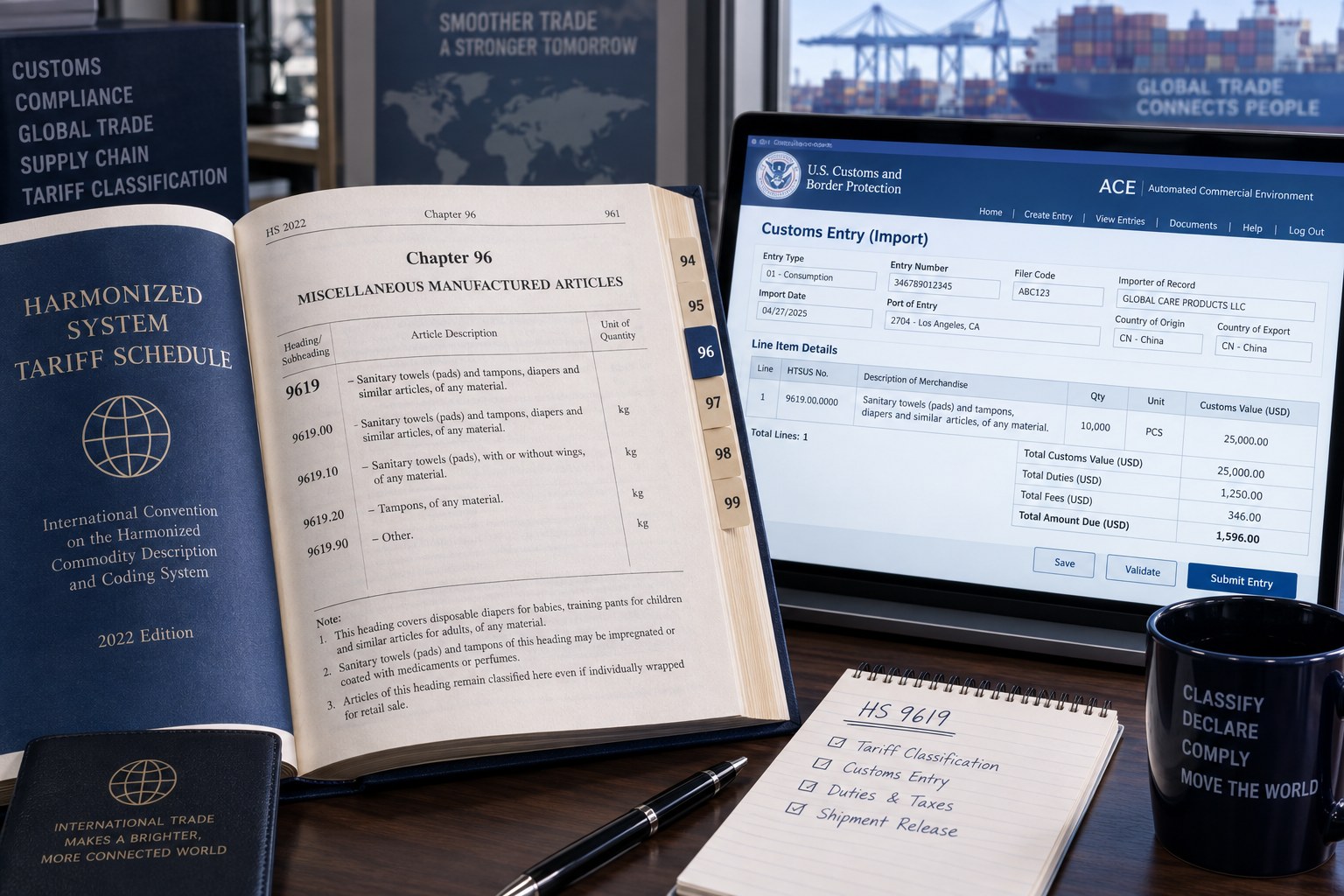
While tariff classification dictates the applicable duty percentage, customs valuation determines the monetary tax base upon which that percentage is assessed. In accordance with the World Trade Organization (WTO) Customs Valuation Agreement, the primary basis for customs value is the Transaction Value—defined as the price actually paid or payable for the goods when sold for export to the country of importation.
However, customs authorities worldwide subject high-volume consumer goods imports to intense valuation scrutiny. Customs audit divisions actively cross-reference commercial invoice prices against historical database benchmarks. If an overseas buyer negotiates an exceptionally low factory price from an unverified supplier, customs authorities may reject the transaction value, alleging undervaluation or tax evasion, and artificially assess duties based on higher fallback deductive values.
Shenghongda protects its B2B clients from customs valuation disputes through unassailable pricing transparency. Every commercial invoice issued by Shenghongda reflects a legitimate, arm’s-length commercial transaction backed by signed sales contracts, formal bank wire transfer payment receipts (SWIFT MT103 confirmations), and detailed production bill of materials (BOM). Furthermore, our commercial invoices explicitly segregate non-dutiable costs where permitted by destination customs laws—such as post-importation ocean freight charges, overseas technical support, or regional marketing allowances—optimizing the legal dutiable threshold without regulatory risk.
Furthermore, customs audits frequently target post-importation adjustments and transfer pricing between related parties. Importers must maintain a complete "Audit Trail" encompassing commercial contracts, proforma invoices, ocean bills of lading, bank wire confirmations (SWIFT MT103), customs entry summaries, and warehouse receiving logs. Shenghongda’s trade documentation desk provides archived digital dossiers for every shipment, retaining records for a minimum of five years in compliance with international customs audit defense standards.
In private label OEM manufacturing, intellectual property and royalties represent an additional customs valuation trapdoor. Under WTO rules, if an overseas buyer pays design royalties, licensing fees, or tooling assists (such as providing printing cylinders or specialized packaging dies) to the manufacturer, these payments must be declared as "assists" and added to the dutiable customs value. Shenghongda’s trade documentation clearly documents tooling ownership and incorporates all printing die charges directly into the unit product price, ensuring total valuation compliance and eliminating post-clearance audit liabilities.
| Export Market Destination | Annual Import Value (10 Containers) | Standard MFN Duty (No FTA) | Shenghongda FTA Preferential Duty | Net Annual Profit Savings for Buyer |
|---|---|---|---|---|
| Chile (San Antonio Port) | $600,000 USD / Year | $36,000 USD (6% MFN) | $0 USD (Form F FTA 0%) | +$36,000 USD Net Profit |
| Peru (Callao Port) | $600,000 USD / Year | $36,000 USD (6% MFN) | $0 USD (Form F FTA 0%) | +$36,000 USD Net Profit |
| Vietnam (Hai Phong / Cat Lai) | $600,000 USD / Year | $60,000 USD (10% MFN) | $0 USD (Form E FTA 0%) | +$60,000 USD Net Profit |
| Indonesia (Tanjung Priok) | $600,000 USD / Year | $90,000 USD (15% MFN) | $0 USD (Form E FTA 0%) | +$90,000 USD Net Profit |
| Philippines (Manila Port) | $600,000 USD / Year | $42,000 USD (7% MFN) | $0 USD (Form E FTA 0%) | +$42,000 USD Net Profit |
| Total Annualized Working Capital Gain | $3,000,000 USD Portfolio | $264,000 USD Cumulative Duty | $0 USD Tariff Total | +$264,000 USD Direct Bottom-Line Gain |
5. Anti-Dumping Defense, Customs Advance Rulings & Post-Clearance Audit Defense
International trade in consumer hygiene products is increasingly influenced by protectionist trade remedies, anti-dumping investigations, and countervailing duty (CVD) petitions initiated by domestic manufacturing lobbies. In countries where domestic converters operate outdated, high-cost machinery, regional trade associations frequently petition their commerce ministries to impose punitive anti-dumping duties on imported Chinese hygiene products, alleging pricing injury to domestic industry.
Surviving and thriving in this protective regulatory environment requires a manufacturing partner with absolute documentary integrity. Shenghongda’s corporate management and accounting divisions maintain strict compliance with international anti-dumping disclosure standards. Our financial accounting systems operate in full accordance with China Accounting Standards (CAS) and International Financial Reporting Standards (IFRS), maintaining transparent cost-allocation records for raw materials, utility consumption, labor payrolls, and capital depreciation across every converting line. In the event of a national anti-dumping inquiry in any export destination market, Shenghongda is prepared to participate fully as a responding producer, submitting certified production cost questionnaires that substantiate fair-market pricing and defeat dumping allegations.
In addition, Shenghongda operates in full alignment with the Authorized Economic Operator (AEO) framework established by the World Customs Organization SAFE Framework of Standards. China Customs has signed mutual recognition arrangements (MRA) with customs authorities across the European Union, Singapore, South Korea, Japan, New Zealand, Brazil, and Chile. Importers sourcing from an accredited Chinese producer benefit from expedited customs clearance, drastically reduced physical cargo inspection rates (typically below 1%), and priority processing during periods of general port congestion.
Furthermore, for clients entering new or complex regulatory jurisdictions, Shenghongda strongly advocates utilizing the Customs Advance Ruling mechanism. Under WCO standards, importers can submit physical product samples, complete technical ingredient breakdowns, and manufacturing schematics to destination customs authorities prior to commercial importation, requesting a legally binding Advance Ruling on Tariff Classification (e.g., CBP Binding Ruling in the US or Binding Tariff Information / BTI in the EU). Once issued, a binding advance ruling guarantees legal classification certainty for up to three years, completely immunizing the importer from border classification disputes, penalties, or retroactive duty assessments.
6. Barcode Serialization, GS1 Global Standards & Digital Customs Green-Channel Processing
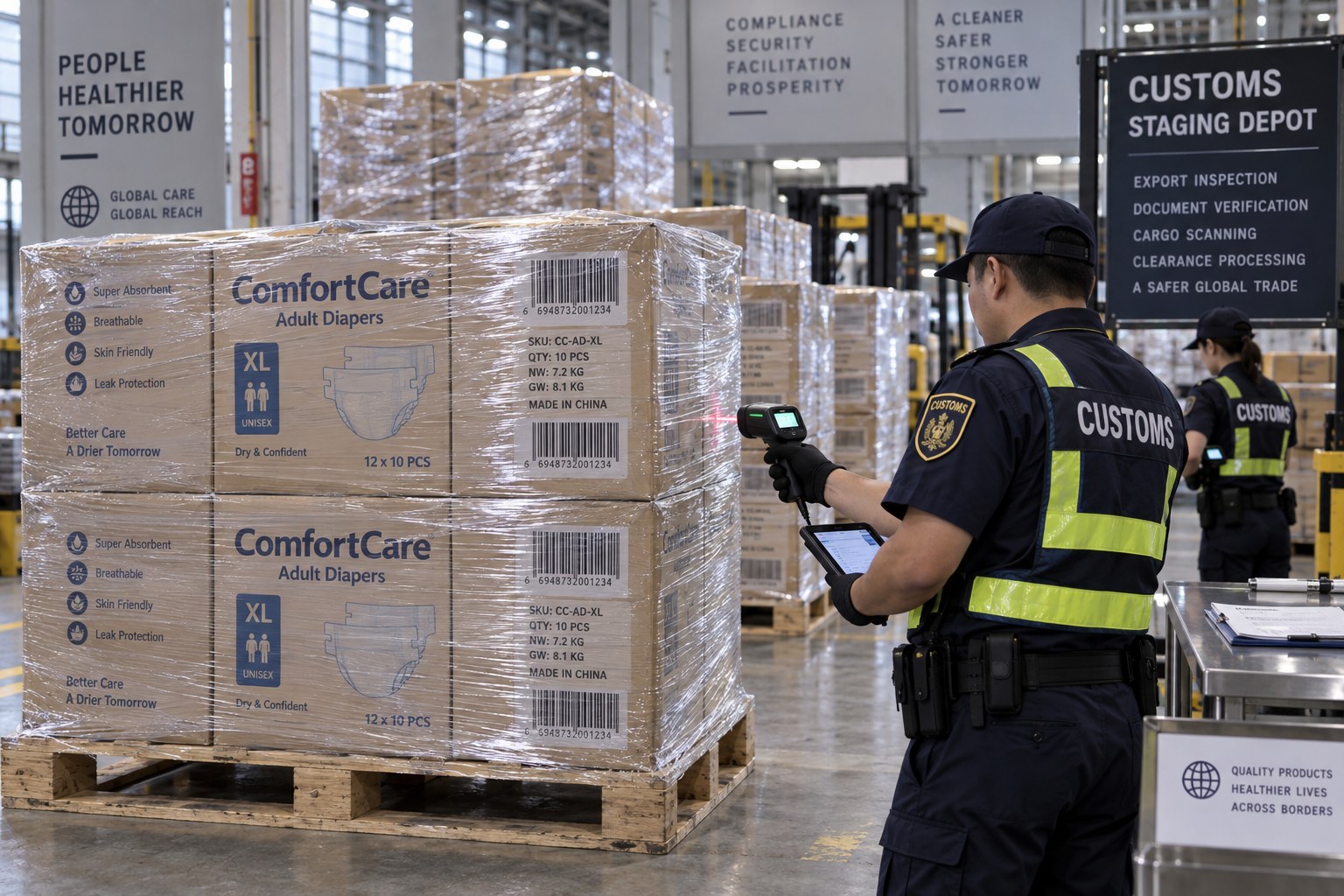
The administrative velocity of customs clearance is directly tethered to product labeling, barcoding, and serialized cargo packaging. At modern international container terminals equipped with automated optical character recognition (OCR) and laser scanning gantries, shipments lacking standardized barcodes or exhibiting illegible shipping marks are pulled aside for physical inspection, triggering warehouse handling fees and multi-day clearance delays.
Shenghongda enforces strict GS1 international barcoding standards across all primary, secondary, and tertiary packaging levels. Every finished polybag is printed with verified GS1 GTIN-13 or UPC barcodes registered directly under the client's corporate brand prefix. Secondary master corrugated shipping cartons feature serialized GS1-128 (UCC/EAN-128) shipping container barcodes encoding crucial supply chain data: Global Trade Item Number (GTIN), batch lot number, manufacturing date, expiration date, and exact carton unit piece count.
This automated serialization enables digital customs "Green Channel" clearance. When a container vessel discharges at destination ports, customs manifest algorithms electronically cross-reference the EDI packing list against the container seal number and carton GS1 data. In jurisdictions operating automated risk-management engines (such as the US Automated Commercial Environment / ACE or the EU Customs Single Window), Shenghongda’s shipments consistently achieve immediate automated release without physical container devanning.
In addition, Shenghongda’s IT infrastructure is directly integrated with major global third-party logistics providers (3PLs) and freight forwarders via REST APIs and AS2 electronic data interchange. When shipping containers are sealed at our loading docks, digitized Advanced Shipping Notices (ASN) with full GS1 serialized carton manifests are transmitted automatically to the importer's enterprise resource planning (ERP) system. This real-time electronic visibility enables destination distribution centers to pre-allocate warehouse racking locations, schedule cross-docking appointments, and pre-book inland intermodal transport days before vessel discharge, eliminating warehouse bottleneck delays.
Furthermore, serialized batch traceability satisfies stringent medical device post-market surveillance requirements under European European CE MDR (EU 2017/745) and US U.S. FDA frameworks, ensuring that every individual diaper unit can be traced back to its specific production shift, converting line, and raw material lot number within minutes of an inquiry.
7. Strategic Sourcing Due Diligence Roadmap & Customs Compliance Checklist for Importers
For international procurement directors, healthcare tender managers, and consumer goods brand executives seeking to optimize customs classification and tariff savings, Shenghongda recommends the following 7-step operational due diligence roadmap:
- Step 1: Harmonized System (HS) Heading 9619.00 Pre-Classification Audit
Review the exact constituent material breakdown of target SKUs: distinguish between cellulose wood pulp dominance vs synthetic textile nonwoven dominance to establish the precise national tariff subheading.
- Step 2: Free Trade Agreement (FTA) Eligibility Assessment
Determine whether bilateral or multilateral FTAs exist between China and the destination nation (e.g., China-ASEAN, China-Chile, China-Peru, RCEP). Verify that converting transformation satisfies Tariff Shift and Regional Value Content criteria.
- Step 3: Secure Legal Binding Customs Advance Rulings
For large-volume contracts, collaborate with Shenghongda to submit technical product dossiers and samples to destination customs authorities, securing binding advance tariff rulings that guarantee long-term duty certainty.
- Step 4: Authenticated Preferential Certificate of Origin Issuance
Mandate that every commercial shipment is accompanied by an authenticated Preferential Certificate of Origin (Form E, Form F, or RCEP CO) issued by China Customs/CCPIT prior to vessel arrival.
- Step 5: WTO-Compliant Customs Valuation & Invoice Structuring
Ensure that commercial invoices reflect legitimate transaction values, explicitly incorporate tooling assists, and provide detailed container/carton packing lists to satisfy destination customs valuation audits.
- Step 6: GS1 Barcode Serialization & Electronic Data Interchange (EDI)
Verify that primary polybags and master shipping cartons feature verified GS1 barcodes (GTIN-13 / GS1-128) encoding batch, date, and piece count to enable automated green-channel customs clearance.
- Step 7: Sinosure Open Account (OA) Credit & Port Clearance Reconciliation
Leverage Sinosure trade credit to defer payment settlements post-clearance, and conduct quarterly customs reconciliation audits to verify that all tariff preferences are fully captured in corporate accounting.