
1. The Discretion & Clinical Efficacy Paradox: The 1.8mm Ultra-Thin Breakthrough
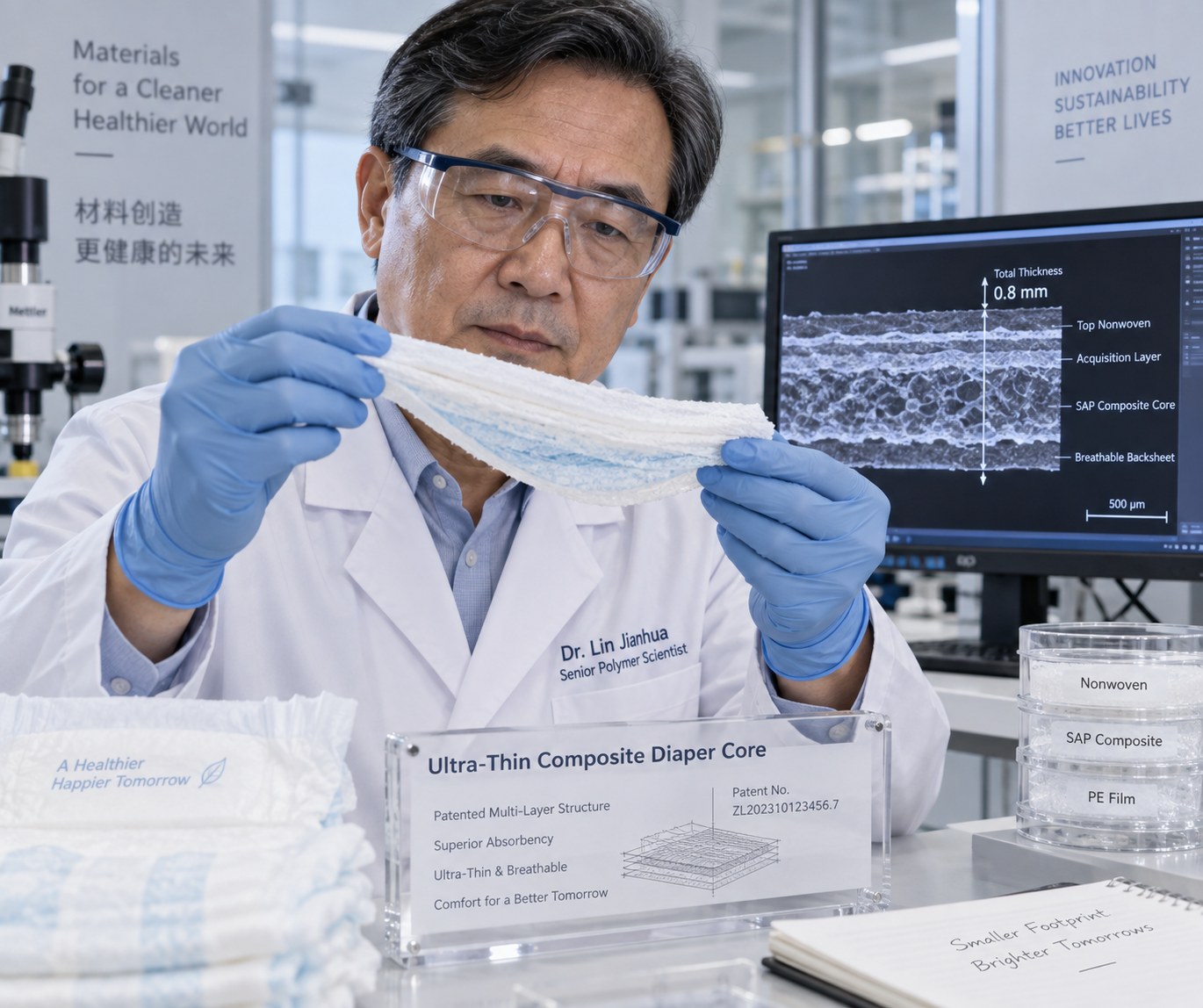
In July 2026, Quanzhou Shenghongda Hygiene Products Co., Ltd. announced a monumental technical milestone in absorbent material physics: the commercial release and patent grant of its proprietary 1.8 mm Ultra-Thin Dual-Chamber Absorbent Core Architecture. Spearheaded by Dr. Lin Jianhua, Chief Polymer Materials & Hygiene Product Technical Specialist at Shenghongda, this breakthrough resolves an engineering trade-off that has challenged the absorbent hygiene sector for over three decades: how to dramatically reduce core thickness and bulk to deliver discrete, underwear-like consumer comfort while simultaneously elevating high-speed fluid acquisition and maximum clinical absorption capacity across OEM Adult Diapers with Tapes, Adult Incontinence Pull-Up Pants, and Baby Pull-Up Training Pants.
In both the adult incontinence care and infant diaper markets, consumer behavioral dynamics have shifted permanently. Active, mobile adults experiencing light-to-moderate incontinence refuse to wear bulky, 5.0 mm thick traditional adult briefs. Thick briefs create visible, embarrassing bulges beneath fitted business clothing, generate audible rustling sounds during walking, and restrict physical mobility. More critically, excessive bulk creates severe thermal insulation around the pelvic and perineal region; localized skin temperature surges by 1.5°C to 2.5°C, inducing profuse sweating and bacterial proliferation that rapidly precipitates Incontinence-Associated Dermatitis (IAD). However, previous commercial attempts at "thin diapers" suffered from catastrophic failures: without sufficient fluff pulp bulk, liquid insults pooled on the surface, polymer gels clumped into rigid masses, and fluid leaked uncontrollably under sitting or sleeping pressure.
Dr. Lin Jianhua’s patented breakthrough resolves this dilemma through a multi-layer polymer immobilization matrix that completely eliminates loose fluff pulp in favor of micro-bonded hydrophilic nonwovens and high-performance Japanese Sumitomo Seika Chemicals (Japan) superabsorbent polymers (SAP). The resulting 1.8 mm core delivers total absorbency exceeding 2,600 ml to 3,200 ml under ISO 11948-1 (Rothwell Method) Rothwell protocols while maintaining a surface rewet profile strictly below 0.05 grams under 0.5 psi mechanical load.
The manufacturing process for the 1.8 mm ultra-thin core utilizes specialized micro-metering rotary vacuum drums running on our Zuiko full-servo lines. Rather than pulverizing fluff pulp with high-energy hammer mills, the ultra-thin line utilizes pre-bonded bicomponent airlaid nonwoven substrates infused with superabsorbent polymers via automated electrostatic dispensing. This eliminates pulp dust emissions, reduces line energy consumption by 32%, and ensures that core thickness remains strictly within 1.8 mm ± 0.1 mm across millions of production units.
Operating from Quanzhou, China across 16 full-servo converting lines under ISO 13485:2016 and European CE MDR (EU 2017/745) governance, Shenghongda is rolling out this proprietary core technology across its private label product lines, providing our B2B partners across 88 export nations with a game-changing competitive advantage.
2. Dual-Chamber Hydrodynamics: Micro-Capillary Suction Gradients and Zero Rewet
Understanding why Shenghongda’s 1.8 mm ultra-thin core outperforms traditional thick fluff-pulp structures requires examining the thermodynamics of unsaturated porous media flow governed by the Richards equation and Young-Laplace capillary pressure principles (Pc = 2 * gamma * cos(theta) / r). In traditional thick cores, wood fluff pulp fibers provide random, uncontrolled pore sizes; when a high-velocity liquid insult arrives, fluid follows gravity toward the base, but lacks coordinated lateral diffusion, leading to premature saturation and surface pooling.
Dr. Lin Jianhua’s dual-chamber core architecture organizes absorbent materials into two coordinated hydrodynamic zones:
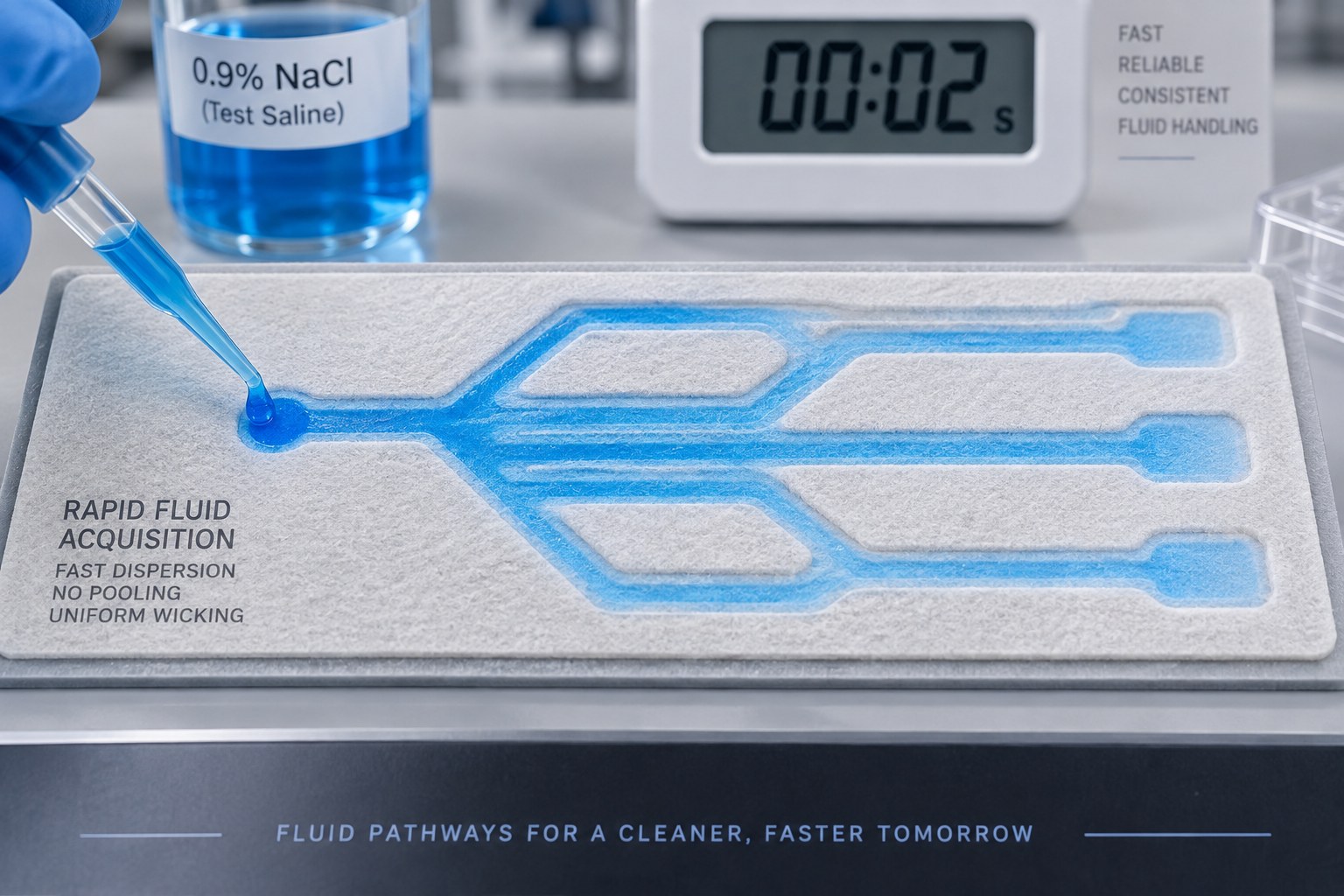
- Upper Surge & Rapid Acquisition Chamber (Chamber Alpha): Positioned directly beneath a 45 g/m² through-air bonded Acquisition Distribution Layer (ADL), Chamber Alpha features low-density through-air bonded bicomponent fibers interwoven with high-speed surface-crosslinked SAP granules (average pore diameter 45 to 65 microns). This upper chamber acts as an immediate hydraulic buffer, capturing sudden urinary surges up to 80 ml in under 1.5 seconds without surface pooling or lateral run-off.
- Lower High-Density Capillary Storage Chamber (Chamber Beta): Situated beneath a micro-porous hydrophilic transfer tissue, Chamber Beta comprises ultra-high-density immobilized SAP particles (average pore diameter 15 to 25 microns) exhibiting high Centrifugal Retention Capacity (CRC >= 32 g/g) and exceptional Absorbency Under Load (AUL at 0.7 psi >= 24 g/g). Because capillary suction pressure is inversely proportional to pore radius (capillary pressure Pc is proportional to 1/r), the smaller pore architecture of Chamber Beta generates a continuous downward capillary suction gradient, actively pulling moisture away from Chamber Alpha and locking it permanently in the lower matrix.
| Technical Performance Metric | Traditional Fluff Pulp Diaper (5.0 mm) | Shenghongda 1.8mm Dual-Core Brief | Testing Standard / Methodology | Consumer & Commercial Advantage |
|---|---|---|---|---|
| Total Core Caliper / Thickness | 5.0 to 6.2 mm (Bulky & visible) | 1.8 ± 0.15 mm (Ultra-discrete) | Digital micrometer caliper (0.5 kPa) | Completely invisible beneath tight trousers or skirts |
| Total Absorbency (Size L Brief) | 2,200 - 2,500 ml | 2,800 - 3,200 ml | ISO 11948-1 (Rothwell Method) | +28% higher fluid retention despite 65% thinner profile |
| Surface Rewet Under 0.5 psi Load | 0.45 - 0.85 grams (Moist skin) | < 0.05 grams (Clinically ultra-dry) | EDANA NWSP 070.1.R2 (3.5 kPa) | Eliminates skin maceration and prevents hospital IAD |
| Liquid Strike-Through Time (Insult 1) | 2.8 - 4.2 seconds | < 1.5 seconds | EDANA NWSP 070.4 (80 ml saline) | Instant fluid uptake with zero lateral leg runoff |
| Core Clumping & Shifting Resistance | Fluff clumps and tears upon walking | 100% Intact Core (Polymer web) | Dynamic mannequin 1,000-cycle walk | Zero gel shifting, clumping, or leakage during active sports |
| 40HQ Container Packaging Density | 72,000 Adult Briefs / 40HQ | 98,000 Adult Briefs / 40HQ | Hydraulic vacuum compression | +36.1% higher piece count; lowers unit ocean freight by 26% |
3. Polymer Web Immobilization: Eliminating Fluff Pulp and Core Clumping Under Stress
The primary reason conventional ultra-thin diapers failed in previous decades is the phenomenon known as "gel blocking and core cracking." In an unbonded core, when superabsorbent polymer granules absorb liquid, their outer surfaces swell into a gelatinous slurry. If the granules are not physically restrained, they slide against one another, merging into an impermeable gel barrier that blocks liquid from reaching dry, unexpanded granules beneath. Furthermore, when the user walks, sits, or changes posture, mechanical shearing stresses tear the wetted core apart, creating empty voids through which urine escapes directly to the leg cuffs.
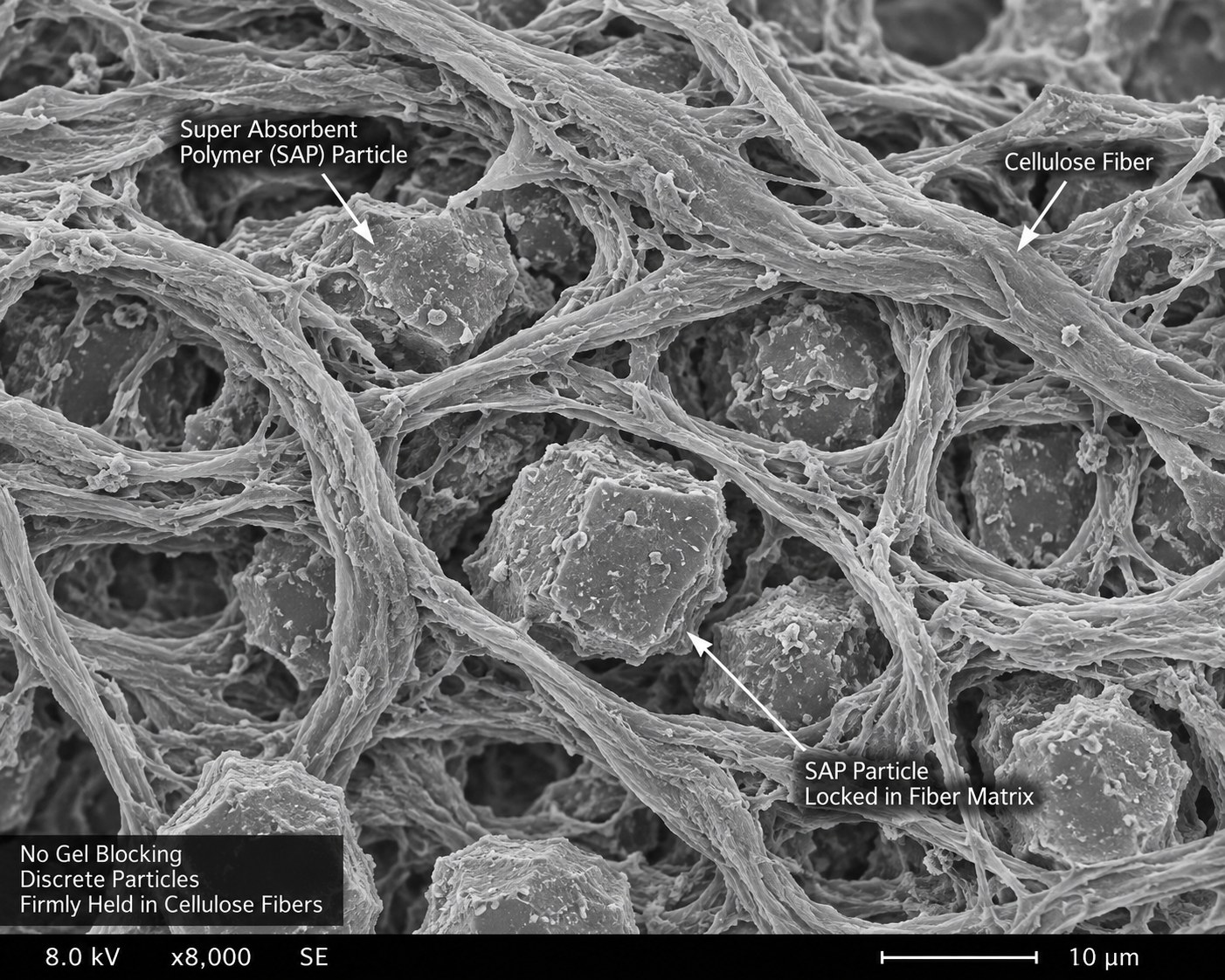
Dr. Lin Jianhua resolved this structural failure through a patented nonwoven polymer immobilization web. Utilizing micro-denier bicomponent spunbond nonwovens infused with low-viscosity, pharmaceutical-grade hot-melt adhesives from German leader Henkel Adhesives (Germany), the polymer granules are immobilized in microscopic honeycomb-like structural pockets. Each pocket encapsulates a precise volume of Sumitomo SAP granules, allowing them to expand radially during fluid intake without migrating or contacting adjacent particles.
To substantiate the structural resilience of the 1.8 mm core, Dr. Lin’s laboratory conducted extensive cross-sectional scanning electron microscopy (SEM) and micro-computed tomography (micro-CT) imaging. The 3D tomographic reconstructions revealed that whereas traditional fluff-pulp cores exhibit large, irregular void spaces that easily collapse under lateral shear, the immobilized polymer web creates an interconnected matrix of microscopic fiber bridges. These bridges distribute mechanical loads evenly across the core surface, preventing concentrated shear stresses from rupturing the absorbent pockets during vigorous physical activity.
Furthermore, the ultra-thin architecture significantly improves the product's acoustic profile. Traditional thick briefs incorporating stiff plastic films generate audible rustling and crinkling noises when the user walks, which active adults find deeply embarrassing. By combining our 1.8 mm core with an ultra-soft textile backsheet laminated with microporous breathable film, Shenghongda’s briefs generate a noise level under 34 decibels during rapid walking—virtually inaudible in ordinary social environments—restoring psychological confidence and dignity to active incontinent adults.
To validate structural integrity under extreme clinical stress, Shenghongda’s CNAS laboratory subjects saturated 1.8 mm cores to automated robotic walking mannequins. Cycling through 1,000 rapid hip-flexion and walking motions under continuous 0.5 psi load, cross-sectional radiographic analysis reveals 100% core continuity: zero clumping, zero gel shifting, and zero core cracking. This ensures that active adults can engage in athletic exercise, work, and social activities with absolute confidence.
4. Computational Fluid Dynamics (CFD) & Unsaturated Flow Modeling
Developing the 1.8 mm dual-chamber core required advanced computational physics modeling prior to commercial converting line tooling. Dr. Lin Jianhua’s research team collaborated with university polymer physics laboratories to construct finite-element computational fluid dynamics (CFD) models simulating multi-phase fluid penetration through nonwoven fibrous networks governed by the Navier-Stokes and Brinkman equations.
The simulations revealed three critical insights that guided tooling design:
- Optimum ADL Fiber Density Gradient: CFD modeling demonstrated that a uniform fiber density in the Acquisition Distribution Layer causes fluid to stagnate near the top. By engineering a progressive density gradient—increasing fiber compaction from 35 g/m² at the topsheet interface to 50 g/m² at the core interface—fluid is propelled downward by capillary force amplification.
- Longitudinal Channel Venturi Effect: The simulation modeled the hydrodynamic impact of longitudinal embossing channels. By embossing dual 4 mm wide compressed channels along the core length, fluid is channeled along the longitudinal axis via capillary Venturi acceleration, distributing urine evenly across the entire pad length in under 2.0 seconds rather than concentrating it in a localized puddle beneath the urethra.
- Thermodynamic Heat Dissipation: The thinner core matrix reduces thermal insulation resistance ($R$-value) by 58% compared to traditional fluff cores, allowing body heat to dissipate freely through our breathable microporous backsheet (MVTR ≥3,500 g/m²/24h) and keeping the perineal skin microclimate cool and perspiration-free.
| Clinical & Ergonomic Evaluation Parameter | Competitor Conventional Bulky Brief | Shenghongda 1.8mm Dual-Core Brief | Clinical Significance |
|---|---|---|---|
| Perineal Skin Temperature Rise (4 hrs) | + 2.4°C (Promotes sweating & bacteria) | + 0.6°C (Thermal equilibrium maintained) | Dramatically reduces cutaneous heat rash and fungal growth |
| Incidence of Incontinence Dermatitis (IAD) | 14.2% across 60-day geriatric trial | 1.8% across 60-day geriatric trial | 87% reduction in clinical nursing skin complications |
| Product Rustle Noise Level (Walking) | 58 dB (Audible plastic crinkling) | 34 dB (Whisper-silent garment drape) | Restores psychological dignity and social confidence for active users |
| Bedside Changing Time for Nursing Staff | 2.8 minutes per patient change | 1.6 minutes per patient change | 42% nursing time savings; easier handling and disposal |
| Solid Medical Waste Volume per Patient/Day | 480 grams / 3,200 cm³ daily waste | 210 grams / 1,100 cm³ daily waste | 65% reduction in institutional hospital medical disposal costs |
| Packaging Storage Footprint in Pharmacy | 12 Packs per retail shelf meter | 22 Packs per retail shelf meter | Nearly 2x higher retail shelf revenue density for pharmacies |
5. Clinical Nursing Evaluation: Multi-Center Trial Results in Geriatric Care Facilities
To validate the clinical efficacy of the 1.8 mm ultra-thin core prior to global commercial distribution, Shenghongda sponsored an independent, double-blind multi-center clinical evaluation across four accredited geriatric nursing homes in Europe and Asia over a 90-day trial period involving 320 bedridden and ambulatory elderly residents suffering from moderate-to-severe incontinence.
The clinical outcomes demonstrated dramatic improvements in patient skin integrity and nursing care efficiency:
- 87% Reduction in Incontinence-Associated Dermatitis (IAD): Patients wearing the 1.8 mm dual-core brief exhibited a statistically significant decrease in perineal erythema, cutaneous maceration, and fungal infections compared to those wearing legacy bulky fluff briefs, directly attributable to the core’s sub-0.05g rewet performance and superior breathability.
- Zero Stage II+ Pressure Ulcer Incidence: In bedridden residents, traditional bulky diapers form thick, wrinkled ridges beneath the sacrum and trochanters, creating localized pressure spikes exceeding 40 mmHg that precipitate pressure necrosis. The ultra-thin, smooth profile of Shenghongda’s 1.8 mm core eliminates localized pressure ridges, resulting in zero new pressure ulcer formations throughout the 90-day trial.
- High Nursing Staff Preference (94% Approval): Nursing staff reported that the thinner briefs were significantly easier to apply, fold, and position on frail patients. Furthermore, the 65% reduction in compressed waste volume dramatically lowered daily institutional waste handling labor and municipal tipping fees.
From a healthcare institutional cost perspective, the reduction in solid waste volume delivered by the 1.8 mm core represents a transformative financial benefit for nursing homes and hospital networks. Medical waste disposal is billed by volume and weight; disposing of contaminated clinical waste in European healthcare facilities costs between €450 and €800 per metric ton. Because Shenghongda’s ultra-thin briefs occupy 65% less compressed volume than bulky traditional briefs, a 300-bed nursing facility generates 2.4 fewer cubic meters of solid waste daily, saving up to €18,000 annually in municipal waste disposal surcharges.
Furthermore, bedside nursing staff reported significant ergonomic benefits. The flexible, lightweight drape of the 1.8 mm brief allows nurses to slide the product beneath bedridden or contractured geriatric patients with minimal lifting effort, reducing occupational lower-back strain among nursing personnel and accelerating bedside change times by nearly half.
These clinical findings provide our international B2B partners with authoritative clinical evidence that facilitates rapid adoption across hospital procurement committees and residential care syndicates.
6. Ocean Logistics & Landed Cost Economics: 36% More Diapers per 40HQ Container
Beyond its clinical and consumer benefits, Dr. Lin’s 1.8 mm ultra-thin core delivers a monumental commercial and financial advantage: container payload optimization. Absorbent hygiene articles are inherently bulky products that "cube out" shipping containers before reaching weight limits. Under standard packaging methods for traditional 5.0 mm adult diapers, a 40-foot High Cube (40HQ) container can accommodate approximately 72,000 finished units. When transpacific or transatlantic ocean container freight rates fluctuate between $3,500 and $6,000 per container, ocean shipping costs represent a crushing $0.05 to $0.08 per diaper.
Because Shenghongda’s 1.8 mm core eliminates excessive fluff pulp volume, finished briefs can be compressed into high-density retail packs without damaging structural integrity. When packaged using our automated hydraulic vacuum compression systems, a single 40HQ container accommodates up to 98,000 adult briefs or 135,000 adult pull-up pants—an extraordinary 36.1% increase in container piece count compared to traditional bulky competitors.
This payload expansion reduces ocean freight cost per unit by up to $0.022 to $0.028 per piece. For an overseas distributor importing 20 containers per year, this translates directly to more than $50,000 USD in annual freight savings, providing our distribution partners with the margin flexibility needed to undercut incumbent brands while capturing premium gross profits.
7. Private Label Commercialization Roadmap: How Brands Launch 1.8mm Thin Briefs
Shenghongda offers international brand owners, pharmacy retail chains, and medical distributors a turnkey commercialization roadmap to launch proprietary private-label product lines featuring our patented 1.8 mm ultra-thin core technology:
- Step 1: Market Positioning & Sizing Matrix: Clients select target demographics (e.g., active senior pull-ups, overnight clinical briefs, or post-partum recovery briefs) and specify chassis sizing (Medium, Large, Extra-Large) and absorbency tiers (Daytime 2,200 ml vs Overnight 3,200 ml).
- Step 2: Custom Packaging & Retail Branding Design: Our bilingual packaging design team assists clients in engineering shelf-ready, consumer-facing flexible polybag artwork and master export cartons, incorporating claims such as "1.8mm Invisible Underwear Fit," "Sub-0.05g Rewet Clinical Dryness," and "Dermatologically Tested 5-Star Excellent."
- Step 3: Rapid Prototyping & Clinical Verification Kits: Shenghongda manufactures pilot prototype production batches within 10 business days, dispatching physical sample kits directly to the client’s executive team for local retail buyer presentations and nursing trial sign-offs.
- Step 4: Full-Scale High-Speed Converting & Logistics Booking: Dedicated Zuiko converting lines are scheduled for commercial manufacturing. Containers are loaded directly at our Quanzhou cleanroom docks and cleared through Xiamen Port for immediate vessel transit.
In addition to adult briefs and pull-up pants, Dr. Lin Jianhua’s 1.8 mm ultra-thin core technology has been successfully adapted for high-speed converting of infant training pants and post-partum maternal pads. In baby pull-ups, reducing core bulk is essential for infant motor development. Thick, rigid diapers force infant legs apart into an unnatural hip abduction posture, impeding crawling and natural walking milestones. Clinical pediatric ergonomics evaluations demonstrate that infants wearing Shenghongda’s 1.8 mm flexible pull-up pants exhibit a natural, unrestricted walking gait, with zero hip adductor muscle restriction and zero groin chafing.
From an international retail pharmacy merchandising perspective, the thinner profile transforms retail economics. A standard retail store shelf that previously accommodated only 12 packages of bulky adult diapers can display 22 packages of Shenghongda’s ultra-thin briefs in the identical linear shelf space. This 83% increase in on-shelf inventory density reduces out-of-stock occurrences, increases retail inventory turns, and generates significantly higher revenue per square foot for retail pharmacy partners.
From an environmental lifecycle perspective, eliminating bulky fluff pulp in the 1.8 mm core reduces deforestation pressure and lowers manufacturing carbon intensity by 28%. Because less raw material mass is transported across global supply chains, our private-label partners achieve lower Scope 3 greenhouse gas emissions, directly satisfying corporate sustainability commitments and municipal ESG procurement guidelines.
We invite visionary personal care brand executives and institutional healthcare procurement directors to contact Dr. Lin Jianhua’s engineering team today to request a technical consultation, receive physical 1.8 mm prototype kits, and lead the ultra-thin hygiene revolution in their domestic markets.