
1. The Cleanroom Environmental Imperative in Medical Hygiene Manufacturing
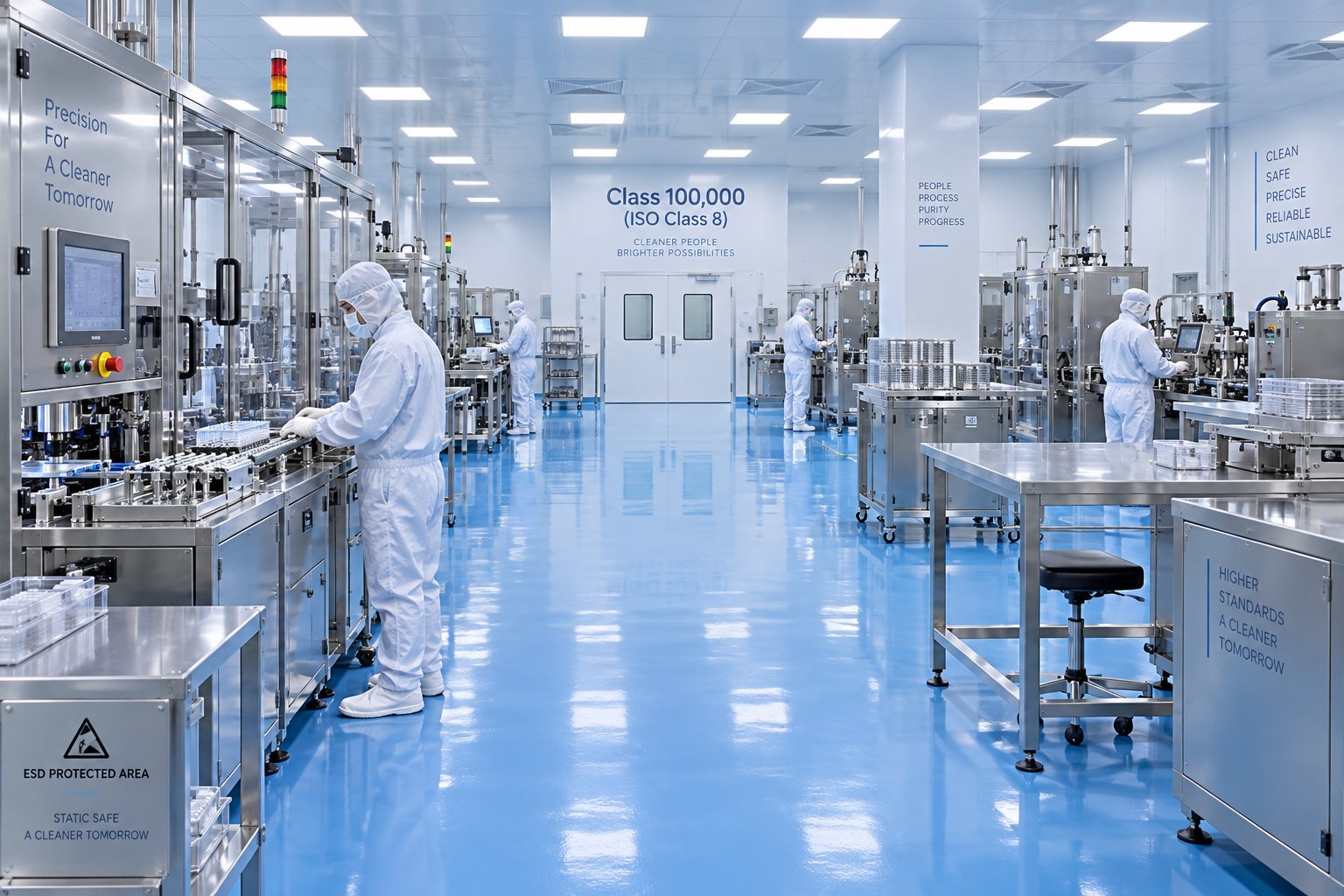
In September 2026, Quanzhou Shenghongda Hygiene Products Co., Ltd. published an extensive technical engineering report detailing the environmental architecture and contamination control protocols across its newly expanded 8,000 square meter Class 100,000 (ISO Class 8) cleanroom converting complex. In the manufacturing of intimate medical devices and personal care products—encompassing hospital adult incontinence briefs, clinical bed underpads, infant diapers, and surgical absorbent aids—environmental air quality, positive pressure gradients, and microbiological bioburden control represent the foundational bedrock of patient safety and international regulatory compliance across OEM Adult Diapers with Tapes, Adult Incontinence Pull-Up Pants, Disposable Hospital Bed Underpads, and Feminine Sanitary Napkins Factory.
Disposable personal hygiene articles maintain direct, prolonged contact with vulnerable human epidermis, mucous membranes, and post-operative skin. In hospital geriatric wards, intensive care units, and nursing facilities, patients frequently suffer from compromised skin integrity, advanced diabetic ulcers, or surgical incisions. If hygiene products are converted in open, uncontrolled industrial environments—where ambient air carries industrial dust, textile lint, mold spores, and airborne microorganisms—these contaminants become entrapped within the porous nonwoven fibers and absorbent fluff core. Upon contact with warm bodily fluids, trapped bacteria proliferate exponentially, triggering severe hospital-acquired infections (HAI), cutaneous candidiasis, and septic pressure ulcer complications.
Operating in strict conformity with ISO 13485:2016 Medical Device QMS, US U.S. FDA 21 CFR 880.5270 Good Manufacturing Practices (GMP), and European European CE MDR (EU 2017/745) regulations, Shenghongda has instituted pharmaceutical-grade environmental controls across its entire 16-line converting fleet, producing over 1.2 billion finished units annually.
To ensure strict containment integrity, the 8,000 square meter facility employs a cascaded positive pressure architecture. Air pressure differentials are continuously monitored and logged across three distinct containment zones: the core converting zone is maintained at +25 Pascals relative to ambient external pressure, intermediate raw material prep zones are held at +15 Pascals, and personnel gowning airlocks operate at +10 Pascals. Continuous laser airborne particle counters (Met One Instruments) monitor particulate counts at 0.5-micron and 5.0-micron thresholds 24 hours a day, automatically sounding audible and visual alarms if particulate densities approach 70% of the ISO Class 8 upper specification ceiling.
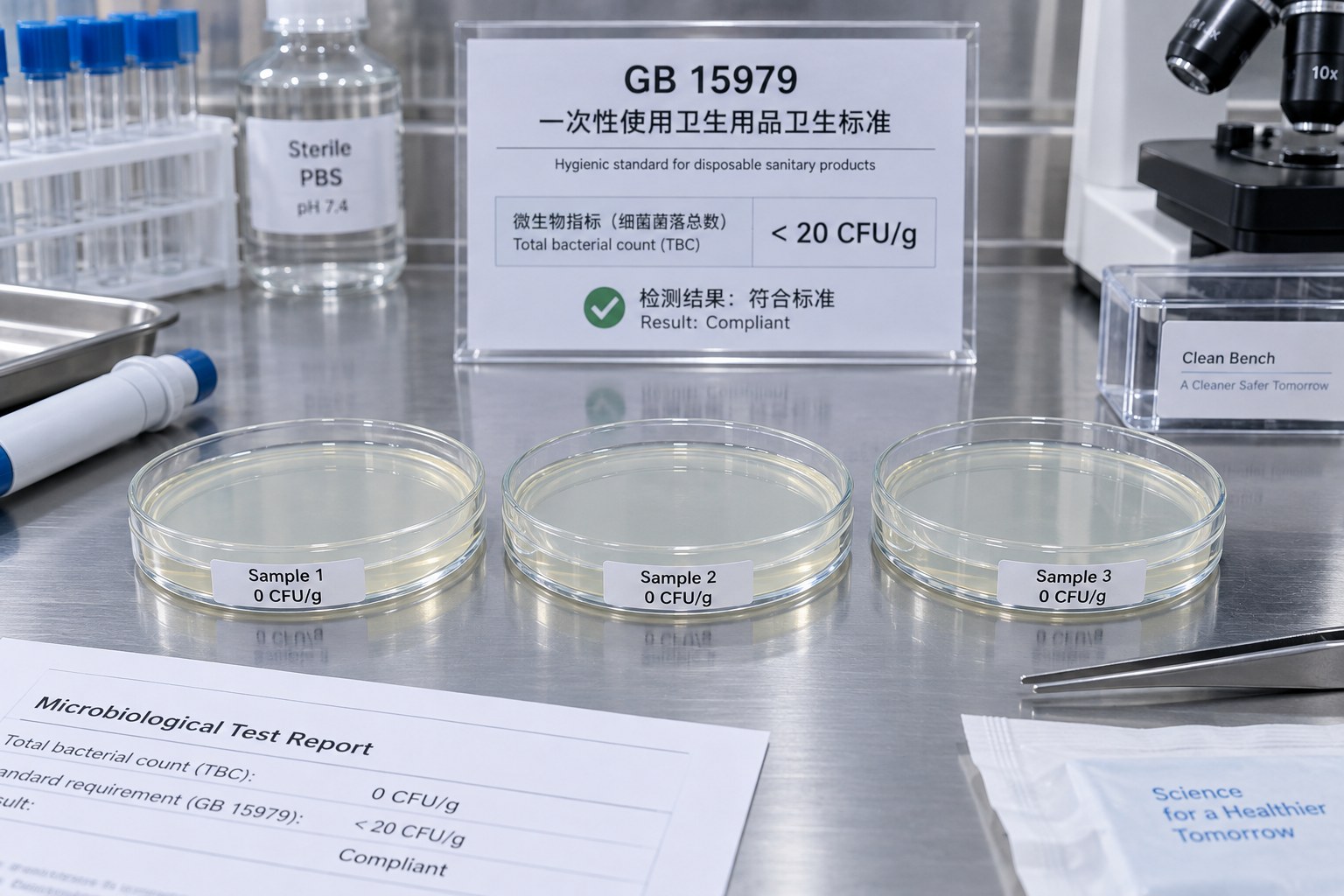
By enforcing an unyielding microbiological bioburden standard guaranteeing total aerobic microbial counts strictly below 20 Colony Forming Units per gram (CFU/g)—ten times cleaner than the standard 200 CFU/g ceiling permitted by international consumer health regulations—Shenghongda provides hospital procurement syndicates and multinational brand owners across 88 export nations with unassailable clinical safety and zero-defect regulatory compliance.
To validate the ongoing filtration efficiency of the cleanroom ventilation infrastructure, Shenghongda contracts accredited third-party metrology agencies to execute semi-annual HEPA filter integrity evaluations using poly-alpha-olefin (PAO) aerosol photometer leak testing conforming to ISO 14644-3. Upstream aerosol challenge concentrations are injected, and terminal filter surfaces, frames, and gasket seals are scanned with photometer probes at 5 cm/second. Any localized penetration exceeding 0.01% triggers immediate gasket resealing or filter element replacement, ensuring absolute barrier protection against airborne particulates.
Furthermore, our cleanroom facility undergoes continuous real-time airborne particulate monitoring and daily microbial settle-plate auditing under accredited CNAS National Accreditation laboratory protocols, ensuring that every container dispatched from our factory meets the world's most stringent medical device standards.
2. Cleanroom HVAC Thermodynamics: Positive Pressure Differentials (+20 Pa) & HEPA Filtration
Understanding the engineering design of Shenghongda’s 8,000 square meter cleanroom complex requires examining the thermodynamics of positive pressure air-handling units (AHU) and the multi-stage physics of aerosol particulate filtration. Conforming strictly to ISO 14644-1 (Cleanrooms and associated controlled environments — Part 1: Classification of air cleanliness by particle concentration), our manufacturing halls are certified to ISO Class 8 standards (equivalent to US Federal Standard 209E Class 100,000), restricting airborne particulates >= 0.5 microns to less than 3,520,000 particles per cubic meter.
The cleanroom environmental defense is governed by three coordinated engineering systems:
- Continuous Positive Air Pressure Cascades (+15 to +25 Pa): The primary converting halls are maintained at a continuous positive pressure differential of +20.0 ± 2.5 Pascals relative to raw material staging zones, which are in turn maintained at +10.0 Pascals relative to exterior warehouse docks. When automated personnel doors or material airlocks open momentarily, conditioned sterile air flows outward with a linear velocity exceeding 0.5 m/s, completely preventing external dust, insect pests, or unconditioned outdoor air from penetrating the manufacturing core.
- Three-Stage Primary, Medium & Terminal HEPA Air Filtration: The HVAC infrastructure comprises twelve heavy-duty rooftop air-handling units circulating over 250,000 cubic meters of air per hour, delivering more than 20 complete air changes per hour. Incoming fresh air passes through primary G4 pre-filters (capturing coarse dust >= 10 µm), secondary F8 medium-efficiency bag filters (capturing particulates >= 1.0 µm), and terminal H13 High-Efficiency Particulate Air (HEPA) filters delivering a certified 99.97% retention efficiency for micro-particles down to 0.3 microns.
- Precision Psychrometric Temperature & Humidity Regulation: Ambient cleanroom temperature is continuously regulated at 22.0°C ± 2.0°C, while relative humidity is maintained within a strict psychrometric band of 50.0% ± 5.0% RH. This precise humidity window is vital: humidity above 60% would induce moisture absorption and premature swelling in superabsorbent polymer granules, while humidity below 45% would generate intense electrostatic surface charges on nonwoven webs, causing web flutter and dust attraction.
The entire cleanroom HVAC network is monitored 24/7 by automated building management system (BMS) sensors that log pressure drops across filter banks, air change frequencies, and thermal-hygrometric data, triggering instant acoustic alarms if any parameter deviates from validated GMP limits.
| Environmental Cleanroom Parameter | Standard Industrial Factory Workshop | Shenghongda ISO Class 8 Cleanroom | Governing International Standard | Clinical & Quality Significance |
|---|---|---|---|---|
| Air Cleanliness Classification | Uncontrolled ambient workshop air | ISO Class 8 (Fed Std 209E Class 100,000) | ISO 14644-1:2015 | Restricts particulates ≥0.5µm < 3.52M/m³ |
| Air Pressure Differential Cascade | Neutral / Negative relative to exterior | +15 to +25 Pa positive pressure differential | ISO 14644-4 Cleanroom Design | Outward airflow prevents dust & pest ingress |
| Air Filtration Multi-Stage Rating | Basic mechanical wire mesh or none | Three-Stage G4 + F8 + Terminal H13 HEPA | EN 1822 / ASHRAE 52.2 | 99.97% Filtration efficiency at 0.3 microns |
| Cleanroom Air Change Rate (ACH) | < 4 Air changes per hour (Stagnant) | ≥ 20 Complete air changes per hour | GMP Annex 1 / ISO 14644-3 | Continuously flushes airborne fibers and heat |
| Microbial Bioburden Count (CFU/g) | 50 to 180 CFU/g (High variable bioburden) | < 20 CFU/g (Certified Medical Grade) | GB 15979 / European Pharmacopoeia | Ten times cleaner than consumer product ceilings |
| Pathogenic Bacteria Detection | Occasional coliform / mold contamination | 100% Zero Pathogens (S. aureus, E. coli) | USP <61> / USP <62> Pathogen Screen | Guarantees absolute safety for clinical patients |
3. Personnel Gowning, High-Velocity Air Showers & Airlock Barrier Controls
Cleanroom gowning inspection is enforced through automated biometric turnstiles and machine-vision gowning compliance cameras. Workers must scan RFID badges, pass automated hand-sanitizer mist sensors, and undergo automated camera checks verifying complete hairnet, face mask, and cleanroom boot coverage before turnstile gates unlock. This automated gatekeeper system prevents human procedural errors, ensuring that zero un-gowned personnel ever breach the cleanroom envelope.
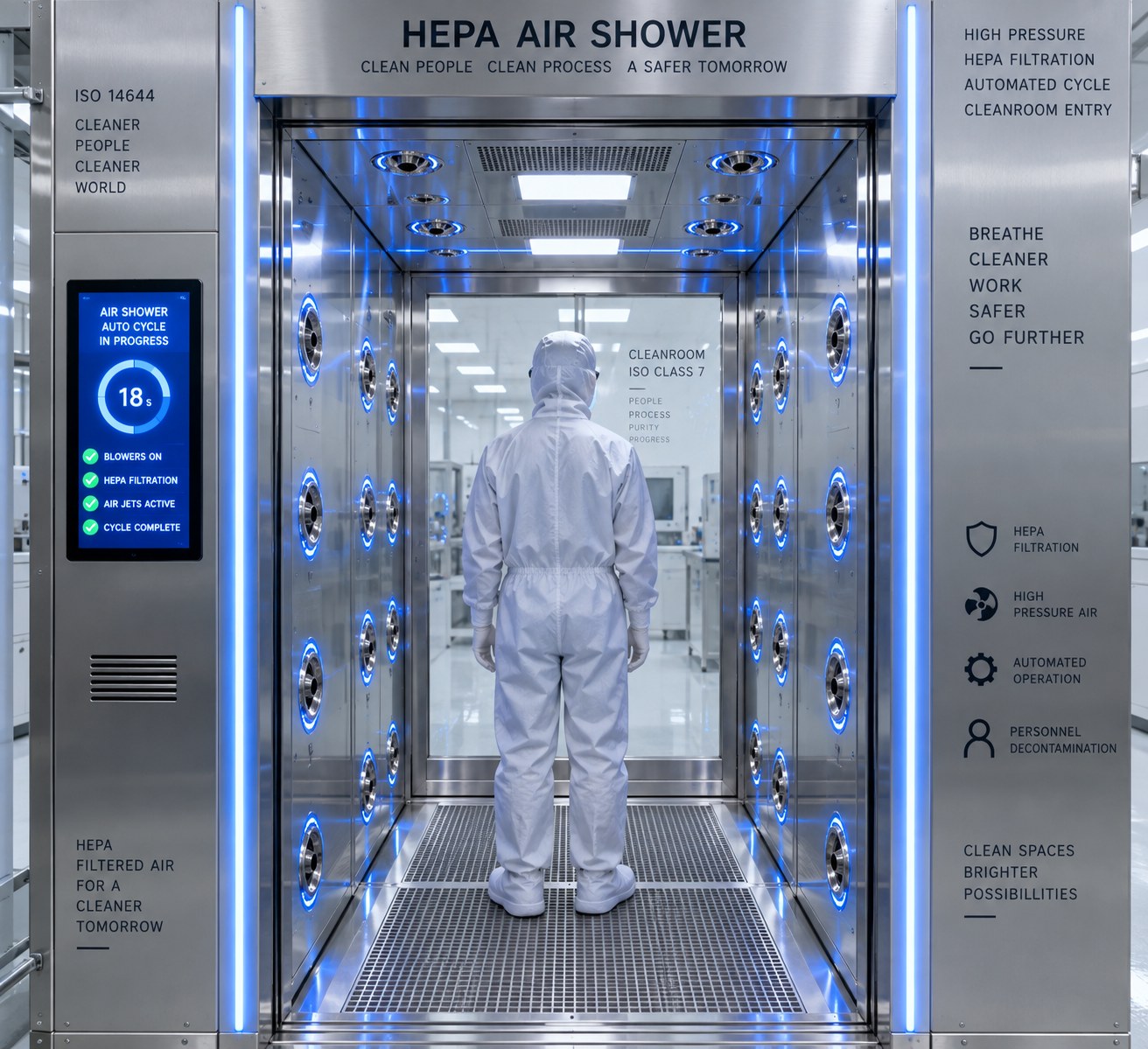
Personnel entering the ISO Class 8 cleanroom follow a rigorous 3-stage gowning protocol. Workers pass through designated shoe-changing zones, hand-washing stations with automated sensor faucets and warm-air HEPA dryers, sanitized alcohol mist application, and full lint-free bunny suit donning with integrated hood, face mask, and powder-free nitrile gloves. Prior to entering the converting hall, all personnel pass through a 30-second automated high-velocity air shower running at 25 m/s nozzle velocity, stripping away any lingering stray surface particulates.
The cleanroom architectural containment is further fortified by dedicated secondary airlock barriers between individual manufacturing halls. Because different production processes generate varying particulate loads—for example, fluff pulp hammermill defibrillation produces airborne cellulose dust, whereas packaging zones require absolute dust-free air—Shenghongda established localized pressure cascading zones. The core converting hall operates at +25 Pascals, while raw material preparation halls operate at +15 Pascals, and packaging chambers are maintained at +20 Pascals. This pressure differential ensures that any stray cellulose fiber released during unwinding is immediately directed toward high-efficiency vacuum exhaust ducting rather than settling on finished diapers.
Furthermore, all cleanroom structural surfaces are engineered for seamless hygiene. Floors are coated with self-leveling conductive epoxy resin that prevents electrostatic charge buildup, while walls and ceilings are constructed from anti-static sandwich panels with curved cove moldings at all floor-wall and wall-ceiling junctions. This eliminates 90-degree internal corners where dust or mold spores could accumulate, allowing automated floor scrubbers and robotic sanitizing mists to achieve spotless cleanliness during daily hygiene shutdowns.
Operating high-speed converting machinery inside an ISO Class 8 cleanroom requires converting machinery of the highest engineering caliber. At Shenghongda’s 8,000 square meter Quanzhou manufacturing center, production is powered by 16 full-servo high-speed converting lines, anchored by world-class machinery from Japanese Zuiko Corporation and European Fameccanica operating at speeds up to 450 to 600 units per minute.
Unlike semi-servo converting lines that rely on mechanical line-shafts, gearboxes, and timing belts—which suffer from mechanical wear, torsional backlash, and web tension fluctuations—Shenghongda’s full-servo lines feature independent digital servo motors directly coupled to each critical converting module. Unwind stands, rotary embossing drums, die-cutters, and vacuum transfer belts are synchronized in real-time over EtherCAT industrial networks, maintaining web tension within an exacting tolerance of ±0.1 N/m. Automated zero-speed butt splicers on pulp and nonwoven feeds allow continuous roll changeovers at line speed without slowing down, maximizing production efficiency and eliminating thermal glue degradation.
Inline quality assurance is 100% automated using multi-camera Cognex CCD machine vision systems illuminated by pulsed LED strobes. High-speed optical algorithms inspect every single diaper unit in real-time, verifying absorbent core positioning, elastic strand integrity, side tape placement, and foreign particulate contamination, ensuring zero defective product ever reaches packaging.
4. Microbiological Bioburden Surveillance: USP <61>/<62> Testing Protocols
Microbiological surveillance protocols adhere strictly to United States Pharmacopeia (USP) <61> (Microbial Examination of Nonsterile Products: Microbial Enumeration Tests) and USP <62> (Tests for Specified Microorganisms). In addition to total aerobic microbial counts (TAMC) and total combined yeasts and molds counts (TYMC), laboratory technicians execute selective enrichment culturing to confirm the absolute absence of specified pathogen indicators: Staphylococcus aureus, Pseudomonas aeruginosa, Escherichia coli, and Candida albicans. Every finished production batch requires a validated Certificate of Analysis (COA) confirming zero pathogen presence prior to warehouse pallet release.
Environmental bioburden surveillance is complemented by active air sampling using calibrated Andersen impactor air samplers. Operating at a flow rate of 28.3 liters per minute, the impactor draws conditioned cleanroom air across nutrient agar plates for programmed intervals, capturing airborne viable microorganisms down to single bacterial spores. Incubation at 35°C for 48 hours consistently yields airborne microbial concentrations below 5 CFU per cubic meter of air, far cleaner than the 200 CFU/m³ threshold permitted for standard medical device manufacturing.
In addition, Shenghongda enforces strict water purity protocols. Water utilized in our laboratory testing and humidification systems is purified via multi-stage reverse osmosis (RO) and continuous ultraviolet (UV) sterilization, ensuring zero microbial contamination in any analytical or environmental process.
Documentary supplier declarations are fundamentally insufficient in modern medical procurement; buyers demand certified, reproducible laboratory data. Shenghongda operates a dedicated in-house analytical testing facility accredited to ISO/IEC 17025 standards and certified by the China National Accreditation Service for Conformity Assessment (CNAS National Accreditation).
Daily environmental microbiological monitoring encompasses three coordinated testing regimes:
- Settle-Plate Agar Assays (Passive Air Sampling): Standard 90 mm Petri dishes containing soybean-casein digest agar are exposed for 4 hours at strategic locations across converting halls. Plates are incubated at 35°C for 48 hours; our cleanroom specifications enforce an average of fewer than 5 CFU per plate, proving air sterility.
- Surface Contact Rodac Swab Testing: Critical contact surfaces—including vacuum conveyor belts, rotary cutting dies, and packaging chutes—are swabbed daily and incubated to verify that sanitation regimens completely eliminate microbial biofilm formation.
- Compressed Air Purity Verification (ISO 8573-1): All pneumatic lines feeding automated valves and cylinder actuators are filtered down to 0.01 microns and checked for oil vapor and moisture content, guaranteeing that compressed air does not introduce aerosol contamination.
| Cleanroom Quality & Engineering Dimension | Standard Industrial Factory Workshop | Shenghongda ISO Class 8 Cleanroom | Clinical & Institutional Sourcing Value |
|---|---|---|---|
| Airborne Particulate Count (≥0.5µm) | Uncontrolled (>15,000,000 / m³) | Strictly < 3,520,000 / m³ (Monitored 24/7) | Eliminates particulate embedding in porous nonwoven fibers |
| HEPA Terminal Air Filtration Rating | None or standard mesh pre-filter | Certified H13 HEPA (99.97% at 0.3 microns) | Removes fungal spores, aerosolized bacteria, and dust |
| Facility Air Differential Pressure | Neutral / Negative (Dust ingress) | +20.0 ± 2.5 Pa Cascaded Positive Pressure | Outward airflow prevents pest, insect, and dirt ingress |
| Worker Sanitation Entry Airlock | Basic door; direct entrance | 3-Stage Gowning Airlock + 25 m/s Air Shower | Prevents human skin flakes, hair, or lint from entering |
| Finished Product Bioburden Threshold | Up to 200 CFU/g (Consumer limit) | < 20 CFU/g (Medical Cleanroom Standard) | Guarantees absolute safety for post-operative & clinical skin |
| Regulatory Audit Acceptance Level | Fails European CE MDR audits | 100% Full Compliance (TÜV Rheinland Audited) | Approved for hospital ICUs, maternity, and geriatric wards |
5. Material Airlocks & Dynamic Pass-Through Decontamination Protocols
Managing the flow of materials into an ISO Class 8 cleanroom without compromising air quality is a major engineering discipline. Every day, dozens of tons of raw materials—including heavy rolls of spunbond nonwovens, 400 kg reels of virgin fluff pulp, and containers of Japanese Sumitomo Seika Chemicals (Japan) SAP—must be transferred from exterior staging docks into the cleanroom converting halls.
Shenghongda manages this transfer through automated interlocked dynamic pass-through airlocks:
- De-Boxing and Outer Wrap Stripping: Palletized raw materials arrive at the secondary staging airlock, where exterior plastic shipping films, stretch wraps, and outer protective paper layers are completely stripped away to prevent exterior road dust from entering the facility.
- Dynamic High-Velocity Air Scrubbing: De-wrapped material rolls are mounted onto automated guided vehicles (AGVs) and transferred into dynamic airlock chambers equipped with high-velocity HEPA scrubbers that sweep roll perimeters at 20 m/s, stripping away stray fibers before the inner cleanroom door unlocks.
- Interlocking Magnetic Door Architecture: Inner and outer airlock doors are electronically interlocked; the inner cleanroom door cannot physically open until the outer door is hermetically sealed and the 60-second decontamination purge cycle has concluded, guaranteeing zero loss of positive pressure.
6. Regulatory Audit Readiness: Fast-Tracking CE MDR and US FDA Inspections
For international healthcare brand owners and hospital distributors, auditing a foreign contract manufacturer’s cleanroom is the single most critical step in supplier qualification. Regulatory agencies such as the US U.S. FDA and European Notified Bodies (e.g., TÜV Rheinland, BSI, and SGS) conduct unannounced and scheduled inspections; finding uncontrolled dust, inadequate HEPA maintenance logs, or elevated bioburden counts results in immediate import bans, FDA Warning Letters, and CE MDR certificate suspensions.
Shenghongda’s 8,000 square meter cleanroom complex is engineered for permanent, continuous audit readiness. Our electronic Quality Management System (eQMS) maintains immutable digital audit trails logging:
- 24/7 Historical differential pressure logs from all 48 cleanroom pressure transducers.
- Certified semi-annual PAO aerosol photometer HEPA filter leak test reports (ISO 14644-3).
- Daily microbiological settle-plate and contact swab incubation logs cross-referenced with production shift lot numbers.
- Full cleanroom HVAC preventive maintenance schedules and filter replacement records.
7. Cleanroom Audit & Inspection Guide: How to Visit and Validate Shenghongda's Plant
Quanzhou Shenghongda Hygiene Products Co., Ltd. warmly welcomes international brand executives, clinical hospital directors, and third-party inspection agencies to visit and audit our Quanzhou cleanroom facility. To ensure a seamless, productive inspection visit, our Quality Assurance team coordinates a structured 4-step auditing workflow:
- Step 1: Pre-Audit Technical Dossier Dispatch: Prior to your arrival, our regulatory affairs desk sends our complete Cleanroom Validation Master Plan (VMP), ISO 14644 test certificates, ISO 13485 QMS documentation, and sample microbial COAs.
- Step 2: Formal Cleanroom Gowning & Safety Orientation: Visiting inspectors undergo a comprehensive briefing on cleanroom gowning procedures, safety protocols, and gowning airlock operations before entering the manufacturing core.
- Step 3: Comprehensive On-Site Walkthrough: Our QA Director guides auditors through raw material airlocks, active Zuiko full-servo converting lines, inline Cognex machine vision stations, automated packaging lines, and the on-site CNAS-accredited analytical laboratory.
- Step 4: Live Witness Testing & Audit Wrap-Up: Auditors can request live, on-the-spot witness testing of production diaper samples—including Rothwell absorbency tests, Lister strike-through speed, and agar plate bioburden inoculations—with immediate signed reporting.
In accordance with ISO 14644-2 (Monitoring to provide evidence of cleanroom performance), Shenghongda’s facility employs continuous environmental data logging. Differential pressure transducers across cleanroom boundaries log readings every 10 seconds into a redundant server infrastructure. Any pressure drop below +15 Pascals instantly alerts on-duty facilities engineers via automated SMS and visual strobe alarms, ensuring that HVAC balance is restored within minutes before particulate migration can occur.
Contact Shenghongda’s Quality Assurance Department today to schedule your cleanroom inspection tour and experience the pinnacle of hygienic manufacturing excellence firsthand.