
1. Cross-Border Trade Liquidity & The Strategic Role of Sinosure Export Credit
In high-volume international B2B commerce—particularly within the absorbent personal care and institutional medical hygiene sectors—supply chain success is governed just as decisively by financial liquidity and credit terms as it is by manufacturing precision. Procuring disposable adult diapers, infant pull-ups, and hospital underpads involves substantial working capital commitments: full ocean containers of high-density medical goods represent inventory investments ranging from $30,000 to over $80,000 USD per 40HQ box. For growing distributors, healthcare tender contractors, and retail supermarket chains, funding multiple simultaneous container orders under traditional cash-in-advance terms severely constrains commercial expansion.
Historically, overseas transactions with Chinese manufacturing factories were dominated by rigid, risk-averse payment terms: a mandatory 30% cash deposit upon contract signing, with the remaining 70% balance demanded prior to bill of lading release or container discharge. In an era of extended maritime transit times—where voyages around the Cape of Good Hope to Europe or across the Pacific to Latin America require 25 to 40 days at sea—requiring buyers to lock up 100% of capital before goods arrive imposes severe working capital drag. Overseas distributors must finance inventory holding costs, pay destination customs tariffs, and wait 30 to 90 days for regional hospital or supermarket invoices to be settled, creating dangerous liquidity bottlenecks.
To eliminate these financial friction points, Quanzhou Shenghongda Hygiene Products Co., Ltd. has established an integrated trade finance partnership with China Export & Credit Insurance Corporation (Sinosure)—the state-funded policy export credit agency of the People’s Republic of China. Sinosure provides comprehensive cross-border credit underwriting, buyer solvency rating, and political risk insurance, enabling Shenghongda to extend flexible Open Account (OA) credit terms across our entire manufacturing portfolio, encompassing OEM Adult Diapers with Tapes, Baby Diapers OEM Manufacturing, Adult Incontinence Pull-Up Pants, and Disposable Hospital Bed Underpads.
By leveraging Sinosure credit facilities, qualified international buyers across 88 export destination nations defer payment for 30, 60, 90, or even 120 days post-bill of lading, allowing them to receive goods, distribute to regional sales channels, and collect customer receivables before settling factory invoices.
In the contemporary macroeconomic climate, the global supply chain has been repeatedly tested by maritime choke points, fuel cost escalations, and currency volatility. When ocean container sailing schedules stretch from 25 days to over 45 days due to Cape of Good Hope detours, international buyers experience unprecedented liquidity strain. If an importer is forced to commit 100% cash before a container leaves the port of export, their working capital cycle freezes. They cannot replenish other fast-moving product lines, invest in regional retail promotional campaigns, or respond to urgent municipal healthcare tenders. Sinosure-backed trade credit bridges this critical temporal gap by converting what would otherwise be a capital-intensive cash outlay into a smooth, revolving trade facility that aligns factory invoice settlement with domestic customer cash collections.
Furthermore, Sinosure trade facilities are recognized and integrated with international commercial banking networks, allowing overseas buyers to maintain off-balance-sheet trade credit that preserves their domestic credit lines for local expansion, inventory warehousing, and fleet development.
2. Sinosure Underwriting Mechanics: Credit Rating, Policy Limits & Risk Mitigation
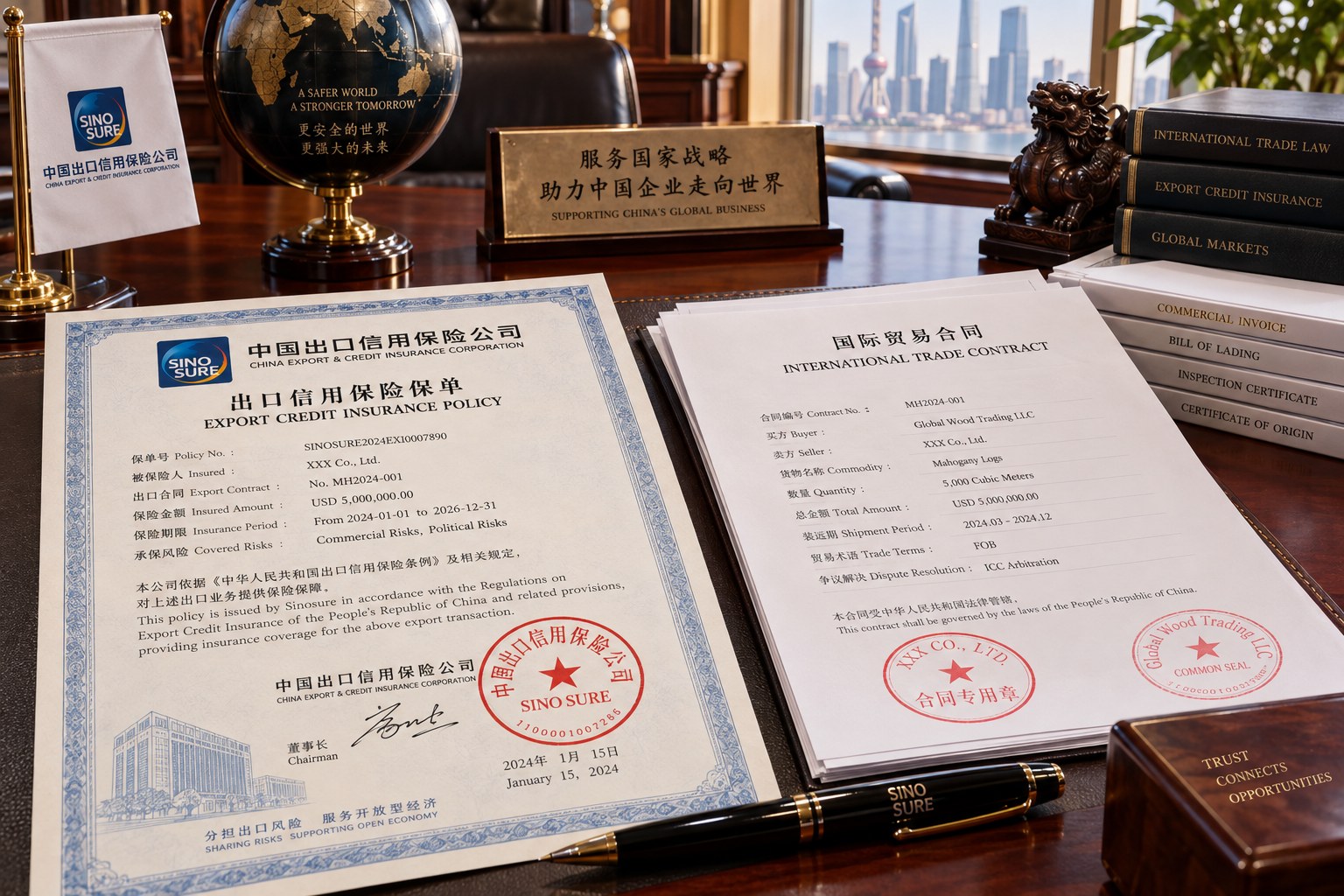
Understanding how Sinosure export credit insurance functions requires examining the underwriting mechanics of international trade finance. Sinosure operates a sophisticated global commercial credit evaluation network in partnership with international credit rating agencies such as Dun & Bradstreet, Bureau van Dijk, and Coface. When an overseas importer applies for credit terms with Shenghongda, Sinosure conducts a rigorous, confidential solvency and financial audit of the buyer company, evaluating audited financial statements, historical payment track records, banking references, and regional market capitalization.
Based on this assessment, Sinosure establishes an authorized revolving Credit Limit (typically ranging from $100,000 USD for mid-sized distributors up to $5,000,000+ USD for national retail supermarket chains) and assigns an approved payment tenor—most commonly Open Account (OA) 30 days, 60 days, 90 days, or 120 days from the Onboard Ocean Bill of Lading (B/L) date. Under this policy structure, Shenghongda acts as the primary policyholder, while Sinosure underwrites up to 90% to 95% of commercial and political default risks, including buyer insolvency, protracted payment default, foreign currency exchange restrictions, and unexpected trade embargoes.
The operational benefits for overseas importers are immense. Unlike traditional commercial Letters of Credit (LC)—which consume the buyer’s local banking credit lines, incur exorbitant banking opening and amendment fees (often 1.5% to 3.0% of contract value), and involve cumbersome documentary discrepancy penalties—Sinosure Open Account terms operate on clean, streamlined commercial invoicing. The buyer’s local banking lines remain 100% untouched, freeing up domestic borrowing capacity for local marketing, logistics expansion, and retail promotional campaigns.
Furthermore, Sinosure-backed trade terms provide foreign exchange and inventory risk mitigation. In regions experiencing currency volatility—such as Latin America, Southeast Asia, or Africa—a 90-day OA term allows distributors to manage local foreign exchange hedging, match currency cash flows from local invoice collections, and eliminate the risk of capital lock-up while goods are in transit across oceans.
Sinosure’s credit underwriting methodology evaluates quantitative financial indicators alongside qualitative market positioning. On the quantitative side, underwriters scrutinize current ratios (preferring >= 1.2), quick ratios, debt-to-equity metrics, and operating cash flow margins. Qualitatively, Sinosure assesses the buyer’s tenure in the hygiene and medical distribution sector, corporate client portfolio (such as existing contracts with national pharmacy chains or hospital networks), and regional country sovereign risk. Buyers categorized as Tier-A or Tier-B receive expedited approval within five business days, unlocking multi-million dollar credit lines with minimal collateral requirements.
In addition, established buyers who demonstrate flawless on-time settlement over 12 to 24 months enjoy automatic credit limit escalations, enabling rapid scaling of purchasing volumes during seasonal peak demands or when securing multi-year public hospital tender awards.
| Payment & Financing Structure | Cash-in-Advance / TT Deposit | Commercial Letter of Credit (LC) | Sinosure Open Account (OA 30-90 Days) | Strategic Advantage for Overseas Buyers |
|---|---|---|---|---|
| Working Capital Drag | 100% cash locked for 45-75 days | Ties up buyer's local bank credit line | Zero cash locked; payment due post-delivery | Maximizes liquidity for local business scaling |
| Banking Fees & Overhead | Basic wire fees ($30-$50) | High bank opening & discrepancy fees (1.5-3%) | Zero bank LC fees; standard wire transfer | Saves thousands of dollars in banking commissions |
| Documentary Discrepancy Risk | Low / Direct commercial agreement | High / Tiny clerical errors freeze payment | Zero discrepancy risk; direct commercial terms | Eliminates port demurrage caused by banking delays |
| Buyer Balance Sheet Impact | Strains short-term operating cash | Restricts bank borrowing capacity | Off-balance-sheet trade credit financing | Preserves domestic banking lines for local growth |
| Cargo Release & Customs Clearance | Requires 100% payment before B/L release | Requires bank document negotiation | Immediate express telex release upon sailing | Fast-track customs clearance at destination ports |
| Default & Force Majeure Cover | Buyer bears 100% commercial risk | Bank guarantees payment on documents | Underwritten by Sinosure sovereign agency | Complete commercial and political risk mitigation |
3. Corporate Credit Application Procedures, Financial Auditing & Sovereign Risk Rating
Initiating a Sinosure-backed trade credit facility with Shenghongda follows a structured, transparent due diligence protocol designed to minimize administrative friction while satisfying international underwriting compliance. Overseas enterprises seeking trade credit must provide verifiable corporate documentation that establishes legal standing, operational history, and financial solvency.
The standard underwriting submission dossier encompasses:
- Corporate Registration & Legal Formation: Certified copies of Certificate of Incorporation, Business Registration Licenses, Taxpayer Identification Numbers (such as VAT / RFC / RUT), and current Articles of Association.
- Audited Financial Statements: Certified balance sheets, income statements, and cash flow statements for the preceding two to three fiscal years, audited by recognized independent public accounting firms.
- Principal Banking References: Formal banking reference letters stating the duration of account relationships, credit facilities maintained, and confirmation of good standing without historical overdraft defaults.
- Trade Credit History & Major Vendor References: Letters or contact details from existing international suppliers demonstrating established credit history and on-time settlement records.
- Shenghongda B2B Credit Application Form: Standardized application outlining anticipated monthly purchasing volumes, target product SKUs, required credit limits, and preferred payment tenors (OA 30, 60, or 90 days).
Furthermore, the tripartite collaboration between the buyer, Shenghongda, and Sinosure can be augmented through international commercial bank factoring. Under non-recourse export factoring arrangements, Shenghongda’s designated financing banks provide immediate liquidity upon presentation of shipping documents, while the buyer retains their full 60, 90, or 120-day settlement window. This structure eliminates all financial strain on the factory floor, ensuring continuous raw material procurement and unthrottled production schedules while granting the buyer the extended payment tenor needed to optimize domestic cash flow.
Upon receipt of the application, Shenghongda submits the dossier directly to Sinosure’s international underwriting division. Sinosure assigns an official sovereign Buyer Credit Rating (ranging from Tier-A for publicly listed conglomerates down to Tier-C for mid-sized private firms) within 5 to 7 business days. Once the rating is finalized, Sinosure issues a formal Credit Insurance Approval Notice stipulating the approved revolving credit limit and approved payment tenor, enabling immediate contract signing and container production scheduling.
4. Banking Integration, Documentary LC Elimination & Working Capital Cash Flow Modeling
The elimination of traditional commercial Letters of Credit (LC) through Sinosure Open Account financing delivers transformative financial efficiencies to our overseas distribution partners. While Letters of Credit were historically considered the gold standard of international commerce, in modern fast-moving consumer goods (FMCG) distribution, LCs introduce unacceptable friction, exorbitant banking charges, and documentary trapdoors.
When an overseas buyer issues a commercial LC, their domestic bank typically freezes 100% of the contract value in cash or encumbers an equivalent portion of their active corporate credit line. Furthermore, commercial banks levy issuing fees (0.5% to 1.5%), advising fees, document examination fees, and punitive discrepancy fees ($75 to $150 per clerical error). If a bill of lading exhibits a typographical punctuation variance or a sailing date slips by a single day due to port congestion, the issuing bank freezes payment negotiation, delaying document release and triggering crippling destination demurrage charges.
Under Shenghongda’s Sinosure Open Account framework, these banking hurdles are completely eliminated. Transactions proceed smoothly on clean commercial invoices and express bills of lading. The buyer’s bank lines remain entirely unencumbered. Consider an importer ordering 10 forty-foot High Cube containers per month, representing an ongoing inventory pipeline value of $600,000 USD. Under cash-in-advance or LC terms, the importer must permanently tie up $600,000 USD in liquid capital. Under OA 90-day terms, that entire capital allocation remains liquid within the buyer’s corporate accounts, allowing them to fund domestic marketing campaigns, hire regional sales representatives, and purchase warehousing infrastructure.
To quantify the financial advantage of eliminating Letters of Credit, consider the administrative overhead: an international LC incurs opening commissions (typically 0.25% to 0.75% per quarter), advising charges, amendment fees ($50 to $100 per amendment), and negotiation fees (0.15% to 0.25%). On an annual purchasing portfolio of $5,000,000 USD, these banking frictional costs easily exceed $45,000 to $75,000 USD. Under Sinosure Open Account financing, these banking fees are reduced to standard international telegraphic transfer (TT) bank charges of $30 to $50 per remittance, directly returning dozens of basis points of operating margin back to the buyer's bottom line.
Furthermore, because Shenghongda’s production lines operate under strict ISO 13485:2016 and ISO 9001:2015 standards, production quality is guaranteed, allowing buyers to inspect incoming containers at their local warehouses with complete confidence before invoices fall due.
| Financial & Operational Metric | Traditional TT (30% Dep + 70% B/L) | Sinosure Open Account (OA 90 Days) | Working Capital Benefit for Buyer |
|---|---|---|---|
| Initial Capital Required for Order | $180,000 USD (30% Cash Deposit) | $0 USD Cash Advance Required | Preserves $180,000 USD in immediate cash reserves |
| Capital Tied Up During Sailing | $600,000 USD (100% Value Paid) | $0 USD (Goods in transit on credit) | Zero interest expense on transit inventory |
| Inventory Holding Cash Drag | High / Financed via local bank debt | Zero / Financed by factory trade credit | Saves an estimated 8-12% annual borrowing cost |
| Payment Settlement Timing | Before container arrival at port | 60 days AFTER container arrival | Allows buyer to collect local customer invoices first |
| Annualized Purchasing Capacity | Restricted by liquid cash balance | 3x to 4x Higher Purchasing Volume | Enables rapid expansion into new retail channels |
| Container Payload (40HQ) | 70,000 - 74,000 pcs (Standard pack) | 92,000 - 96,000 pcs (High-density vacuum) | +28% higher piece count; $0.024/pc ocean freight savings |
5. Currency Hedging, FX Volatility Mitigation & Regional Distributor Expansion
In developing and emerging markets—most notably across Latin America, Southeast Asia, Central Asia, and Africa—foreign exchange (FX) volatility represents one of the most perilous risks confronting import distributors. When local currencies fluctuate sharply against the US Dollar during a 30-day maritime shipping transit, an importer who has prepaid 100% of cargo value in hard currency absorbs massive translation losses that can completely erase commercial distribution margins.
Shenghongda’s Sinosure Open Account framework provides a powerful structural hedge against foreign exchange volatility. By extending payment tenors to 60 or 90 days from the ocean bill of lading date, our overseas partners gain crucial temporal flexibility to manage currency conversions. Instead of being forced to buy US Dollars at spot rates during an unfavorable market peak to satisfy an upfront factory deposit, distributors can dynamically stagger currency purchases, execute forward currency contracts, or settle invoices using matching revenue streams collected from local retail accounts.
Furthermore, for buyers operating in markets with established Renminbi (RMB / CNH) cross-border settlement channels—such as the UAE, Saudi Arabia, Russia, Brazil, and Southeast Asian ASEAN nations—Shenghongda accepts direct cross-border trade settlements in Chinese Yuan via the Cross-Border Interbank Payment System (CIPS). Settling in RMB completely eliminates USD intermediation fees, insulates transactions from US banking clearing delays, and provides access to preferential factory pricing matrices.
In addition to USD settlement, Shenghongda supports cross-border trade transactions in multiple major currencies, including the Euro (EUR) for European clients and the Chinese Yuan (RMB / CNH) for partners in Latin America, the Middle East, and Southeast Asia. Settling in Renminbi via the Cross-Border Interbank Payment System (CIPS) provides significant structural advantages: it eliminates double-conversion foreign exchange spreads (Local Currency -> USD -> RMB), hedges against unilateral dollar appreciation, and enables factory pricing discounts since domestic Chinese raw material suppliers are paid directly in local currency.
This financial flexibility serves as an engine for regional distribution expansion. By liberating working capital, Shenghongda’s distribution partners are empowered to win high-volume institutional hospital tenders that mandate 60 to 90-day payment terms from public healthcare authorities, securing market leadership in their domestic territories.
6. Contractual Compliance, Claim Resolution Procedures & Long-Term Credit Line Escalation
Sustaining a successful long-term trade credit partnership requires transparent contractual discipline and robust dispute resolution mechanisms. Sinosure policies operate on clear international commercial law principles. To protect both parties and ensure complete transparency, Shenghongda establishes formalized sales contracts that clearly define Incoterms 2020 rules, technical product specifications, quality inspection benchmarks, and scheduled payment due dates.
In the event of physical shipping damage or quality claims, Shenghongda enforces a standardized clinical claims resolution protocol:
- Immediate Joint Survey Inspection: In the rare event of transit damage or manufacturing discrepancy, the buyer submits photographic evidence and container inspection tallies within 14 days of container arrival. For substantial claims, an internationally recognized inspection agency (such as SGS, Bureau Veritas, or Intertek) conducts an on-site joint survey.
- Credit Note Offset: Validated claims are resolved immediately through credit notes applied against outstanding open account balances or deducted from subsequent container shipments, ensuring that business operations remain completely uninterrupted.
- Grace Periods & Settlement Windows: Sinosure underwriting includes a built-in commercial grace window (typically 15 to 30 days) beyond the nominal OA maturity date, accommodating unexpected banking transfer holidays or regional customs processing delays without triggering adverse credit reporting.
Should unexpected logistical disruptions arise—such as port strikes, severe customs clearance delays, or force majeure maritime blockades—Shenghongda's trade finance desk works proactively with Sinosure underwriters to grant temporary payment tenor extensions. Sinosure policies incorporate standard grace periods that allow commercial payment dates to be rescheduled without penalizing the buyer's credit rating, maintaining mutual commercial trust and ensuring continuous supply chain fluidity.
Long-term credit growth is structured dynamically. As an overseas buyer successfully completes consecutive shipments with prompt invoice settlement, Shenghongda routinely petitions Sinosure for annual credit line expansions. Buyers who begin with a $200,000 USD revolving credit limit frequently see their limits expanded to $1,000,000 USD or more within 18 months, providing the capital foundation required to dominate regional private label and institutional medical markets.
7. Strategic Sourcing Due Diligence Roadmap & Buyer Action Checklist for Sinosure Credit
For international procurement directors, healthcare tender managers, and consumer goods brand executives seeking to establish Sinosure-backed Open Account trade terms with Shenghongda, our trade finance desk recommends the following 7-step operational roadmap:
- Step 1: Preliminary Credit Application & Dossier Submission
Complete Shenghongda’s standardized Sinosure Buyer Profile form: provide legal business registration details, corporate tax identification numbers, and basic banking references to initiate underwriting review.
- Step 2: Financial Audit & Solvency Verification
Submit audited balance sheets, P&L statements, and reference letters from existing international vendors to substantiate commercial payment track records and financial stability.
- Step 3: Sinosure Credit Rating & Limit Establishment
Sinosure cross-references global credit databases (Dun & Bradstreet, Coface) and issues an official sovereign buyer credit rating and revolving credit ceiling (typically within 5 to 7 business days).
- Step 4: B2B Sales Contract Execution under Approved OA Terms
Finalize the master supply contract specifying approved payment terms (OA 30, 60, or 90 days from B/L date), product technical specifications, packaging artwork, and shipment schedules.
- Step 5: High-Speed Cleanroom Converting & Container Loading
Shenghongda commences manufacturing across 16 full-servo converting lines under ISO 13485:2016 governance. Finished goods undergo high-density vacuum compression packaging and 7-point container stuffing inspections.
- Step 6: Ocean Sailing & Express Document Release
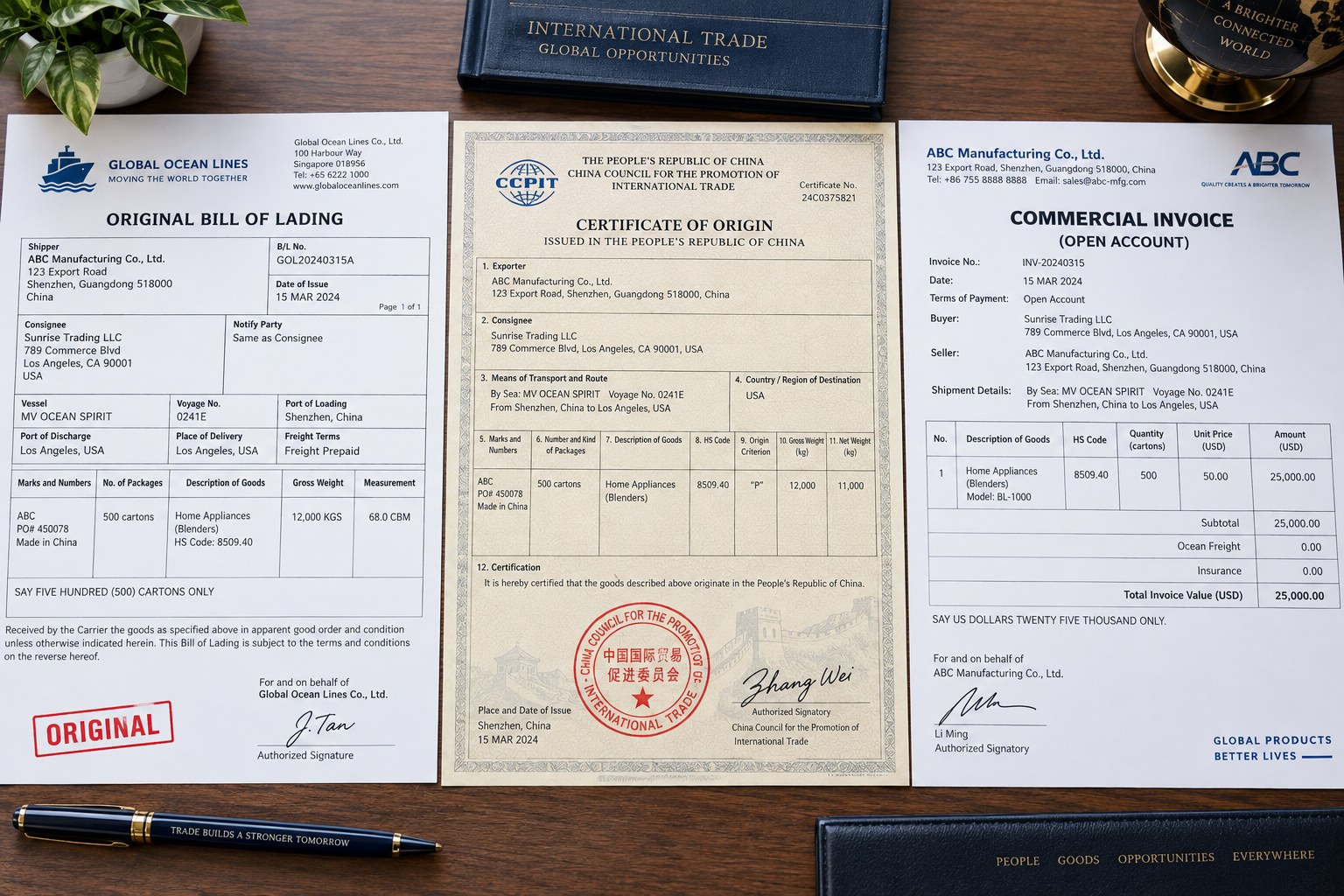
Upon container vessel departure from Xiamen or Quanzhou port, clean ocean bills of lading, commercial invoices, and preferential Certificates of Origin are issued immediately via express telex release.
- Step 7: Goods Delivery, Channel Distribution & Invoice Settlement
The buyer clears destination customs, receives goods at regional warehouses, distributes inventory to retail or hospital networks, and settles factory invoices upon agreed credit maturity.