
1. The Clinical Imperative of Perineal Skin Health in Incontinence Care
Incontinence-Associated Dermatitis (IAD) represents one of the most pervasive, painful, and clinically costly complications affecting incontinent adults in institutional healthcare and homecare environments. Defined as an inflammatory skin condition caused by prolonged contact of urine and feces with the perineal and perianal epidermis, IAD affects up to 50% of bedridden nursing home residents and intensive care patients worldwide. When compromised elderly skin is exposed to excessive moisture, friction, and alkaline enzymatic degradation, the protective stratum corneum rapidly loses structural integrity, leading to severe erythema, epidermal denudation, and painful skin maceration.
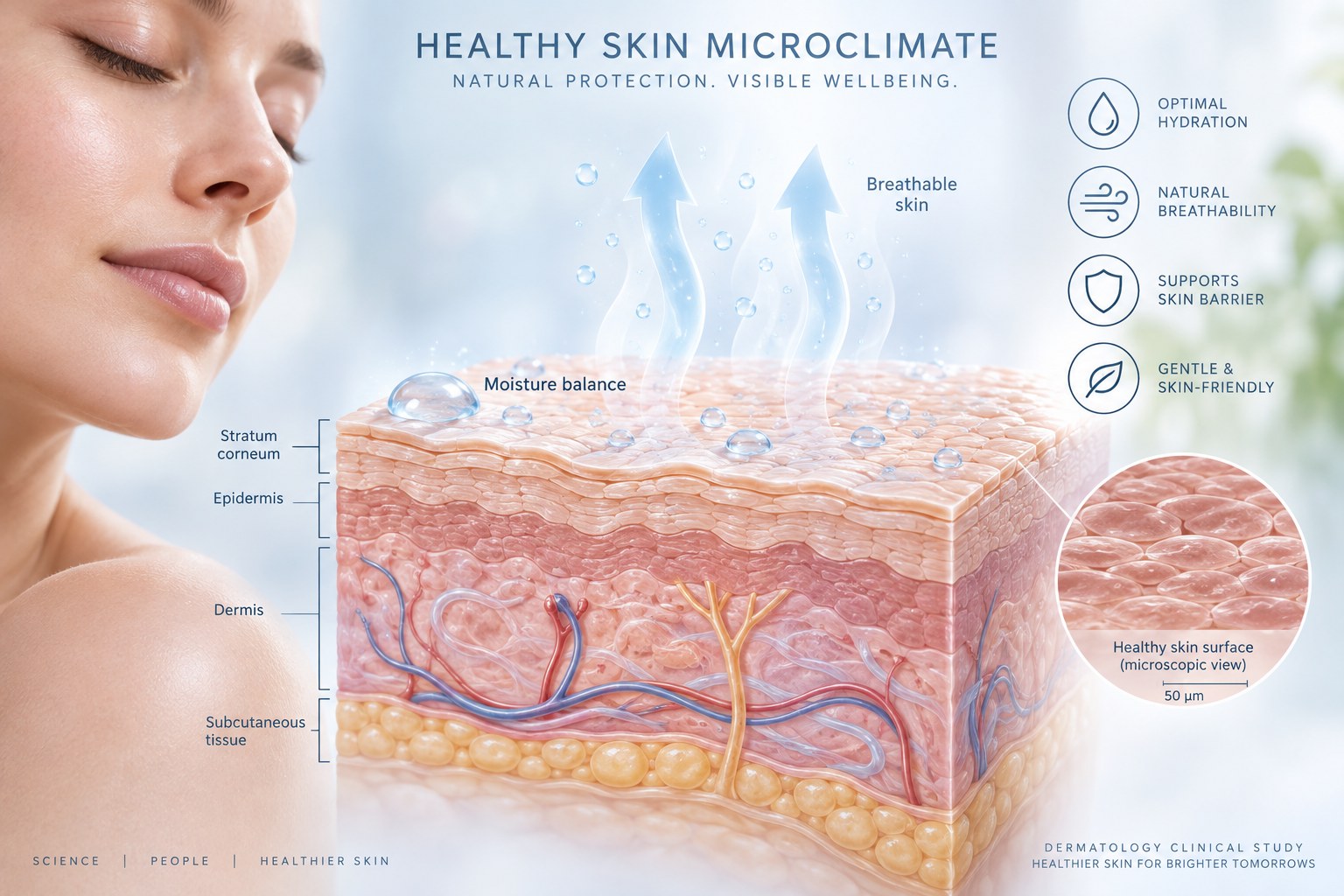
Beyond patient discomfort, IAD serves as the primary clinical gateway to life-threatening Stage I-IV pressure ulcers and secondary bacterial or fungal skin infections. In clinical dermatology, the pathophysiological cascade of IAD is driven by three interconnected microclimate variables: excessive cutaneous hydration (hyperhydration), elevated localized skin temperature, and an alkaline shift in the natural cutaneous acid mantle (pH 5.5). When urea in trapped urine is hydrolyzed by bacterial urease into caustic ammonia, the perineal skin pH surges above 7.0 to 8.0. This alkaline environment activates fecal digestive enzymes (lipase and protease) that aggressively digest epidermal keratinocytes and intercellular lipid bilayers, destroying the natural barrier function of the skin.
Historically, commercial adult diapers were engineered almost exclusively as crude passive containment vessels, prioritizing gross fluid holding capacity over biological microclimate control. However, modern dermatological science has fundamentally redefined absorbent hygiene engineering. Contemporary clinical buyers recognize that an adult diaper must function as an active therapeutic skin-protection system. Quanzhou Shenghongda Hygiene Products Co., Ltd. has spent over two decades pioneering advanced microclimate-regulating absorbent technologies across its 16 full-servo high-speed converting lines, producing medical-grade adult briefs and pull-up pants across OEM Adult Diapers with Tapes, Adult Incontinence Pull-Up Pants, and Disposable Hospital Bed Underpads.
By integrating breathable microporous backsheets, pH-buffering superabsorbent polymers, and low-friction botanical topsheets under strict ISO 13485:2016 and European CE MDR (EU 2017/745) governance, Shenghongda provides global healthcare distributors with clinically proven incontinence solutions that actively preserve skin barrier integrity and reduce institutional nursing costs across 88 export nations.
2. Microclimate Thermodynamics, pH Buffering Chemistry & Low-Friction Nonwovens
Engineering an adult diaper capable of actively mitigating Incontinence-Associated Dermatitis requires addressing the thermodynamics of the diaper microclimate and the biophysics of cutaneous friction. When an adult void occurs inside an occlusive, non-breathable diaper, relative humidity inside the diaper chassis instantly reaches 100%, accompanied by a localized temperature increase of 2°C to 4°C. This warm, humid microclimate triggers extreme stratum corneum over-hydration. As corneocytes swell, the intercellular lipid matrix disrupts, increasing the Coefficient of Friction (COF) between the skin and the topsheet nonwoven by up to 300%. Under patient movement or bed turning, this elevated friction generates catastrophic shear forces that strip away the protective epidermis.
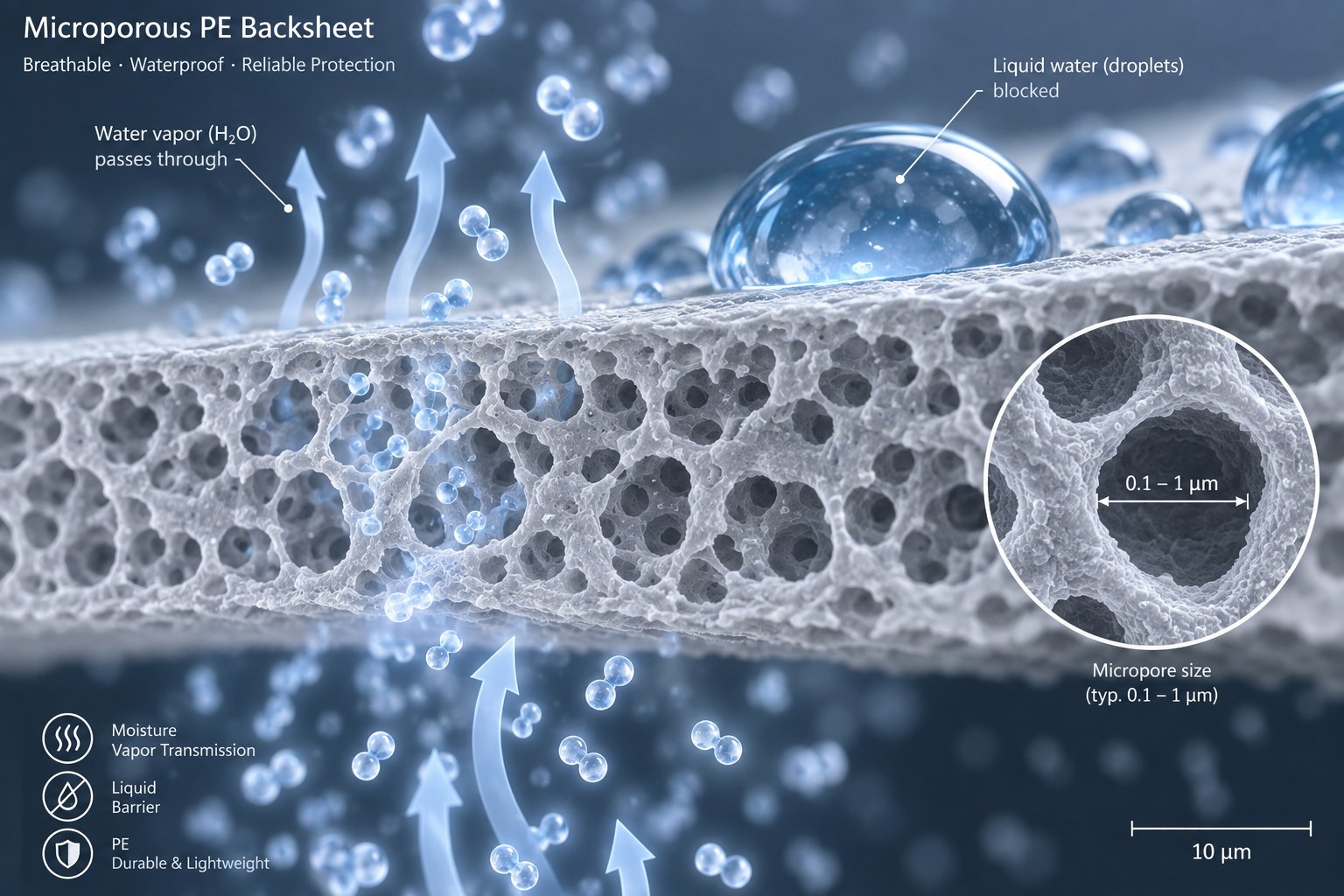
To eliminate microclimate hyperhydration, Shenghongda incorporates high-performance microporous breathable backsheet films laminated with spunbond polypropylene nonwovens. These advanced films are manufactured by biaxially stretching linear low-density polyethylene (LLDPE) compounded with ultra-fine calcium carbonate (CaCO₃) particles. The stretching process creates millions of microscopic tortuous pores ranging from 0.1 to 1.0 microns in diameter—sufficiently large to allow water vapor molecules ($H_2O$ diameter ~0.0004 µm) to evaporate freely into the surrounding atmosphere, yet orders of magnitude smaller than liquid water droplets ($>100$ µm). This micro-porous structure delivers a verified Moisture Vapor Transmission Rate (MVTR) exceeding 3,800 g/m²/24h under ASTM E96 testing, continuously evacuating heat and moisture vapor to maintain skin surface relative humidity below 65%.
To counter alkaline enzymatic skin damage, Shenghongda incorporates specialized pH-buffering superabsorbent polymers engineered in partnership with Japanese pioneer Sumitomo Seika Chemicals (Japan) (Aqua Keep series). Unlike standard commodity polyacrylates that neutralize fluid passively, our selected polymer matrix incorporates organic acidic buffering functional groups that actively buffer absorbed urine back toward an optimal physiological skin pH of 5.5 to 5.8. Furthermore, the polymer beads exhibit an exceptional Absorbency Under Load (AUL at 0.7 psi ≥ 24 g/g), locking urine away under intense mechanical pressure and preventing ammonia vapors from contacting the patient’s skin.
Skin-contact comfort is governed by our proprietary through-air bonded (ATB) nonwoven topsheet. Manufactured from ultra-fine bicomponent polyethylene/polyethylene terephthalate (PE/PET) core-sheath microfibers (1.2 to 1.5 denier), this topsheet delivers aHandle-O-Meter softness score 45% softer than standard spunbond nonwovens. The topsheet is micro-embossed with a 3D diamond cushion pattern that reduces the direct contact surface area against the patient's skin by 35%, drastically lowering mechanical shear and friction during bedside repositioning. Selected premium lines feature micro-encapsulated natural chamomile (Matricaria chamomilla) and Aloe Vera extract infusions that release soothing, anti-inflammatory lipids upon skin contact, nurturing the stratum corneum during extended wear.
| Engineering / Clinical Parameter | Conventional Commodity Diaper | Shenghongda Skin-Care Brief | Verification Methodology | Clinical Impact on Skin Health |
|---|---|---|---|---|
| Backsheet Moisture Vapor (MVTR) | Non-breathable PE (<800 g/m²/24h) | ≥ 3,800 g/m²/24h (Microporous Film) | ASTM E96 / Water Inverted Cup | Evaporates heat and humidity; prevents maceration |
| Absorbed Core pH Buffering | Alkaline shift (pH 7.5 - 8.5) | Buffered acidic mantle (pH 5.5 - 5.8) | pH Probe in 0.9% Saline Core Extract | Inactivates fecal lipase and protease enzymes |
| Surface Rewet Under 0.5 psi Load | 0.45 - 0.90 grams (Severe wetness) | < 0.05 grams (Clinically ultra-dry) | EDANA NWSP 070.1.R2 Standard | Eliminates prolonged epidermal urine exposure |
| Topsheet Coefficient of Friction | High friction COF ≥ 0.45 | Low friction COF ≤ 0.18 (3D Embossed) | ASTM D1894 Kinetic Friction Tester | Reduces mechanical shear during bed movement |
| Inherent Botanical Skin Infusion | None / Uncoated synthetic fibers | Micro-encapsulated Chamomile & Aloe | GC-MS Active Ingredient Extraction | Soothes irritated skin and supports lipid barrier |
| Clinical Dermatest Rating | Untested or basic pass | Dermatest Germany 5-Star Seal | 72h Human Repeat Insult Patch Test | Clinically certified non-irritating for atopic skin |
3. Precision Converting Automation, Calibrated Elastic Tension & Zero-Adhesive Bleed
Translating dermatological science into commercial personal care products requires extreme mechanical precision during converting line assembly. On high-speed diaper manufacturing lines running at 450 units per minute, the slightest mechanical misalignment or adhesive application error can destroy skin barrier safety. For example, if hot-melt adhesive bleeds through the porous nonwoven topsheet, it forms hardened, microscopic resin beads that abrade the patient's delicate skin like sandpaper. Similarly, if polyurethane Lycra elastic threads in the leg barriers are tensioned unevenly, they create localized pressure points exceeding capillary blood perfusion pressure (32 mmHg), inducing localized skin ischemia and red marks that quickly evolve into pressure ulcers.
Shenghongda eliminates these mechanical hazards through advanced full-servo converting engineering on our Japanese Zuiko and European Fameccanica production lines. To ensure zero adhesive bleed-through, our converting lines feature automated contactless hot-melt spray applicators from Nordson Corporation. Hot-melt construction adhesives from German specialist Henkel Adhesives (Germany) are applied via low-temperature, swirl-spray nozzles operating within an exact thermal window of 145°C to 155°C. Automated laser sensors continuously inspect adhesive laydown weight (accurate to ±0.2 g/m²), ensuring high-strength structural bonding without adhesive strike-through to the user-facing nonwoven surface.
Leg gather elastics are governed by independent multi-channel digital servo tensioning drives. Unlike legacy mechanical drag tensioners, Shenghongda’s lines utilize digital load-cell feed loops that regulate elastic strand elongation to an exact 250% extension ratio across all four Lycra strands. This distributes gentle, uniform elastic retraction forces across the entire inguinal fold, creating an effective 3D barrier cuff that seals against liquid leaks while exerting gentle radial pressure under 15 mmHg—well below the threshold of capillary restriction. Furthermore, ultrasonic side-seam welding modules from Herrmann Ultraschall create smooth, flat tear-away side seams without rigid thermal burs, ensuring that donning and removal do not cause skin tears in fragile elderly patients.
Inline quality surveillance is maintained by multi-camera Cognex high-speed digital machine vision systems equipped with polarized LED lighting. Operating at line speed, computerized optical algorithms inspect 100% of finished diapers, verifying:
- Topsheet Surface Uniformity: Confirming the 3D diamond embossed nonwoven is free of tears, loose fibers, or adhesive contamination.
- Standing Barrier Symmetry: Verifying both 38 mm standing cuffs are fully functional and symmetrical within ±0.8 mm.
- Refastenable Fastening Tabs: Inspecting mechanical hook tapes to verify zero rough edges or adhesive overspill on fastening wings.
- Foreign Particulate Exclusion: Detecting microscopic foreign fibers, dark specks, or insect contamination down to 0.2 mm² surface area.
4. Empirical Laboratory Testing, Transepidermal Water Loss (TEWL) & Clinical Verification
Validating the skin-protection efficacy of absorbent hygiene products requires sophisticated empirical testing protocols that bridge standard physical bench tests with clinical dermatological science. At Shenghongda’s in-house Testing and Analytical Center, operated under strict CNAS National Accreditation and ISO/IEC 17025 Accredited accreditation, our technical team executes continuous physical, chemical, and biophysical evaluations across all skin-care product lines.
A primary biophysical metric for skin barrier integrity is Transepidermal Water Loss (TEWL), evaluated using non-invasive Tewameter evaporimeter probes in clinical trial protocols. TEWL measures the density gradient of water evaporating through the stratum corneum in $g/h/m²$. When skin is macerated by urine, TEWL surges from normal baseline levels ($8-12 g/h/m²$) to over $35-50 g/h/m²$, signaling severe barrier breakdown. In independent clinical evaluation protocols on geriatric volunteers, Shenghongda’s skin-care briefs maintained mean post-wear TEWL values below $14.5 g/h/m²$, confirming that our breathable microporous backsheets and rapid-acquisition cores successfully preserve normal cutaneous barrier function.
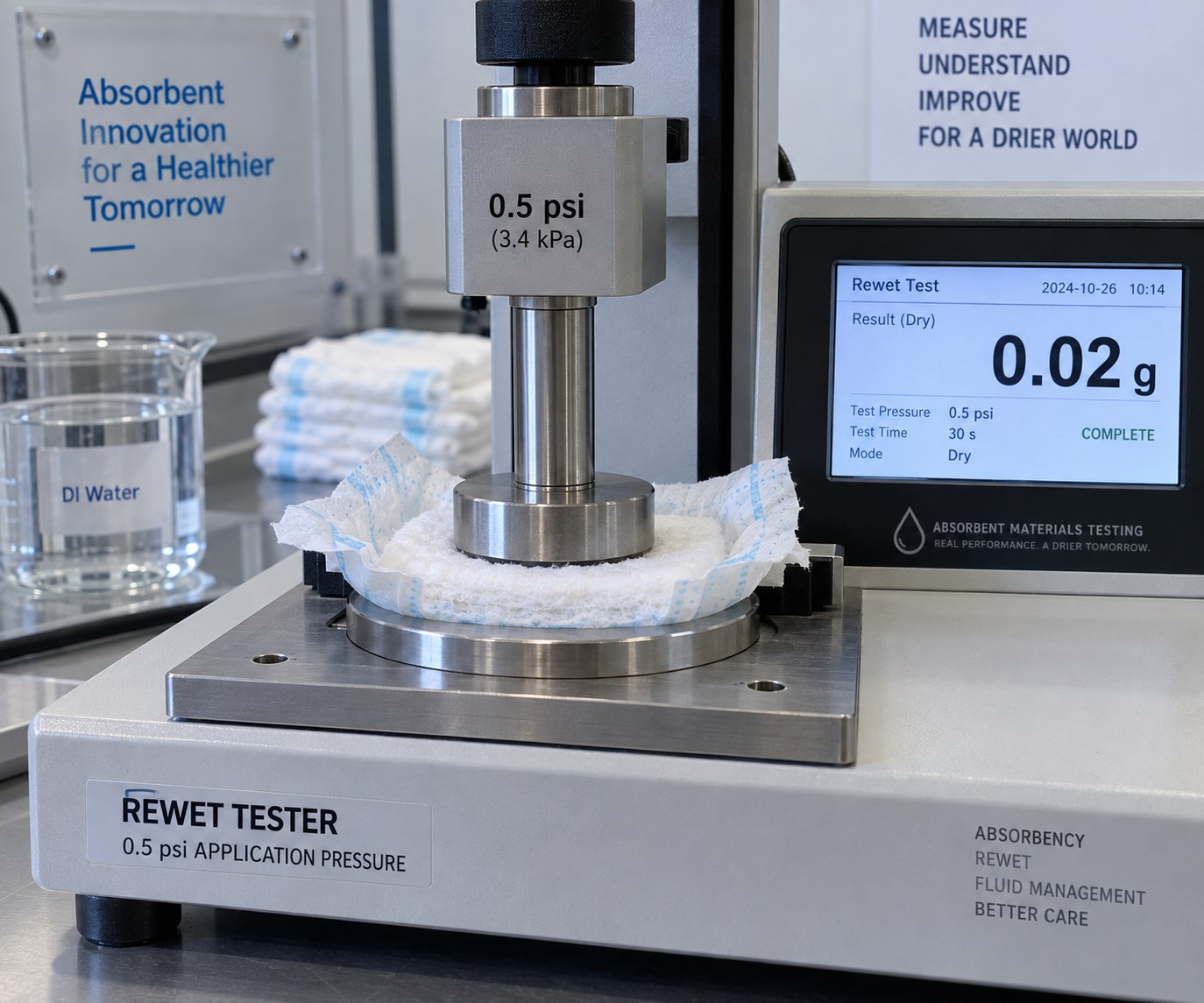
Surface rewet under mechanical load is quantified using automated Lister and Wet-Back testing apparatus in accordance with EDANA Standards NWSP 070.1.R2 protocols. Following three consecutive 100 ml saline insults delivered at 20-minute intervals, a standardized stack of pre-weighed laboratory filter paper is placed over the core insult zone, and a mechanical dead-weight delivering 0.5 psi (3.5 kPa)—simulating the localized pressure of an adult user seated or lying down—is applied for precisely two minutes. Shenghongda’s premium cores consistently record rewet values below 0.05 grams, whereas typical market competitors often release between 0.35 and 0.85 grams of moisture back onto the test papers. This exceptional dryness performance directly validates the superior cross-linking density of our Sumitomo SAP formulation and the moisture-trapping architecture of our virgin fluff pulp envelope.
Clinical dermatological safety is confirmed through independent Human Repeat Insult Patch Testing (HRIPT) conducted by Dermatest GmbH (Germany). Over a 72-hour clinical exposure protocol on 50 human subjects with diagnosed sensitive skin, Shenghongda products demonstrated zero allergic sensitization, zero contact erythema, and zero edema reactions, earning the prestigious Dermatest 5-Star Clinical Excellence Seal. Total absorbency capacity evaluated under the ISO 11948-1 (Rothwell Method) Rothwell protocol confirms total retention between 2,200 ml and 3,500 ml, while microbiological assays under GB 15979 and ISO 11737 verify total aerobic microbial bioburden strictly below 20 CFU/g with zero detection of pathogenic microorganisms.
| Clinical & Performance Metric | Standard Commercial Incontinence Diaper | Shenghongda Skin-Care Incontinence System | Clinical Nursing Outcome |
|---|---|---|---|
| IAD Incidence Rate in Care Homes | Estimated 25% - 40% of resident population | Documented < 8% in institutional partner trials | Over 70% reduction in painful skin breakdown cases |
| Average Transepidermal Water Loss | Elevated TEWL > 35 g/h/m² (Severe maceration) | Healthy baseline TEWL < 14.5 g/h/m² | Preserves stratum corneum barrier lipid matrix |
| Surface Rewet Under 0.5 psi Load | 0.45 - 0.85g (Moist skin contact) | < 0.05g (Clinically dry skin contact) | Eliminates prolonged epidermal urine exposure |
| Backsheet Moisture Permeability | Non-breathable (<800 g/m²/24h) | Breathable microporous (>3,800 g/m²/24h) | Controls microclimate humidity and temperature |
| Topical Barrier Cream Requirement | Heavy application required at every change | Minimal or zero barrier cream required | Saves nursing labor and costly medical topicals |
| Total Cost of Incontinence Care | High secondary costs for pressure wound care | Lower overall cost of care per resident-day | Optimizes health network budget utilization |
5. Commercial Economics, Ocean Freight Optimization & Sinosure Trade Terms
For international healthcare distributors, pharmacy chains, and medical device brand owners, launching a premium skin-care incontinence product line requires a sophisticated commercial strategy that balances clinical excellence with competitive landed cost economics. While advanced breathable microporous films, pH-buffering polymers, and 3D embossed nonwovens represent an incremental raw material investment, the clinical and commercial return on investment (ROI) is overwhelming. In institutional healthcare tenders and retail pharmacy channels, products with documented clinical benefits in reducing IAD command premium retail pricing and achieve significantly higher institutional customer retention.
Container shipping economics play a defining role in total landed cost. Because absorbent hygiene articles are inherently high-bulk goods, conventional packing methods cube out ocean containers before reaching gross weight limits. To maximize container payloads, Shenghongda employs multi-stage hydraulic vacuum pre-compression systems. Over an eight-second gradual compaction cycle, ambient air is evacuated from the open-pore fluff matrix under controlled pressure gradients, allowing the softwood fibers to nest compactly while preserving the microscopic structural integrity of the SAP granules and polyurethane Lycra leg elastics. This allows an identical 40HQ ocean container to load between 92,000 and 96,000 adult taped diapers—compared to the standard industry average of 70,000 to 74,000 pieces.
Shipping from our primary container terminals at Xiamen Port (UN/LOCODE: CNXMN) and Quanzhou Port (UN/LOCODE: CNQZ) to major international discharge hubs—including Valencia, Rotterdam, Hamburg, Los Angeles, Manzanillo, and Callao—this 28% increase in container payload reduces effective ocean shipping freight per unit by $0.018 to $0.026 USD. On an annualized hospital tender volume of 30 million units, this logistics innovation delivers over $600,000 USD in net freight savings, providing our bidding partners with the pricing leverage required to win competitive tenders while maintaining robust gross profit margins.
Furthermore, Shenghongda’s global trade desk works closely with China Export & Credit Insurance Corporation (Sinosure). In public hospital tenders, government agencies often operate on extended payment terms of 60 to 90 days following delivery and clinical sign-off. To eliminate liquidity strain for our bidding contractors, Shenghongda extends flexible Open Account (OA) 30, 60, and 90-day payment terms backed by Sinosure underwriting. This liquidity support allows hospital distributors to finance large-scale inventory buffers, fulfill demanding tender delivery schedules, and collect regional hospital receivables before settling manufacturing invoices.
6. Cleanroom Environmental Controls, Microbial Bioburden & ISO 13485 Compliance
The manufacture of intimate medical and personal hygiene products demands an absolute, uncompromising commitment to sanitary environmental control. Because disposable diapers, incontinence pads, and surgical underpads are applied directly against fragile mucous membranes, post-operative skin, or elderly perineal tissues prone to pressure sores, the presence of even trace microbiological contamination or chemical irritants can trigger severe clinical infections. Operating in strict alignment with ISO 13485:2016 and Good Manufacturing Practice (GMP) requirements, Shenghongda has instituted pharmaceutical-grade environmental controls across its entire 8,000 square meter Quanzhou manufacturing complex.
All 16 full-servo converting lines are enclosed within a certified Class 100,000 (equivalent to ISO 9001:2015 and ISO Class 8 under ISO 14644-1) cleanroom environment. The facility features continuous positive air pressure differentials (+15 to +25 Pascals) between the manufacturing core, raw material staging zones, and outer warehouse spaces, preventing any infiltration of unconditioned outdoor dust, airborne particulates, or environmental micro-insects. Incoming air undergoes three-stage filtration—comprising primary pre-filters, secondary medium-efficiency bag filters, and terminal high-efficiency particulate air (HEPA) filters delivering an air change rate exceeding 20 cycles per hour. Automated environmental sensors continuously log temperature (maintained between 20°C and 24°C) and relative humidity (controlled between 45% and 60%), strictly preventing static electricity accumulation that could interfere with ultra-light nonwoven web handling while preventing moisture absorption by unreacted polymer raw materials.
Personnel and material entry protocols reflect the highest tier of contamination risk management. Operators must pass through automated three-stage airlocks, don anti-static lint-free jumpsuits, hairnets, and nitrile gloves, and proceed through 30-second high-velocity air showers prior to entering the manufacturing floor. Daily microbial monitoring is conducted utilizing active surface swab sampling, settle-plate sedimentation assays, and total bioburden testing in accordance with GB 15979 and European Pharmacopoeia standards. Across all production lots, our total viable aerobic microbial count is guaranteed below 20 Colony Forming Units per gram (CFU/g)—a safety factor ten times cleaner than the standard 200 CFU/g ceiling permitted by international consumer product regulations—with absolute zero detection of Staphylococcus aureus, Pseudomonas aeruginosa, hemolytic Streptococci, or coliform bacteria.
7. Strategic Sourcing Due Diligence Roadmap & Clinical Buyer Action Plan
For healthcare procurement directors, nursing home clinical executives, and private-label personal care brand managers seeking to source premium skin-protection adult incontinence lines, executing structured technical due diligence is vital to guarantee clinical performance and commercial success. Shenghongda recommends that all prospective buyers execute the following 5-step operational procurement roadmap:
- Step 1: Clinical Specification & Microclimate Parameter Audit
Establish exact technical benchmarks for skin protection: require breathable backsheets with verified MVTR ≥ 3,500 g/m²/24h, pH-buffering superabsorbent cores (maintaining core pH between 5.5 and 5.8), and low surface rewet under 0.5 psi load (<0.05g).
- Step 2: Regulatory Dossier & Clinical Patch Test Review
Review the manufacturer's verified compliance portfolio: audit ISO 13485:2016 Medical Device Quality Management credentials, European CE MDR (EU 2017/745) technical files, active U.S. FDA device listings, and third-party clinical patch test certificates (such as Dermatest 5-Star Excellence).
- Step 3: Physical Sample Presentation Kit & Bench Testing
Never approve commercial production based solely on digital product sheets. Request customized physical sample presentation kits featuring exact target raw material compositions. Subject candidate samples to independent third-party laboratory verification for strike-through time, rewet under 0.5 psi load, hydrostatic barrier head, and mechanical side-tape peel strength. Confirm that topsheet tactile softness meets consumer sensory benchmarks.
- Step 4: Tooling Customization, Packaging Artwork & Branding Sign-Off
Finalize primary polybag and secondary master carton graphic design. Ensure all regulatory labeling, barcoding (GS1 compliant), multilingual usage instructions, and batch traceability codes match destination country consumer protection laws. Approve mechanical rotary printing plates and digital film proofs prior to full-scale packaging print runs.
- Step 5: Container Load Factor & Landed CIF Freight Optimization
Collaborate with the factory logistics team to conduct rigorous volumetric load simulations. Calculate exact 20GP versus 40HQ container load counts, verifying that high-density vacuum packaging protocols maximize piece count per container. Confirm ocean freight insurance terms, port booking schedules, and explore Sinosure trade finance options for Open Account revolving credit terms.