
1. The Global Virgin Fluff Pulp Commodity Cycle & Hygiene Supply Architecture
Virgin wood fluff pulp represents the structural foundation, bulk capillary matrix, and second largest raw material cost component in disposable absorbent hygiene manufacturing. Constituting between 35% and 65% of the total dry weight of conventional adult incontinence briefs, baby diapers, and hospital underpads, global fluff pulp market dynamics directly influence finished product pricing, factory lead times, and operating margins for personal care brand owners worldwide. In 2026, global hygiene supply chains face an intricate commodity environment shaped by RISI international benchmark price cycles, geopolitical trade disruptions, and stringent environmental forestry mandates.
Unlike standard paper-grade bleached kraft pulp (NBSK/BHKP) used in printing paper or tissue packaging, medical-grade fluff pulp is a highly specialized commodity produced by a limited number of specialized forestry mills concentrated predominantly in the Southeastern United States and Northern Europe. In recent years, global fluff pulp prices have experienced violent cyclical volatility—surging from cyclical lows of $650 per metric ton to historical peaks exceeding $1,350 per metric ton—driven by Canadian softwood sawlog harvest restrictions, Nordic energy crises, and rapid demand growth across emerging markets. For overseas healthcare distributors and private label brand owners, contracting with a diaper manufacturer that relies on spot-market commodity trading introduces extreme vulnerability to sudden price surcharges and supply rationing.
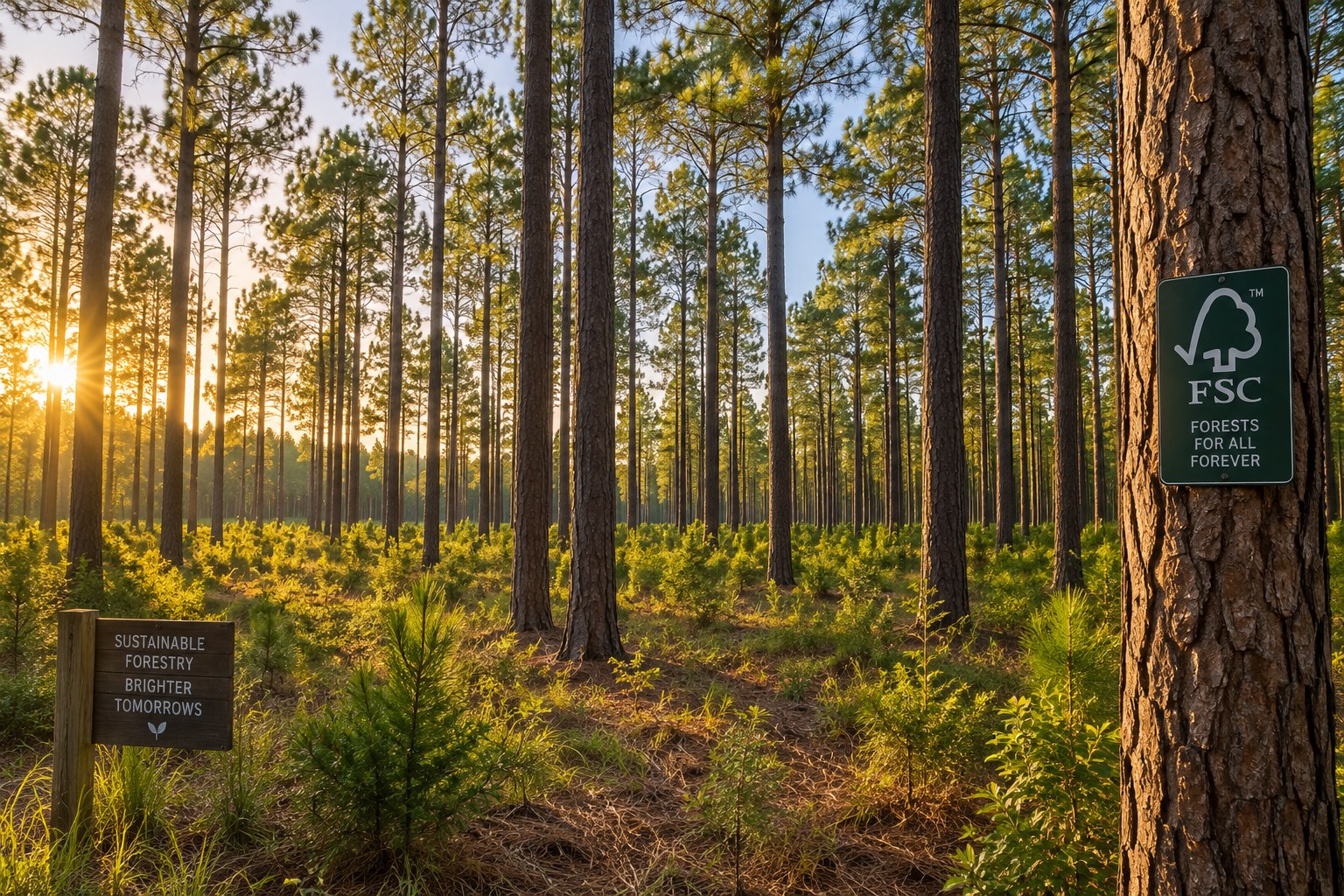
Furthermore, international forestry governance has transformed pulp procurement into an uncompromising regulatory compliance gate. The enactment of the European Union Deforestation Regulation (EUDR, Regulation (EU) 2023/1115) mandates that all wood pulp entering the European Union must be accompanied by verifiable WGS84 polygon geolocation coordinates proving zero deforestation after December 31, 2020. Quanzhou Shenghongda Hygiene Products Co., Ltd. shields its global partners from commodity volatility and regulatory risk through multi-year strategic off-take contracts with the world’s leading sustainable forestry producers, most notably American industry leader Weyerhaeuser Company (USA) (Golden Isles brand Southern Bleached Softwood Kraft, SBSK).
Operating 16 high-speed full-servo converting lines across an 8,000 square meter Quanzhou manufacturing center, Shenghongda maintains dedicated raw material buffer reserves under strict FSC (Forest Stewardship Council) Chain of Custody standards, providing global B2B clients with unyielding price stability and guaranteed container delivery across OEM Adult Diapers with Tapes, Baby Diapers OEM Manufacturing, and Disposable Hospital Bed Underpads.
By establishing long-term index-linked contracts tied to Fastmarkets RISI North American Fluff Pulp benchmark price indices with bilateral collar corridors, Shenghongda protects its international private label and healthcare tender clients from extreme spot market volatility. When pulp markets experience sudden quarterly spikes, our B2B partners benefit from capped raw material price ceilings, enabling predictable retail pricing and protecting tender profitability.
2. Coniferous Softwood Morphology, Hammermill Defibrillation & Capillary Wicking Kinetics
Understanding why virgin Southern Bleached Softwood Kraft (SBSK) fluff pulp remains indispensable in absorbent hygiene requires examining the microscopic morphology of coniferous wood fibers. In an absorbent core combining superabsorbent polymers (SAP) with wood pulp, the fluff pulp serves two vital physical functions: it provides structural resiliency to prevent the core from collapsing when compressed, and it forms an expansive 3D network of open-pore micro-capillaries that draws fluid rapidly away from the initial insult zone and distributes it across the entire core length before SAP granules reach maximum swelling equilibrium.
Shenghongda partners exclusively with Weyerhaeuser Company (USA) to procure Golden Isles SBSK fluff pulp manufactured from sustainably managed pine stands (principally Loblolly Pine, Pinus taeda, and Slash Pine, Pinus elliottii). Coniferous pine trees grown in warm subtropical climates yield tracheid fibers with remarkable physical dimensions: an average fiber length of 2.6 to 2.8 millimeters, an outer diameter of 35 to 45 microns, and a high cell wall thickness that provides exceptional lumen collapse resistance. In contrast, short-fiber hardwood pulps (such as Eucalyptus, with fiber lengths under 1.0 mm) or recycled cellulose fibers collapse into dense, impermeable mats when wetted, choking off capillary suction and causing instantaneous peripheral diaper leakage.
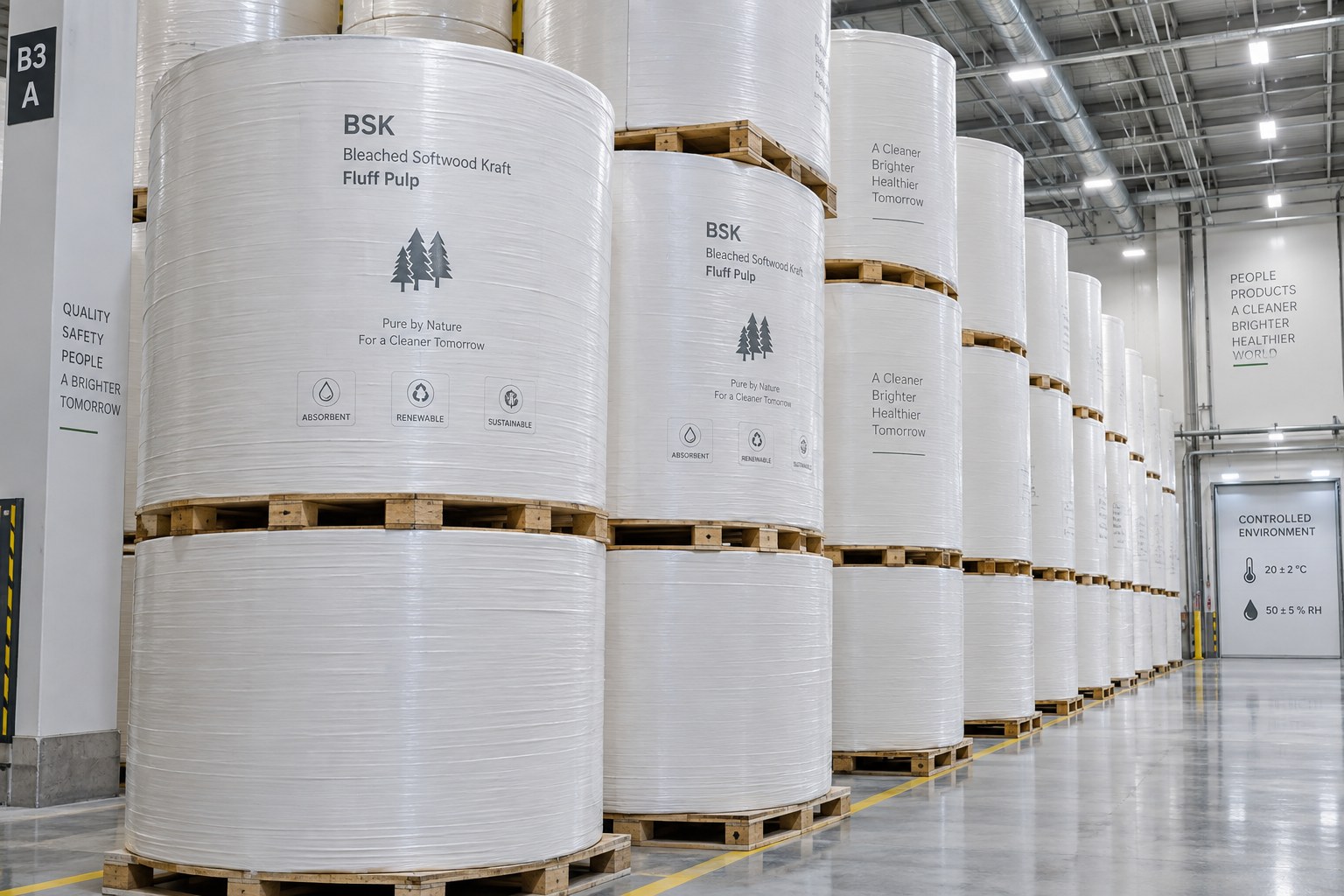
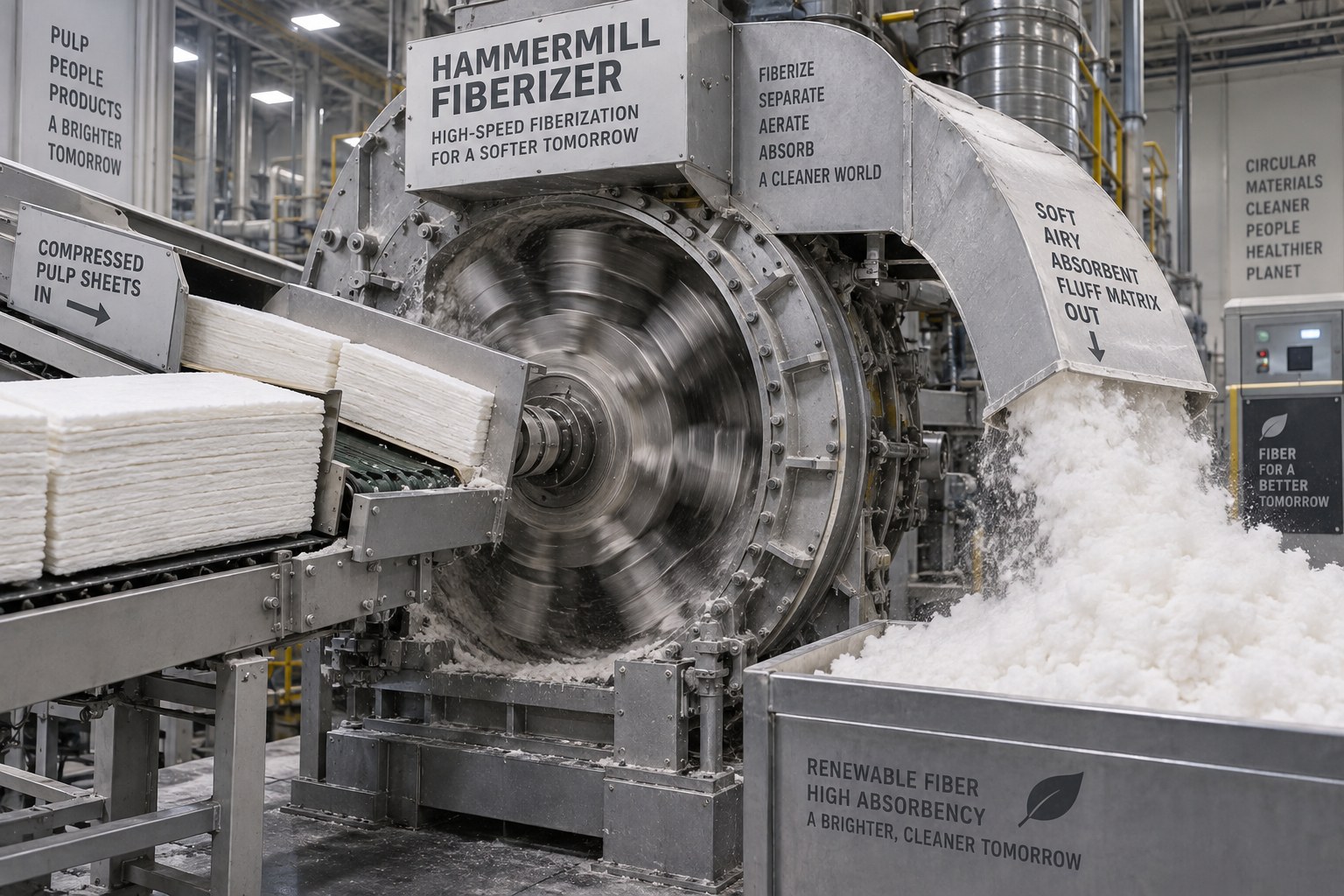
Processing virgin fluff pulp parent rolls into a uniform, high-loft absorbent core requires specialized mechanical defibrillation. On Shenghongda’s 16 full-servo converting lines, 1,500-meter pulp reels are fed into high-speed inline hammermills equipped with carbide-tipped rotary hammers rotating at over 3,200 RPM. The hammermills defibrillate the compacted pulp board cleanly into individualized cellulose fibers at an exceptionally low specific shredding energy below 280 kWh per ton. The defibrillated fibers are aerodynamically suspended in an air-laid vacuum forming drum running at -5.0 kPa, where they are blended with Japanese Sumitomo Seika Chemicals (Japan) superabsorbent polymers at a controlled core density of 0.12 to 0.14 g/cm³.
This air-laid fluff matrix provides an open-pore specific volume exceeding 10.5 cm³/g, ensuring that liquid insults penetrate the core within 1.8 seconds. Chemical purity is verified to be 100% Totally Chlorine-Free (TCF) or Advanced Elemental Chlorine-Free (ECF), with alpha-cellulose content exceeding 86%, ensuring absolute zero residual dioxins or organochlorine bleaching residues in accordance with EPA Method 1613B and ISO 11480 standards.
From a hydraulic physics standpoint, softwood tracheid capillary suction is governed by the Washburn equation, where liquid penetration velocity is proportional to pore radius and surface tension. Weyerhaeuser's long coniferous pine fibers maintain open micro-channels even after repeated liquid saturation cycles, preventing the severe capillary collapse that chokes liquid flow in cheap short-fiber hardwood or mechanically recycled pulps. This sustained capillarity ensures that overnight voids are instantly transported into lower polymer layers, maintaining a dry contact interface against the patient's skin.
| Technical & Chemical Parameter | Low-Grade Recycled / Hardwood Pulp | Commercial Market Standard Softwood | Weyerhaeuser Golden Isles SBSK (Shenghongda) | Clinical & Manufacturing Advantage |
|---|---|---|---|---|
| Average Fiber Length | 0.8 - 1.2 mm (Short fibers) | 2.2 - 2.4 mm (Mixed softwood) | 2.6 - 2.8 mm (100% Virgin Pine) | Maximizes capillary wicking; prevents core cracking |
| Hammermill Defibrillation Energy | > 380 kWh/ton (High knots) | 300 - 350 kWh/ton | < 280 kWh/ton (Clean fiberization) | Eliminates hard fiber knots; ensures cloud-like core |
| Specific Core Volume (Air-Laid) | 6.5 - 8.0 cm³/g (Dense compaction) | 8.5 - 9.5 cm³/g | ≥ 10.5 cm³/g (High-loft matrix) | Accelerates strike-through; holds fluid during surges |
| Alpha-Cellulose Purity | 75% - 80% (High hemicellulose) | 82% - 84% | ≥ 86.0% Pure Alpha-Cellulose | Resists fiber degradation and moisture loss in storage |
| Bleaching Chemistry & Dioxin | Standard Chlorine / Hypochlorite | Elemental Chlorine-Free (ECF) | Totally Chlorine-Free (TCF) / Advanced ECF | Zero dioxin detection; safe for ultra-sensitive skin |
| Forestry Sustainability Standard | Uncertified / Unknown origin | FSC Controlled Wood | FSC-STD-40-004 CoC / EUDR Geolocation | 100% verified legal provenance; zero deforestation |
3. Production Line Defibrillation Engineering, Knot Fractionation & Core Forming Automation
High-speed converting of virgin wood fluff pulp rolls into ultra-uniform absorbent cores requires sophisticated mechanical and aerodynamic engineering. At line speeds reaching 450 to 500 meters per minute, a standard diaper machine processes over 600 kg of compacted wood pulp board per hour. If hammermill shredding pins become worn, or if feed nip roller tensions fluctuate by even a fraction of a millimeter, the pulp board fails to defibrillate cleanly. Incomplete defibrillation produces "knots"—hard, compacted clumps of unseparated wood fibers that feel like rough pebbles inside the diaper core, puncture delicate nonwoven tissue wraps, and cause severe localized core leakage.
To eliminate fiber knotting, Shenghongda’s 16 full-servo converting lines utilize Japanese Zuiko dual-rotor carbide hammermills with automated electronic fiber-fractionation air loops. Compacted pulp rolls are fed into the hammermill via dual servo-driven tungsten-carbide nip rollers governed by real-time web tension load cells. As the counter-rotating hammers disintegrate the pulp board, high-velocity centrifugal airflow conveys the fiber stream across an aerodynamic classification screen. Fully individualized tracheid fibers pass seamlessly into the vacuum forming drum, while any dense fiber bundles or knot particles exceeding 1.2 mm are automatically recycled back into the primary shredding chamber for secondary micro-milling.
Inside the continuous vacuum forming drum, negative air pressure (-5.0 to -6.5 kPa) draws the fluidized softwood fibers into contoured 3D core pockets. Shenghongda’s forming tooling incorporates precision CNC-machined suction screens that deposit a thicker, high-density reservoir in the anatomical wetting zone while gradually tapering toward the front and rear chassis margins. Automated radiometric beta gauges continuously scan the forming drum at 100 Hz, measuring dry basis weight across the entire pad width within a tight tolerance of ±1.5 g/m². This aerodynamic core forming ensures that every single diaper unit exhibits identical capillary suction dynamics and anatomical fit.
Inline quality assurance is maintained by multi-camera Cognex high-speed digital machine vision systems equipped with polarized strobe lighting. High-speed optical algorithms inspect 100% of the continuous core ribbon in real-time, verifying:
- Core Density Uniformity: Radiometric imaging confirms continuous fiber dispersion without localized thin spots, core cracks, or hollow cavities.
- Fiber Knot Detection: High-resolution optical sensors detect hard unseparated pulp knots down to 0.4 mm² surface area.
- Tissue Wrap Sealing: Verifying that the 14 g/m² wet-strength tissue carrier completely encapsulates the fluff matrix with a continuous 15 mm overlap seam.
- Core Pocket Lateral Alignment: Verifying that the absorbent pad is centered over the backsheet within ±1.0 mm of machine centerline.
4. Analytical Laboratory Verification, Chemical Purity & CNAS Testing Regimes
Documentary forestry certificates represent only the baseline of raw material quality governance; physical, chemical, and microbiological testing in an accredited laboratory environment is vital to verify batch-to-batch fluff pulp consistency. Operating in strict conformance with CNAS National Accreditation and ISO/IEC 17025 Accredited laboratory management benchmarks, Shenghongda’s in-house Testing and Analytical Center conducts continuous batch-by-batch physical, chemical, and biological verification of all incoming fluff pulp deliveries.
Incoming parent rolls of Weyerhaeuser Company (USA) Golden Isles SBSK pulp are sampled in accordance with ISO 186 protocols. Fiber morphology and length distribution are quantified using automated optical fiber quality analyzers (ISO 16065-1), confirming an average fiber length between 2.6 and 2.8 mm and fines content (<0.2 mm) strictly below 4.5%. Pulp moisture content is determined via automated infrared thermogravimetric balances in accordance with ISO 638, verifying moisture remains strictly within 7.5% to 8.5%. If moisture exceeds 9.0%, fiberization energy spikes and hammermill knot counts rise; if moisture falls below 6.5%, fibers become brittle and fracture into non-functional dust.
Chemical purity testing focuses on verifying the total absence of toxic bleaching residues and environmental contaminants. Pulp samples undergo solvent extraction and high-resolution Gas Chromatography-Mass Spectrometry (GC-MS) screening in accordance with EPA Method 1613B and ISO 11480, confirming that extractable organic halogens (AOX) remain strictly undetectable below 0.01 mg/kg and 2,3,7,8-TCDD dioxin toxicity equivalents remain below 0.1 parts per trillion (ppt). Intrinsic viscosity testing conducted in cupriethylenediamine (CED) solution under ISO 5351 confirms cellulose degree of polymerization (DP > 1,100), certifying that harsh chemical bleaching has not degraded natural fiber molecular strength.
Full finished article absorbency is evaluated using the ISO 11948-1 (Rothwell Method) Rothwell protocol in a 0.9% physiological saline bath, confirming that adult diaper cores achieve between 1,800 ml and 3,500 ml total retention depending on target SKU specifications. Surface rewet under mechanical load measured in accordance with EDANA NWSP 070.1.R2 protocols remains consistently below 0.05 grams following repeated 100 ml saline insults. Microbiological testing conducted in our Class 10,000 analytical cleanroom confirms total aerobic microbial counts strictly below 20 CFU/g in accordance with GB 15979, USP <61>, and USP <62> requirements, with zero detection of pathogenic bacteria.
| Procurement Factor | Spot-Market Commodity Sourcing | Shenghongda Long-Term Contract (Weyerhaeuser) | Commercial Advantage for Importers |
|---|---|---|---|
| Price Stability & Volatility Risk | Exposed to quarterly ±30% price spikes | Long-term index-linked fixed pricing collars | Guarantees 12-month fixed export pricing for B2B buyers |
| Supply Security During Crises | Vulnerable to mill force majeure & shortages | Priority tier-1 off-take allocation guarantees | Zero production downtime; 100% on-time container delivery |
| EUDR Regulatory Geolocation | Vague declarations; high customs risk | Verified WGS84 polygon GPS plot coordinates | 100% green-channel customs clearance at European ports |
| Fiber Quality & Core Performance | Mixed hardwood/recycled; core collapse risk | 100% Virgin Weyerhaeuser SBSK Softwood | Superior wicking speed (<1.8s) and ultra-low rewet (<0.05g) |
| Container Payload (40HQ) | 70,000 - 74,000 pcs (Low compression) | 92,000 - 96,000 pcs (High-density vacuum pack) | +28% higher piece count; $0.024/pc freight savings |
| Trade Credit & Financing Terms | Strict cash-in-advance before production | Sinosure Open Account (OA) 30/60/90 days | Bridges working capital gap during maritime transit |
5. Commercial Economics, Ocean Freight Logistics & Landed Cost Optimization
In high-volume absorbent hygiene procurement, the commercial impact of raw material selection reverberates directly through container stowage economics and international ocean freight costs. Because virgin softwood fluff pulp features exceptional mechanical fiber length (2.6-2.8 mm) and high lumen spring-back elasticity, cores formulated with Weyerhaeuser SBSK pulp can withstand intense mechanical compression without suffering structural fiber fracture or loss of void volume. This elasticity enables Shenghongda to implement proprietary high-density hydraulic vacuum packaging protocols that dramatically reduce ocean transport overhead.
Using automated dual-stage hydraulic compression packers, Shenghongda evacuates ambient air from the open-pore pulp-SAP core over an 8-second cycle. This allows a 40-foot High Cube (40HQ) ocean container to accommodate between 92,000 and 96,000 adult taped diapers or up to 410,000 baby diapers—an increase in payload density of more than 28% compared to commodity market competitors who ship uncompressed boxes containing only 70,000 to 74,000 adult units. When shipping from our deep-water export gateways at Xiamen Port (UN/LOCODE: CNXMN) and Quanzhou Port (UN/LOCODE: CNQZ) to major international discharge hubs such as Valencia, Rotterdam, Hamburg, Los Angeles, and Manzanillo, this volumetric packaging density reduces landed ocean freight costs by $0.018 to $0.026 USD per unit.
To eliminate port customs friction for European and Latin American buyers, Shenghongda's export documentation desk automatically generates verified EUDR Due Diligence Statements (DDS) through the EU TRACES-NT digital portal 14 days prior to vessel arrival, alongside preferential Certificates of Origin (such as China-Chile FTA Form F and China-Peru FTA Form F) that grant zero or reduced tariff entry upon port discharge.
To insulate overseas clients from sudden international shipping disruptions, Shenghongda maintains a strategic inventory buffer of over 3,000 metric tons of Weyerhaeuser virgin fluff pulp stored in temperature-controlled bonded warehouses adjacent to Xiamen Port. This raw material buffer enables our plant to fulfill high-volume hospital tender orders and emergency replenishment requests without waiting for transpacific pulp vessel transits, guaranteeing uninterrupted converting production throughout global supply shocks.
Furthermore, Shenghongda provides overseas clients with comprehensive trade liquidity support backed by China Export & Credit Insurance Corporation (Sinosure). For established retail chains, medical tender contractors, and healthcare distributors with audited financial standing, Shenghongda extends flexible credit terms, including Open Account (OA) 30, 60, and 90-day settlement structures. Under Sinosure underwriting, overseas buyers defer capital outlay until containers have safely cleared destination customs and reached regional distribution centers, optimizing cash flow and working capital efficiency.
6. Cleanroom Environmental Control, Bioburden Governance & ISO 13485 Standards
The handling and converting of virgin wood fluff pulp in personal hygiene manufacturing requires extraordinary environmental climate control. Wood pulp parent rolls are naturally hygroscopic; if raw material storage or converting workshop environments are exposed to unmanaged atmospheric humidity, pulp fibers absorb ambient moisture before entering the hammermill. Moist pulp fibers resist clean mechanical defibrillation, causing excessive knot generation, hammermill motor overheating, and severe weight fluctuations across finished product cores. Operating in strict alignment with ISO 13485:2016 Medical Devices Quality Management System standards, Shenghongda maintains strict climate and contamination control across its entire 8,000 square meter Quanzhou manufacturing complex.
All 16 full-servo converting lines are enclosed within a certified Class 100,000 cleanroom workshop (equivalent to ISO Class 8 under ISO 14644-1). Centralized industrial HVAC dehumidification systems continuously maintain workshop ambient temperature between 20°C and 24°C and relative humidity strictly between 45% and 60%, preventing electrostatic cling and eliminating hygroscopic clumping of raw polymer granules. The cleanroom operates under continuous positive air pressure differentials (+15 to +25 Pascals) relative to surrounding staging zones, preventing the infiltration of unconditioned outdoor dust, environmental humidity, and airborne insects.
Incoming air undergoes three-stage filtration—coarse pre-filters, medium bag filters, and terminal High-Efficiency Particulate Air (HEPA) filters delivering an air exchange rate of more than 20 cycles per hour. Operators entering the converting floor must pass through automated three-stage airlocks, don lint-free static-dissipative jumpsuits, hairnets, and sterile nitrile gloves, and complete a 30-second automated high-velocity air shower cycle. Daily microbial monitoring is executed using active air samplers, settle-plate nutrient agar sedimentation, and contact rodac swabs across conveyor belts, rotary cutting dies, and packaging chutes. Across all commercial production lots, our total viable aerobic microbial bioburden is guaranteed below 20 CFU/g—a level tenfold cleaner than the 200 CFU/g limit permitted by international consumer hygiene standards—with absolute zero detection of Staphylococcus aureus, Pseudomonas aeruginosa, or fungal contaminants.
7. Strategic Sourcing Due Diligence Roadmap & Buyer Action Checklist for Pulp Auditing
For international hygiene brand owners, healthcare tender managers, and procurement executives seeking to evaluate a prospective manufacturer’s fluff pulp supply chain and regulatory compliance, Shenghongda recommends the following 7-step operational due diligence roadmap:
- Step 1: Audit Pulp Tier-1 Supply Contracts & FSC Provenance
Demand verified documentation proving direct procurement contracts with tier-1 global pulp producers (Weyerhaeuser Company (USA) Golden Isles). Request valid FSC (Forest Stewardship Council) Chain of Custody certificates under FSC-STD-40-004 V3-1 and verify mill origin credentials.
- Step 2: EUDR WGS84 Geolocation & TRACES-NT Portal Verification
Require certified evidence of satellite GIS geolocation data for all forest harvest plots harvested post-December 31, 2020. Confirm the manufacturer’s technical capability to submit automated Due Diligence Statements (DDS) into the EU TRACES-NT system.
- Step 3: Laboratory Fiber Morphology & Knot Count Benchmarking
Request certified laboratory test reports under ISO 16065-1 verifying average fiber length (≥2.6 mm), alpha-cellulose content (≥86%), and knot counts (<0.5%). Confirm that total chlorine-free (TCF/ECF) bleaching reports verify zero detectable dioxins.
- Step 4: Converting Line Hammermill & Fiberization Inspection
Inspect the manufacturing facility’s converting machinery: verify high-speed inline hammermills running under 280 kWh/ton with air-laid forming drums that prevent fiber knotting and core clumping.
- Step 5: High-Density Container Loading & Sinosure Credit Setup
Collaborate with Shenghongda's logistics engineers to simulate high-density vacuum compression load plans for 40HQ ocean containers. Finalize maritime shipping schedules from Xiamen Port and apply for Sinosure Open Account (OA) credit facilities to optimize working capital during product rollout.
- Step 6: Ongoing Fiber Resilience & Wet-Back Quality Surveillance
Establish structured quarterly quality reviews tracking core integrity under patient movement, inline basis weight standard deviations, and container arrival conditions. Shenghongda provides full transparency, factory batch logs, and third-party CoAs for every production run.
- Step 7: Annual Forestry Environmental Audit & Lifecycle Reporting
Conduct annual environmental due diligence audits reviewing forestry supplier replanting ratios, Scope 3 greenhouse gas emissions, and ISO 14001 certification renewals, ensuring continuous alignment with European corporate sustainability reporting directives (CSRD).