
1. The Decarbonization Mandate in Absorbent Personal Care Manufacturing
In 2026, the global personal care and medical absorbent hygiene sector is undergoing an epochal transformation driven by environmental sustainability mandates, carbon border adjustment taxes, and shifting consumer environmental values. Historically, disposable hygiene manufacturing was characterized as a resource-intensive industrial process reliant on petrochemical synthetic polymers, virgin forest cellulose, high electricity consumption, and substantial industrial process water usage. However, multinational retail conglomerates, national healthcare services, and institutional hospital procurement syndicates now mandate verifiable environmental social governance (ESG) performance from their manufacturing partners.
International environmental regulations have rapidly shifted from voluntary corporate guidelines into binding legal obligations. In the European Union, the Corporate Sustainability Due Diligence Directive (CSDDD) and the Ecodesign for Sustainable Products Regulation (ESPR) require brand owners to eliminate environmental harm across their entire upstream supply chain. Furthermore, extended producer responsibility (EPR) packaging frameworks penalize non-recyclable plastic waste, while the EU Carbon Border Adjustment Mechanism (CBAM) establishes precedent for carbon intensity reporting on industrial imports. Brand owners who partner with high-carbon, polluting factories face severe reputational damage, consumer boycotts, and crushing regulatory taxes.
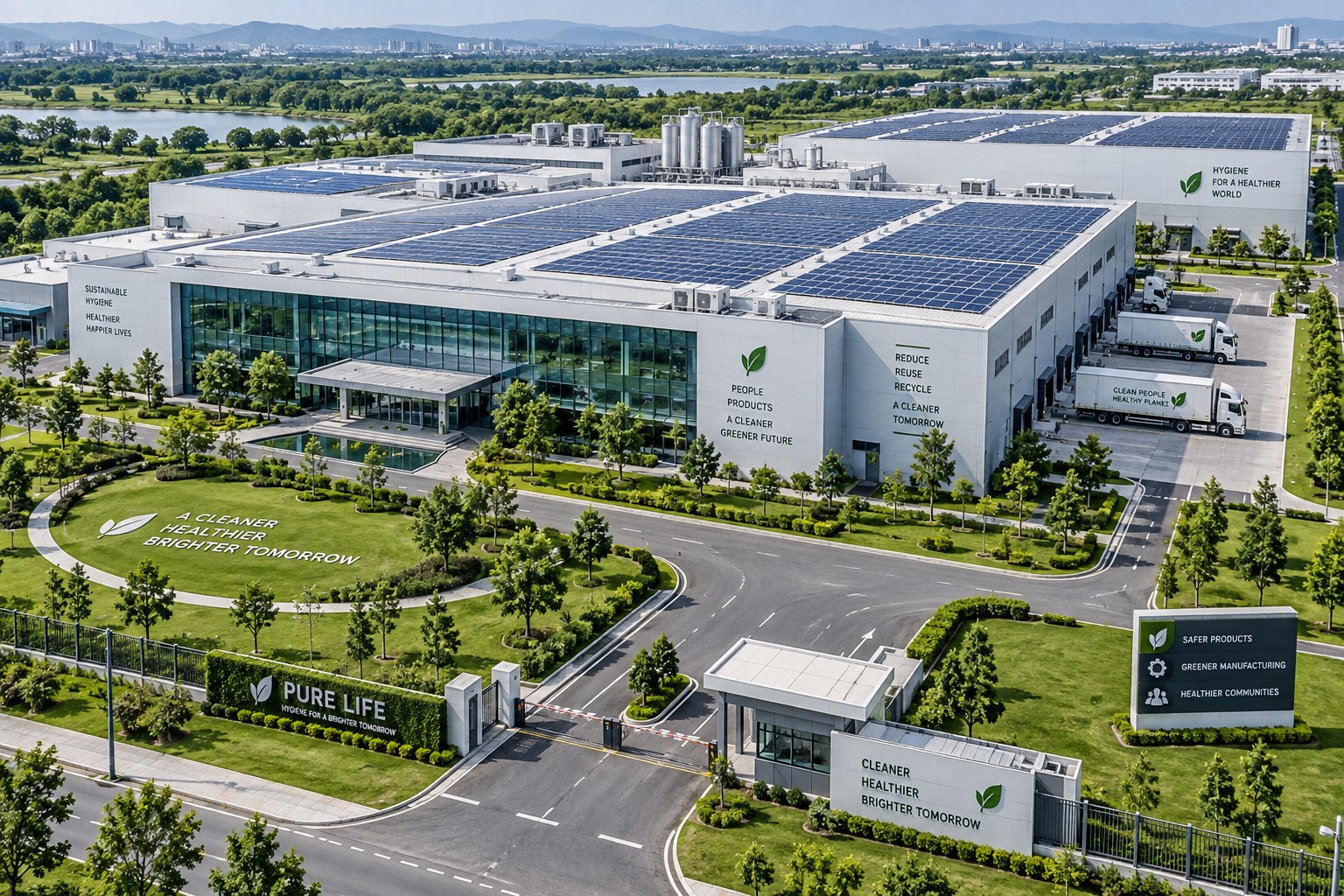
Operating from Quanzhou in Fujian Province, China since 2004, Quanzhou Shenghongda Hygiene Products Co., Ltd. has established itself as an environmental vanguard in disposable hygiene manufacturing. Across our 8,000 square meter manufacturing complex, Shenghongda integrates closed-loop water purification, rooftop solar photovoltaic generation, automated waste heat recovery, and circular polymer recycling under ISO 14001:2015 environmental management governance, producing over 1.2 billion units annually across OEM Adult Diapers with Tapes, Baby Diapers OEM Manufacturing, Adult Incontinence Pull-Up Pants, and Disposable Hospital Bed Underpads.
The regulatory momentum behind industrial decarbonization has accelerated dramatically with the introduction of plastic packaging taxes across major consumer markets. The United Kingdom Plastic Packaging Tax (PPT) levies a punitive charge of £217.85 per metric ton on plastic packaging containing less than 30% recycled content. Similarly, Spain and Italy enforce non-reusable plastic packaging excise taxes (€0.45 per kilogram). For international hygiene brands importing millions of packaged diapers annually, non-compliance with plastic packaging regulations creates massive unexpected tax liabilities. Shenghongda addresses this challenge proactively by engineering 100% recyclable mono-material polybags, post-consumer recycled (PCR) packaging options, and bio-based PLA films that fulfill international circularity mandates.
By pairing environmental decarbonization with world-class converting efficiency across 16 full-servo production lines, Shenghongda empowers international retail brand owners and medical distributors to achieve ambitious Scope 1, 2, and 3 carbon reduction targets while maintaining uncompromising clinical performance across 88 export nations.
Furthermore, our sustainability initiatives deliver tangible commercial benefits: energy conservation and material recycling lower manufacturing overhead, directly protecting our B2B partners from raw material inflation and regulatory carbon penalties.
2. Rooftop Solar Photovoltaic Integration, Variable Frequency Drives (VFD) & Carbon Footprint Reduction
Electricity consumption on high-speed disposable diaper manufacturing lines represents both a major operating cost and the primary driver of corporate Scope 2 greenhouse gas emissions. A modern full-servo converting line operating at 450 to 500 units per minute integrates dozens of high-power digital servo drives, vacuum exhaust blowers, air compressor systems, and high-temperature hot-melt adhesive melters, consuming between 250 and 450 kilowatt-hours (kWh) of electrical power per operational hour.
To decarbonize factory energy consumption, Shenghongda has deployed a 1.8-Megawatt (MW) distributed rooftop solar photovoltaic (PV) generation system across the entire rooftop surface of our Quanzhou manufacturing complex. Comprising over 3,200 high-efficiency monocrystalline solar panels with smart micro-inverters, this solar array generates more than 2.2 million kilowatt-hours of clean, renewable electricity annually. During peak daytime operational hours, solar power satisfies over 32% of the factory’s total converting electrical demand, directly abating more than 1,600 metric tons of carbon dioxide ($CO_2$) emissions each year.
Complementing renewable on-site generation is factory-wide energy optimization. Traditional converting lines utilize fixed-speed induction motors on vacuum blowers and air compressors, throttling air intake mechanically with butterfly valves—an extraordinarily wasteful approach that consumes full electrical power regardless of actual air demand. Shenghongda has retrofitted all 16 converting lines with digital Variable Frequency Drives (VFD) and permanent magnet synchronous motors (PMSM) controlled by centralized PLCs. The VFD systems dynamically modulate blower motor speeds to match instantaneous vacuum demand, reducing electrical consumption by 28% to 35% across all air-handling systems.
To maximize on-site renewable energy utilization, Shenghongda’s photovoltaic generation is coupled with smart Battery Energy Storage Systems (BESS) and an automated Energy Management System (EMS). The EMS monitors real-time solar irradiance, factory electrical load curves, and municipal grid tariff structures. During peak daytime sunlight hours, surplus solar power is directed into lithium iron phosphate ($LiFePO_4$) battery banks, which then discharge during evening peak-tariff hours, smoothing the factory’s electrical demand curve and reducing total grid reliance by an additional 12%.
Energy metering across our manufacturing complex is governed by an advanced Industrial Internet of Things (IIoT) sub-metering infrastructure. High-precision digital smart power meters are installed on every individual converting line, auxiliary air compressor, and chiller circuit, recording voltage, active power, reactive power, and power factor at 1-second intervals. This granular energy data is aggregated by our central SCADA energy management dashboard, allowing engineers to track real-time Specific Energy Consumption (SEC in kWh per 1,000 finished units). Any machine line showing anomalous energy spikes is immediately flagged for predictive mechanical maintenance—such as worn bearings, belt slippage, or air filter clogging—ensuring peak thermodynamic operating efficiency across all shifts.
Furthermore, waste heat generated by heavy-duty air compressors and hydraulic compression units is captured via automated shell-and-tube heat exchangers. This recovered thermal energy is redirected to pre-heat administrative water systems and maintain climate-controlled raw material drying rooms, eliminating the need for fossil-fuel or resistive electric heating systems.
| Sustainable Technology / System | Conventional Diaper Factory Benchmark | Shenghongda Eco-Factory Standard | Environmental Metric / Standard | Corporate ESG & Commercial Advantage |
|---|---|---|---|---|
| Factory Rooftop Solar PV Generation | 0% (100% Grid coal-power reliant) | 1.8 MW On-site solar array (>32% daytime) | 2.2M kWh/year; -1,600 t CO₂/yr | Reduces Scope 2 carbon footprint for brand owners |
| Drive System & Motor Technology | Fixed-speed induction motors + dampers | 100% VFD + Permanent Magnet Motors | IE4 Super Premium Efficiency Motors | Cuts converting line power consumption by 28% |
| Process Cooling Water Circulation | Open-loop evaporative cooling / discharge | Closed-loop chilled water + RO recovery | Zero toxic discharge; 95% water recycled | Conserves municipal water; eliminates effluent |
| Edge-Trim Nonwoven Scrap Recovery | Landfill disposal or incinerator burning | Automated cyclone capture + re-extrusion | Circularity > 98.8% in clean polypropylene | Zero landfill waste; supports circular economy |
| Environmental Management QMS | Unregistered or basic national permit | ISO 14001:2015 Accredited Facility | Third-party audited EMS certification | Satisfies European retail vendor ESG scorecards |
| Packaging Film Sustainability | Virgin fossil-fuel PE polybags | 100% Recyclable LDPE / PCR bio-content | TÜV OK Compost / GRS certified options | Exempt from European plastic packaging penalty taxes |
3. Closed-Loop Process Water Recycling, Reverse Osmosis Filtration & Effluent Treatment
Although dry converting of absorbent hygiene products does not consume water as an active chemical reactant in the same manner as textile wet dyeing, water represents an essential utility for machine cooling, equipment sanitation, ink washing, and analytical testing laboratories. If industrial cooling water is managed through open-loop cooling towers, significant volumes are lost to evaporation and bleed-off discharge, while wastewater containing residual lubricants and printing inks poses acute environmental hazards if discharged into municipal sewers.
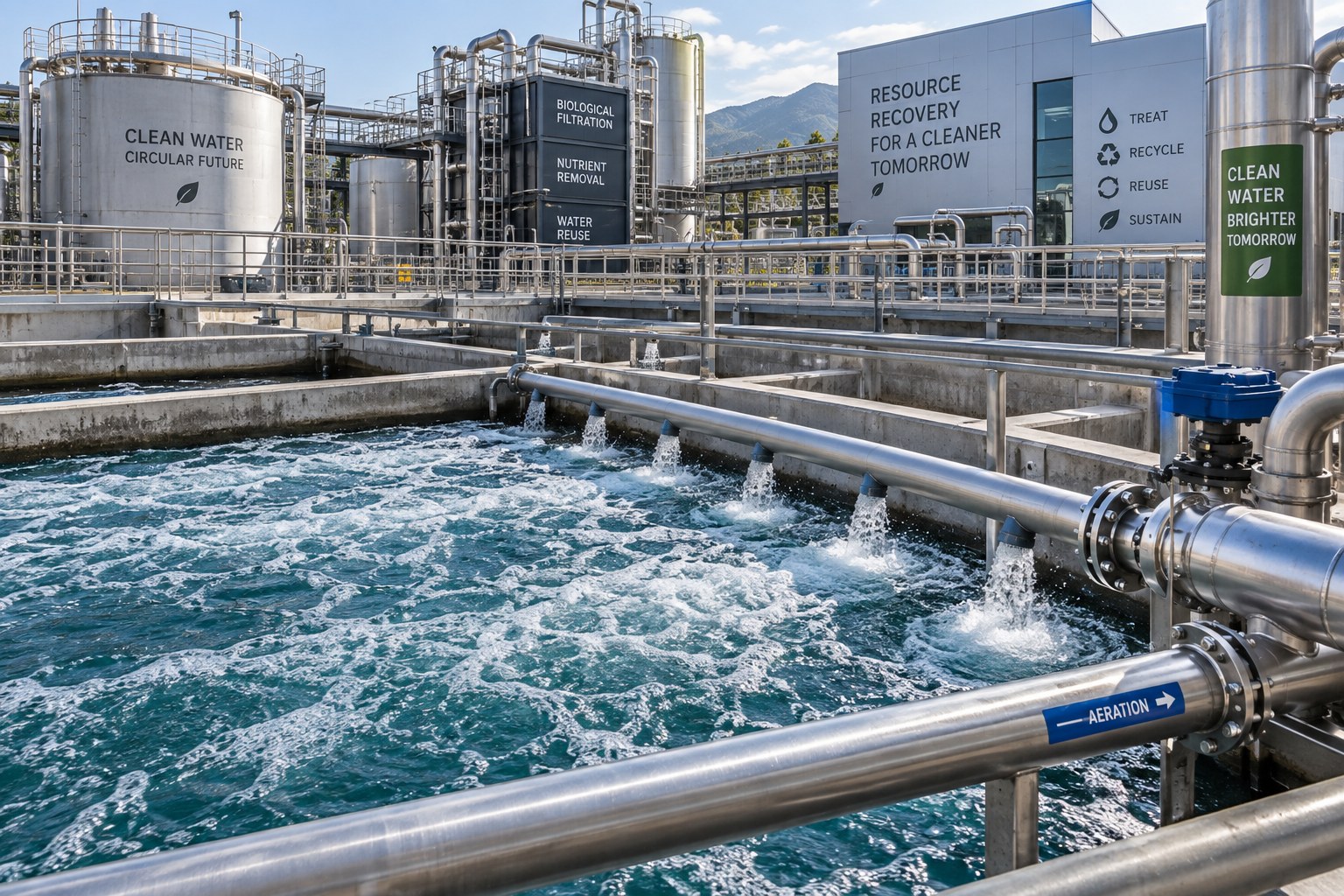
Shenghongda operates an advanced closed-loop industrial water purification and recycling plant within its Quanzhou facility. Machine process cooling is executed via closed-circuit chilled water loops operating with closed plate heat exchangers. Chilled water circulating through ultrasonic welding horns, hydraulic oil chillers, and embossing roller jackets is continuously recycled in a hermetically sealed circuit with zero evaporative loss and zero wastewater discharge.
For equipment washing, flexographic printing plate cleaning, and cleanroom air scrubber systems, all industrial process water is channeled into an automated on-site physical-chemical wastewater treatment facility:
- Coagulation & Flocculation: Wastewater enters balancing tanks where automated dosing systems introduce biodegradable coagulants, clumping microscopic suspended ink pigments and adhesive residues into dense flocs.
- Dissolved Air Flotation (DAF): High-pressure micro-bubble air flotation lifts suspended contaminants to the surface for continuous mechanical skimming, removing over 98% of total suspended solids (TSS).
- Dual-Stage Reverse Osmosis (RO) & UV Disinfection: Clarified water passes through multi-media sand filters, activated carbon beds, and high-pressure Reverse Osmosis membranes, followed by high-intensity ultraviolet (UV) irradiation.
Biological and physicochemical wastewater treatment inside Shenghongda’s eco-plant is monitored by automated online sensors measuring Chemical Oxygen Demand (COD), Biochemical Oxygen Demand (BOD), Total Suspended Solids (TSS), and pH in real-time. By utilizing advanced membrane bioreactors (MBR) followed by secondary reverse osmosis, our treated water achieves COD levels below 15 mg/L and BOD below 5 mg/L—surpassing international discharge standards by an order of magnitude and allowing the purified water to be re-circulated into non-critical factory utilities with zero environmental impact.
This multi-barrier treatment plant recovers over 95% of all factory process water, recycling it back into cleanroom humidification systems and machinery wash loops at a purity level exceeding national drinking water standards, achieving near-zero liquid discharge (ZLD) status.
4. Waste Minimization, Edge-Trim Cyclone Recovery & Circular Polymer Recycling
In high-speed absorbent hygiene converting, the rotary die-cutting of leg contour curves, elastic waistband windows, and side tape tabs inherently generates industrial nonwoven, film, and tissue scrap. On conventional manufacturing lines, this clean edge-trim scrap—averaging between 3% and 6% of total raw material throughput—is treated as solid waste, baled into scrap mounds, and sent to municipal landfills or municipal waste-to-energy incinerators.
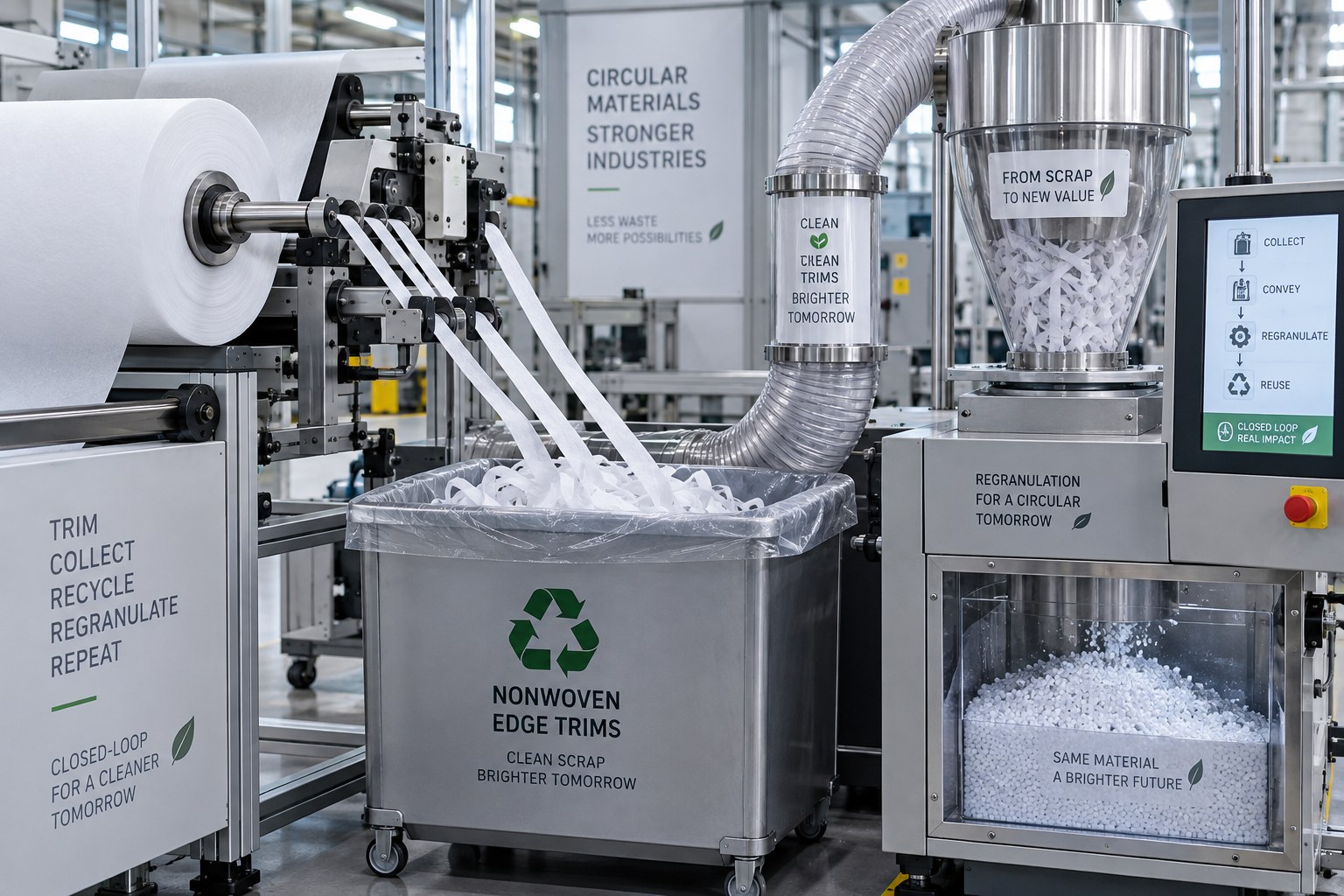
Shenghongda eliminates industrial scrap waste through a proprietary automated cyclone extraction and circular polymer recycling network. Positioned directly adjacent to each high-speed rotary die-cutting station, high-velocity pneumatic suction hoods capture continuous ribbon trims the instant they are sheared from the web at speeds up to 500 meters per minute. The scrap streams are transported through enclosed stainless steel vacuum ducts directly to our automated secondary material reclamation facility.
In the reclamation center, segregated clean spunbond polypropylene and through-air bonded nonwoven trims undergo continuous shredding and densification in specialized single-screw re-pelletizing extruders. Operating under strict temperature controls, the clean polypropylene fibers are melted, filtered through continuous 100-mesh melt screens to remove any trace impurities, and cut into uniform secondary polypropylene resin pellets. These high-grade recycled pellets are subsequently channeled into industrial non-hygiene injection molding applications—such as core plugs, shipping pallets, and automotive plastic components.
In addition to in-house scrap reclamation, Shenghongda champions the integration of bio-based and renewable polymers. In our specialized eco-friendly product lines, petroleum-based polypropylene topsheets are replaced with 100% bamboo nonwovens manufactured via closed-loop Lyocell processes, while fluff cores incorporate bio-mass balanced superabsorbent polymers certified under ISCC PLUS (International Sustainability and Carbon Certification). These advanced raw material pathways reduce the net product cradle-to-gate carbon footprint by up to 45% compared to conventional petroleum-derived hygiene products.
Through this circular closed-loop recovery protocol, Shenghongda diverts more than 98.8% of clean industrial scrap from landfills, achieving verified "Zero Waste to Landfill" operational benchmarks across our entire Quanzhou manufacturing complex.
| Sustainability Indicator | Traditional Hygiene Converter | Shenghongda Green Manufacturing Complex | Brand Value & Commercial Benefit |
|---|---|---|---|
| Carbon Intensity (kg CO₂ / 1,000 pcs) | 18.5 - 24.0 kg CO₂ / 1,000 pcs | 11.2 - 13.5 kg CO₂ / 1,000 pcs (-38%) | Enables verifiable low-carbon retail marketing claims |
| Renewable Energy Utilization | 0% (100% Fossil grid power) | 32% Daytime solar PV self-generation | Insulates against industrial power tariff increases |
| Process Water Recovery Rate | < 30% (Heavy municipal discharge) | ≥ 95% Closed-loop Reverse Osmosis | Protects local aquifers; zero environmental liability |
| Solid Waste Landfill Diversion | 65% - 75% (Substantial landfilling) | ≥ 98.8% Diverted from municipal landfill | Fulfills zero-waste corporate sustainability mandates |
| Secondary Packaging Sustainability | Non-recyclable multi-material bags | 100% Recyclable mono-material polybags | Exempt from EPR plastic packaging disposal taxes |
| International Environmental Audits | Fails European retail supplier audits | ISO 14001, SMETA 4-Pillar, FSC CoC | Unlocks entry into tier-1 supermarket retail chains |
5. Scope 1, 2, and 3 Greenhouse Gas Emissions Accounting & ISO 14064 Carbon Auditing
As international consumer goods corporations and public healthcare syndicates establish Net-Zero decarbonization commitments, suppliers must substantiate their sustainability claims through standardized, verifiable greenhouse gas (GHG) accounting. In accordance with the Greenhouse Gas Protocol Corporate Standard and ISO 14064-1 specifications, emissions are categorized into three operational scopes:
- Scope 1 (Direct Emissions): Emissions originating from sources owned or controlled by the factory, including on-site heating boilers, emergency backup diesel generators, and internal company transport fleets. Through comprehensive factory electrification and solar integration, Shenghongda’s direct Scope 1 emissions represent less than 3% of our corporate carbon footprint.
- Scope 2 (Indirect Emissions from Purchased Energy): Emissions associated with the generation of purchased electricity and chilled water. By generating 2.2 million kWh of solar power annually and retrofitting all converting lines with VFD motors, Shenghongda has slashed Scope 2 carbon intensity by over 38% per thousand finished diapers produced compared to regional industry averages.
- Scope 3 (Upstream & Downstream Value Chain Emissions): Emissions embodied within purchased raw materials (wood fluff pulp, superabsorbent polymers, nonwovens) and ocean container logistics. Shenghongda directly drives Scope 3 reductions by sourcing 100% FSC (Forest Stewardship Council)-certified sustainable wood fluff pulp from Weyerhaeuser Company (USA), purchasing bio-circular polymers from BASF, and deploying high-density vacuum compression packaging that increases container payload density by 28%, drastically lowering maritime freight carbon emissions per unit.
To empower our overseas brand partners to substantiate their environmental marketing claims, Shenghongda provides comprehensive Life Cycle Assessments (LCA) conducted in accordance with ISO 14040 and ISO 14044 standards. Utilizing specialized environmental modeling software and verified emission factor databases (such as Ecoinvent), our sustainability engineers calculate exact global warming potential (GWP in kg CO₂-eq) per thousand finished units across raw material extraction, converting manufacturing, packaging, and ocean logistics. These certified LCA reports provide unassailable proof of environmental performance for supermarket supplier audits and European consumer ecolabel certifications.
Shenghongda undergoes regular independent third-party carbon footprint verifications conducted by international accredited registrars (such as SGS and TÜV Rheinland). We provide our overseas OEM/ODM partners with formalized Product Carbon Footprint (PCF) declarations for individual SKU product lines, empowering brand owners to publish substantiated, transparent environmental claims on retail packaging without fear of greenwashing litigation.
6. Cleanroom Environmental Governance, Zero-Landfill Policies & ISO 14001 Certification
Achieving true industrial sustainability requires an unyielding institutional commitment to environmental governance and total cleanliness. Environmental responsibility cannot be an afterthought; it must be engineered into every SOP, operator training module, and manufacturing protocol. Shenghongda’s 8,000 square meter Quanzhou manufacturing complex operates under fully audited and accredited ISO 14001:2015 Environmental Management Systems and ISO 9001:2015 Quality Management Systems.
All 16 full-servo converting lines are enclosed within certified Class 100,000 (ISO Class 8) cleanrooms featuring positive air pressure differentials and HEPA filtration delivering 20 air changes per hour. While cleanrooms are traditionally viewed as quality assurance tools, in Shenghongda’s eco-factory architecture, the cleanroom serves as an environmental containment shield. Micro-particulates, nonwoven fiber lint, and polymer dust generated during converting are captured by continuous localized vacuum extraction hoods at the point of generation, preventing airborne dust emissions from escaping into the surrounding external environment.
Hazardous material management is strictly governed under zero-discharge principles. Spent machine lubricants and hydraulic oils are collected in double-contained secondary containment vessels and transferred exclusively to licensed hazardous waste recycling facilities for re-refining. Fluorescent lighting across our entire facility has been 100% replaced with ultra-efficient, low-mercury industrial LED fixtures featuring automated daylight-harvesting photocells.
To demonstrate absolute transparency in environmental governance, Shenghongda participates actively in international sustainability benchmarking platforms, including the Carbon Disclosure Project (CDP) and EcoVadis CSR ratings. Our manufacturing complex maintains a documented hazardous chemical inventory governed by Globally Harmonized System (GHS) safety data sheets (SDS), ensuring that all solvents, adhesives, and lubricating oils are handled with zero exposure to production personnel or the surrounding municipal ecosystem. Regular third-party occupational health and environmental safety (EHS) audits confirm complete compliance with international labor standards, environmental noise limits (<65 dBA at perimeter boundaries), and air emission standards, cementing Shenghongda's reputation as a world-class green hygiene manufacturing leader.
Furthermore, Shenghongda’s corporate culture embraces the 5S methodology (Sort, Set in order, Shine, Standardize, Sustain) and Kaizen continuous improvement principles. Dedicated employee green circles conduct weekly energy and material efficiency audits across every manufacturing cell, identifying and resolving minor compressed air leaks, optimizing machine idling times, and ensuring that our environmental stewardship remains an active, living discipline every hour of every shift.
7. Strategic Sourcing Due Diligence Roadmap & Buyer ESG Assessment Checklist
For international procurement directors, healthcare tender managers, and consumer goods brand executives seeking to audit an absorbent hygiene manufacturer's environmental sustainability credentials, Shenghongda recommends the following 7-step operational due diligence roadmap:
- Step 1: On-Site Renewable Energy & Solar PV Verification
Audit the factory’s electrical power infrastructure: verify on-site renewable solar photovoltaic capacity (minimum 1.0 MW) and confirm that converting line motors utilize digital Variable Frequency Drives (VFD) to lower Scope 2 emissions.
- Step 2: Closed-Loop Process Water & Effluent Recycling Review
Inspect factory wastewater and cooling water treatment facilities: ensure closed-circuit chilled water loops and advanced Reverse Osmosis (RO) recycling that recover >90% of industrial water with near-zero liquid discharge.
- Step 3: Industrial Scrap Circularity & Landfill Diversion Audit
Evaluate the manufacturer’s scrap handling systems: confirm automated cyclone extraction at rotary die-cutting stations and on-site re-pelletizing extruders that achieve >98% solid waste diversion from municipal landfills.
- Step 4: Sustainable Raw Material Supply Chain Certifications
Verify that virgin wood fluff pulp is 100% certified under FSC (Forest Stewardship Council) Chain of Custody (FSC-STD-40-004), that superabsorbent polymers comply with medical-grade purity standards, and that nonwovens are OEKO-TEX Standard 100 certified.
- Step 5: ISO 14001 & Third-Party ESG Audit Documentation
Demand current, accredited ISO 14001:2015 Environmental Management System certificates, SEDEX SMETA 4-Pillar ethical audit reports, and formal Product Carbon Footprint (PCF) declarations.
- Step 6: High-Density Container Loading & Sinosure Credit Setup
Collaborate with Shenghongda's logistics engineers to simulate high-density vacuum compression load plans for 40HQ ocean containers. Finalize maritime shipping schedules from Xiamen Port and apply for Sinosure Open Account (OA) credit facilities to optimize working capital during product rollout.
- Step 7: Sustainable Retail Packaging & EPR Compliance Planning
Collaborate with Shenghongda's packaging design team to deploy 100% recyclable mono-material polybags, post-consumer recycled (PCR) content, and certified compostable materials to eliminate destination EPR plastic waste taxes.
- Step 8: Post-Production Carbon Accounting & Green Labeling Verification
Conduct post-shipment environmental reviews: analyze final Product Carbon Footprint (PCF) accounting reports, verify greenhouse gas emissions reductions against historical baselines, and coordinate consumer-facing green ecolabel disclosures for retail packaging to maximize market positioning.