
1. The Automation Imperative: Commissioning 3 Next-Generation Zuiko Converting Lines
In May 2026, Quanzhou Shenghongda Hygiene Products Co., Ltd. officially completed the commissioning, dry-cycle testing, and commercial production validation of three brand-new, ultra-high-speed full-servo converting production lines engineered by Japanese machinery titan Zuiko Corporation. Representing a landmark multi-million-dollar capital investment, these state-of-the-art converting platforms expand Shenghongda’s manufacturing complex to 16 full-servo production lines, lifting total annual production capacity beyond 1.2 billion finished units across OEM Adult Diapers with Tapes, Adult Incontinence Pull-Up Pants, Baby Diapers OEM Manufacturing, and Baby Pull-Up Training Pants.
In the modern international personal care and medical device market, contract manufacturing competitiveness is dictated by high operating speeds, microscopic assembly tolerances, and unyielding batch-to-batch repeatability. Overseas retail private label brands and national hospital procurement syndicates cannot tolerate manufacturing defects, inconsistent core thicknesses, or delayed delivery schedules caused by converting line breakdowns. Zuiko Corporation, headquartered in Osaka, Japan, has long been recognized as the preeminent global engineering authority in automated absorbent article converting machinery. By integrating Zuiko’s proprietary electronic motion controllers, precision carbide rotary dies, and automated zero-speed butt splicers, Shenghongda achieves an operational converting speed of 600 pieces per minute on infant diaper lines and 450 pieces per minute on adult brief lines, operating with an Overall Equipment Effectiveness (OEE) exceeding 92%.
Operating inside our 8,000 square meter ISO Class 8 cleanroom facility in Quanzhou, China, these newly commissioned lines operate in full alignment with ISO 13485:2016 Medical Device QMS, US U.S. FDA 21 CFR 880.5270 Good Manufacturing Practices, and European European CE MDR (EU 2017/745) regulations. Sourcing premium raw materials directly from Japanese polymer innovator Sumitomo Seika Chemicals (Japan), American pulp leader Weyerhaeuser Company (USA), and German adhesive specialist Henkel Adhesives (Germany), Shenghongda combines extreme mechanical velocity with medical-grade product integrity, providing our international distribution partners across 88 export nations with unassailable supply chain security.
This expansion directly satisfies the surging international demand for ultra-thin adult incontinence briefs and premium eco-friendly baby training pants, offering dedicated production windows for high-volume multinational brand owners.
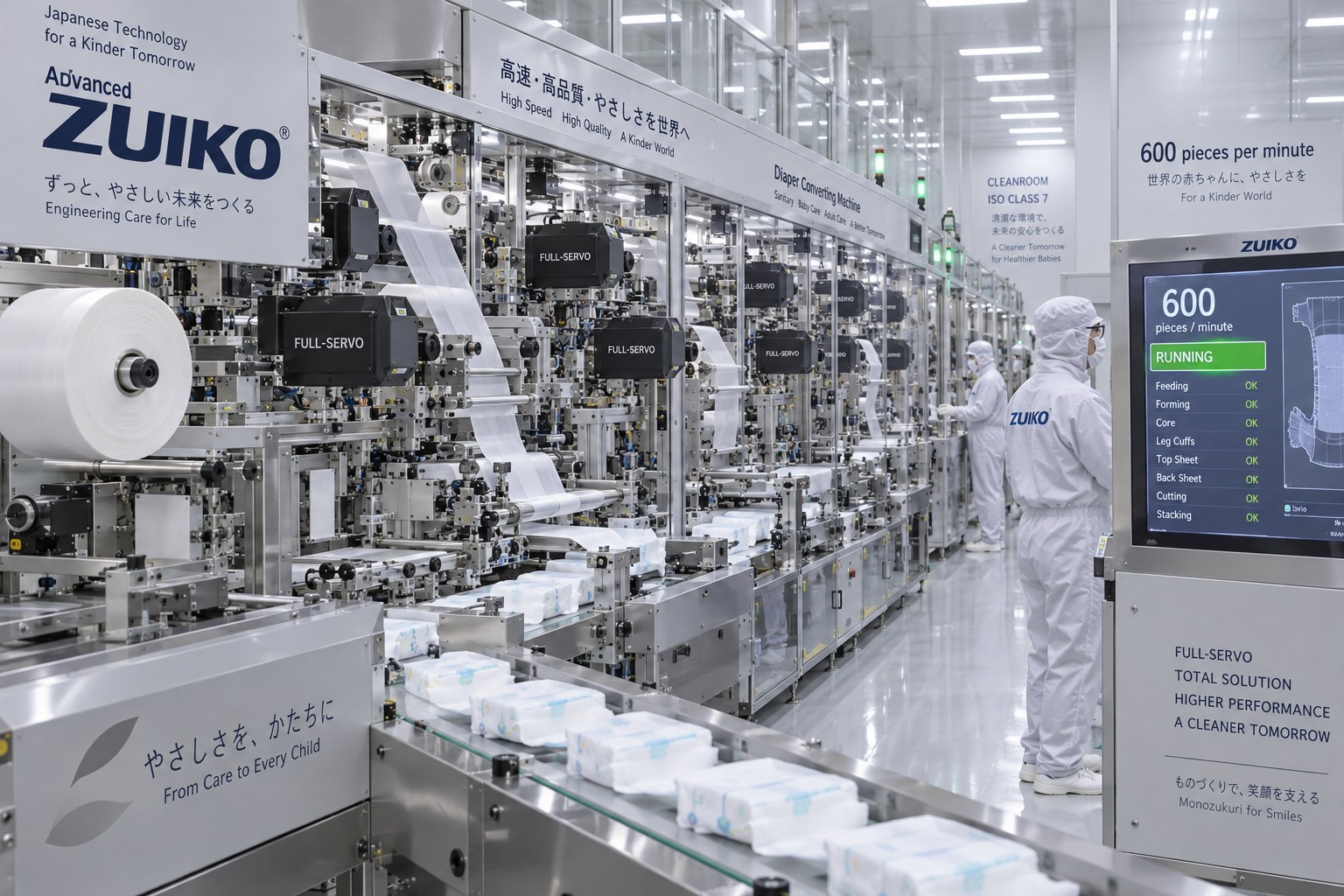
2. High-Speed Kinematics & Mechanical Engineering: 600 Pcs/Min Velocity Under Micro-Tension Control
Operating a converting line at 600 pieces per minute entails moving up to fourteen continuous raw material webs—including spunbond topsheets, virgin fluff pulp ribbons, superabsorbent polymer powder streams, tissue wrappers, Lycra elastic threads, and breathable backsheet films—at linear web velocities surpassing 350 to 500 meters per minute. At these extreme velocities, the physics of web handling presents severe engineering challenges: web inertia, aerodynamic drag, air boundary layer turbulence, and localized friction can induce web wrinkling, lateral wandering, or sudden catastrophic web breaks.
Zuiko resolves these aerodynamic and mechanical challenges through advanced mechatronics and decentralized digital motion synchrony. Rather than utilizing mechanical shafts, gearboxes, or belts, each newly commissioned line incorporates over 60 independent high-torque AC digital servo motors directly coupled to every critical rotating drum, feed roller, and rotary die. Controlled by centralized ultra-fast Programmable Logic Controllers (PLCs) communicating over EtherCAT industrial networks with microsecond cycle synchronization, web tension is continuously measured by high-sensitivity digital load cells and dynamically adjusted down to ±0.1 N/m across fluctuating ambient conditions.
The aerodynamic challenge of high-speed converting is particularly acute in the formation of 3D standing leak barriers and elastic leg cuffs. When four strands of Lycra elastic are laminated between hydrophobic SMS nonwoven webs at 600 pieces per minute, air boundary layers dragged along by the moving web can cause fluttering, misaligning the elastic threads before the ultrasonic bond solidifies. Zuiko engineers resolved this through specialized aerodynamic vacuum transfer plates and positive-pressure air knives that strip away boundary turbulence, holding material webs flat against vacuum drums until bonds are securely formed.
Furthermore, electrostatic charge dissipation is critical at extreme line speeds. Friction between dielectric polymers—such as polypropylene nonwovens and polyethylene backsheets—can generate static charges exceeding 25 kilovolts. High static charges cause webs to cling to steel machine frames and attract airborne dust. The new Zuiko converting platforms incorporate active ionizing air bars (Keyence Corporation) along the entire web path, continuously neutralizing electrostatic charges to under 0.2 kV and maintaining spotless hygienic cleanliness.
Furthermore, automated zero-speed butt splicers on all primary nonwoven and wood pulp unwind stands allow continuous, automated roll changeovers at line speed. When a parent roll approaches exhaustion, the splicer accelerates the new roll to matching web speed, performs a flawless lap-splice cut, and engages the fresh material web in under 0.2 seconds without slowing down the converting line. This eliminates thermal hot-melt glue degradation and web tension spikes, maintaining steady-state thermodynamic equilibrium throughout continuous 24-hour production shifts.
| Technical Machine Parameter | Zuiko ZK-AD800 (Adult Brief Line) | Zuiko ZK-BP600 (Baby Diaper Line) | Zuiko ZK-PU500 (Adult Pull-Up Line) | Quality & Operational Advantage |
|---|---|---|---|---|
| Maximum Mechanical Design Speed | 500 pieces / minute | 700 pieces / minute | 550 pieces / minute | Delivers ultra-high volume scalability for large retail tenders |
| Stable Commercial Operating Speed | 450 pieces / minute | 600 pieces / minute | 480 pieces / minute | Operates with OEE ≥92% and minimal mechanical wear |
| Motion Control Architecture | Full-servo EtherCAT (64 axes) | Full-servo EtherCAT (72 axes) | Full-servo EtherCAT (68 axes) | Micron-accurate electronic phase alignment; zero line shafts |
| Web Tension Regulation Precision | ±0.1 N/m via digital load cells | ±0.1 N/m via digital load cells | ±0.1 N/m via digital load cells | Prevents web breaks, material necking, and wrinkling |
| Rotary Tooling & Die Materials | Tungsten carbide vacuum rotary dies | Tungsten carbide vacuum rotary dies | Tungsten carbide vacuum rotary dies | Zero tool thermal expansion; 50 million cut cycle lifespan |
| Inline Vision Camera Integration | 6 High-Speed Cognex CCD Cameras | 8 High-Speed Cognex CCD Cameras | 6 High-Speed Cognex CCD Cameras | 100% Inline defect scanning with 5ms pneumatic rejection |
3. Ultrasonic Sealing & Micro-Bonding: Eliminating Rigid Adhesives on Waistbands and Side Seams
A premier technical breakthrough featured on the three newly commissioned Zuiko converting lines is the extensive integration of rotary ultrasonic welding technology, replacing traditional hot-melt adhesive spraying on elastic waistbands and tear-away side seams. On conventional converting machinery, securing elastic spandex strands within nonwoven waistbands requires generous coatings of hot-melt adhesive. However, hot-melt adhesives introduce significant consumer drawbacks: they add stiff, inflexible mass to the waistband, create localized chemical odor, and introduce the risk of adhesive bleed-through that can irritate sensitive geriatric or infant skin.
Zuiko’s rotary ultrasonic bonding system utilizes high-frequency acoustic vibrations (20 kHz to 35 kHz) generated by piezoelectric transducers and focused through rotating titanium horns against patterned anvil rolls. As nonwoven webs and Lycra elastic strands pass between the horn and the anvil drum, localized high-frequency mechanical friction generates instantaneous molecular heating within the thermoplastic polypropylene fibers. The polymers fuse together at localized microscopic weld points in milliseconds, without melting adjacent fiber zones or degrading elastic filament tensile recovery.
Ultrasonic side-seaming on our adult and baby pull-up pants delivers three decisive competitive advantages:
- Buttery-Soft Tactile Comfort: Eliminates stiff, scratchy glue seams along the hip joints, providing users with a 100% textile-like, underwear-drape silhouette that completely avoids mechanical friction erythema.
- Consistent Tear-Away Separation Force: Ultrasonic spot-weld geometry is calibrated precisely to deliver a lateral shear bond strength of 22 N to withstand active walking and nocturnal tossing, while providing a clean, effortless peel force of 8 N when caregivers tear the side seams during bedside changing.
- Zero Chemical Odor & VOC Emissions: Operating without hot-melt glue in the waistband zone eliminates volatile organic compounds and chemical odors, ensuring compliance with strict European consumer safety standards.
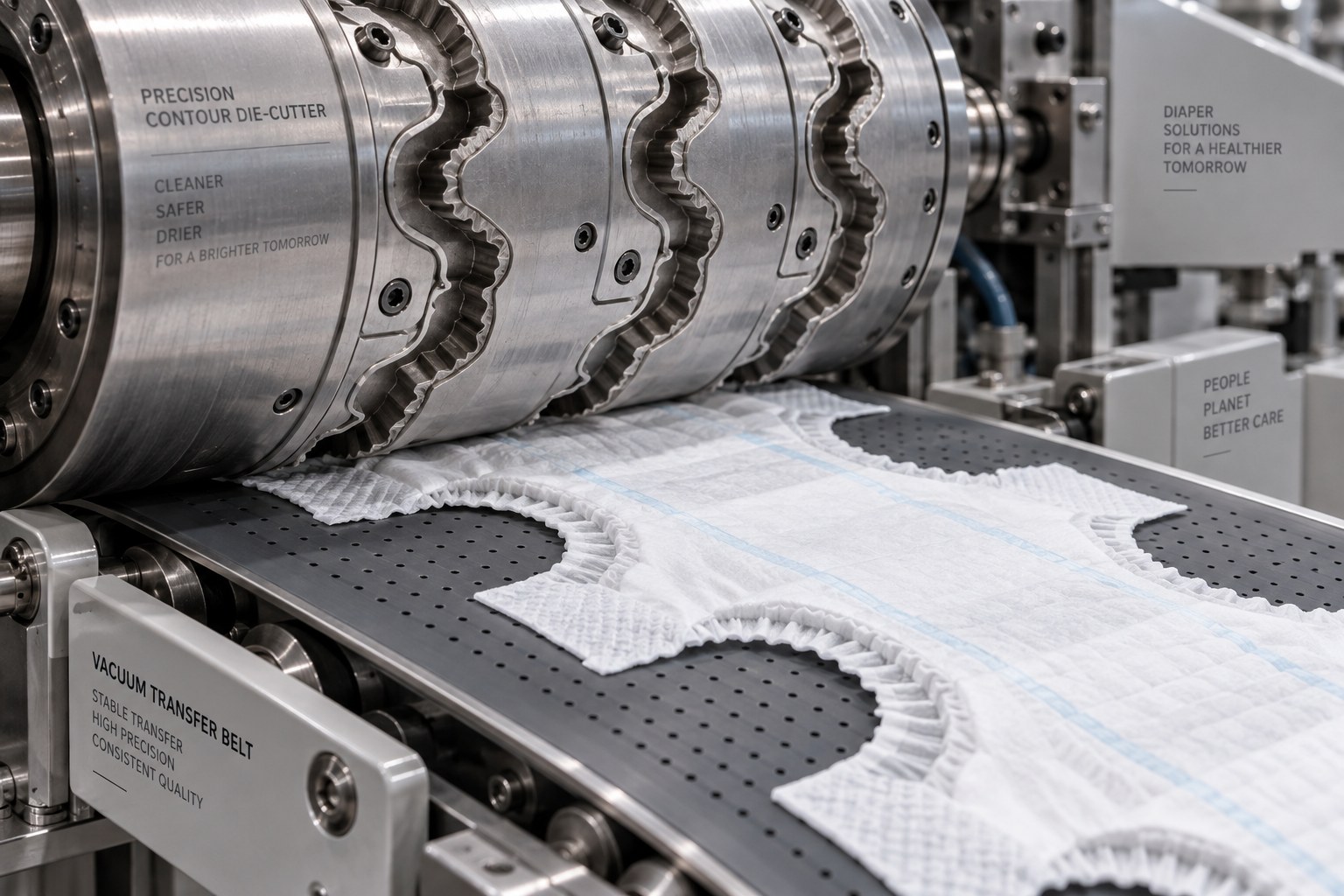
4. 100% Inline Cognex Machine Vision: Real-Time Optical Metrology at 600 Units Per Minute
On an industrial converting line operating at 600 pieces per minute, manual human inspection is physically impossible: ten finished diaper units exit the conveyor belt every single second. Relying on post-production statistical sampling means that if a mechanical die shifts or an elastic strand snaps, thousands of defective products could be manufactured and packaged before operators detect the flaw. To guarantee zero-defect shipment integrity, Shenghongda integrated multi-camera Cognex CCD machine vision systems directly into the converting sequence of each new Zuiko line.
Positioned at critical intermediate assembly stations and illuminated by ultra-short pulsed LED strobe arrays, the vision cameras capture crystal-clear micro-second images of every single passing product. Proprietary optical algorithms execute real-time dimensional metrology and contrast analysis in under 8 milliseconds, verifying:
- Absorbent Core Positioning & Symmetry: Confirming the longitudinal and lateral alignment of the fluff-SAP core relative to the backsheet within ±1.0 mm tolerance.
- Elastic Strand Integrity & Tension: Inspecting all four Lycra strands in each 3D standing leak barrier cuff to verify zero strand breakage and equal elongation.
- Mechanical Tape & Landing Zone Placement: Verifying frontal tape positioning within ±0.5 mm and checking hook tape symmetry to prevent unfastenable closures.
- Foreign Particulate Contamination: Detecting minute foreign fibers, dark specks, or insect contamination down to 0.2 mm² surface area.
- Wetness Indicator Line Clarity: Verifying continuous, sharp application of moisture-sensitive bromothymol blue reagent lines on the backsheet.
The vision inspection platform on the new Zuiko lines also features specialized multi-spectral infrared illumination channels for evaluating adhesive spray geometry. Under standard white LED lighting, transparent hot-melt adhesives applied between nonwoven layers are virtually invisible to optical sensors. Zuiko’s infrared imaging cameras detect the thermal and refractive signatures of hot-melt glue tracks, verifying continuous spiral spray coverage and adhesive bead width on elastic cuffs within ±0.2 mm tolerance. Any adhesive skipping that could cause cuff detachment triggers instantaneous rejection.
In addition to surface dimensional checks, the system integrates continuous radiometric beta-gauge basis weight sensors that scan the running absorbent core across its cross-section. Emitting low-level beta radiation absorbed proportionally by mass, these sensors measure fluff-pulp and SAP mass distribution with 0.1 g/m² resolution, instantly alerting operators if pulp density fluctuates.
When an optical defect is detected, the line PLC tags the flawed unit’s electronic tracking register. As the product approaches the end of the line, a high-speed pneumatic blow-off valve fires within 5 milliseconds, blasting the defective unit into a locked containment bin. Zero non-conforming product ever enters the automated stacker or bagger.
| Converting Line Feature / Capability | Conventional Chinese Semi-Servo Line | Shenghongda New Zuiko Full-Servo Line | Operational & Commercial Advantage |
|---|---|---|---|
| Line Speed Stability (Baby Diaper) | 250 - 320 pieces / minute | 600 pieces / minute (Steady State) | Nearly 2x higher throughput; lowers conversion cost per unit |
| Elastic Waistband Attachment Method | Hot-melt adhesive spray (Stiff feel) | Rotary ultrasonic micro-welding | Zero chemical glue odor; cashmere-soft underwear feel |
| Product Size Recipe Changeover Time | 3.5 to 5.0 hours (Manual tool change) | Under 35 minutes (Digital HMI servo recall) | Enables flexible private label MOQs without cost penalties |
| Core Fluff-SAP Distribution Variance | ± 8.5% across pad length | Strictly < ± 2.0% via vacuum air-laid drum | Prevents localized core clumping and premature leakage |
| Defect Escape Rate to Finished Carton | 150 to 300 PPM (Spot inspection) | Strictly < 5 PPM (100% Inline Cognex Vision) | Protects international retail brand reputation completely |
| Energy Consumption per 1,000 Units | 18.5 kWh / 1,000 finished units | 11.2 kWh / 1,000 finished units | 39.5% Energy reduction; lowers carbon footprint for ESG |
5. Vacuum Air-Laid Core Forming: Micron-Level Polymer Distribution & Density Profiling
At the center of every high-performance diaper is the absorbent core, and the newly commissioned Zuiko lines feature the most advanced vacuum air-laid core forming drums in the nonwovens industry. In legacy converting systems, wood fluff pulp and superabsorbent polymer (SAP) granules are blended in crude mixing chambers and blown across perforated screens by turbulent fan ducts. This turbulent aerodynamic flow causes severe material segregation: heavy polymer granules drop prematurely, while light pulp fibers blow away, creating uneven SAP concentration, localized core lumps, and premature fluid leakage.
Zuiko’s vacuum forming system resolves material segregation through precision aerodynamic chamber engineering and micro-metering servo augers. Virgin fluff pulp from American forestry leader Weyerhaeuser Company (USA) is defibrillated in high-speed inline hammermills, while Japanese Sumitomo Seika Chemicals (Japan) SAP granules are metered into the fiber stream by computerized gravimetric loss-in-weight feeders. The homogenously blended fiber-polymer aerosol is drawn into rotating CNC-machined vacuum forming pockets featuring graduated three-dimensional pocket depths.
This design creates an engineered density gradient along the core geometry:
- Targeted High-Capacity Central Storage Zone: The central target zone directly beneath the urinary insult point receives a higher concentration of SAP (up to 65% by weight) packed at a density of 0.14 g/cm³, providing massive fluid retention capacity up to 3,200 ml under ISO 11948-1 (Rothwell Method) Rothwell protocols.
- Flexible Thin Peripheral Edges: The front and rear wings of the core are formed with lower SAP density and higher soft pulp content (0.10 g/cm³), providing anatomical flexibility, preventing groin chafing, and ensuring a snug, underwear-like fit.
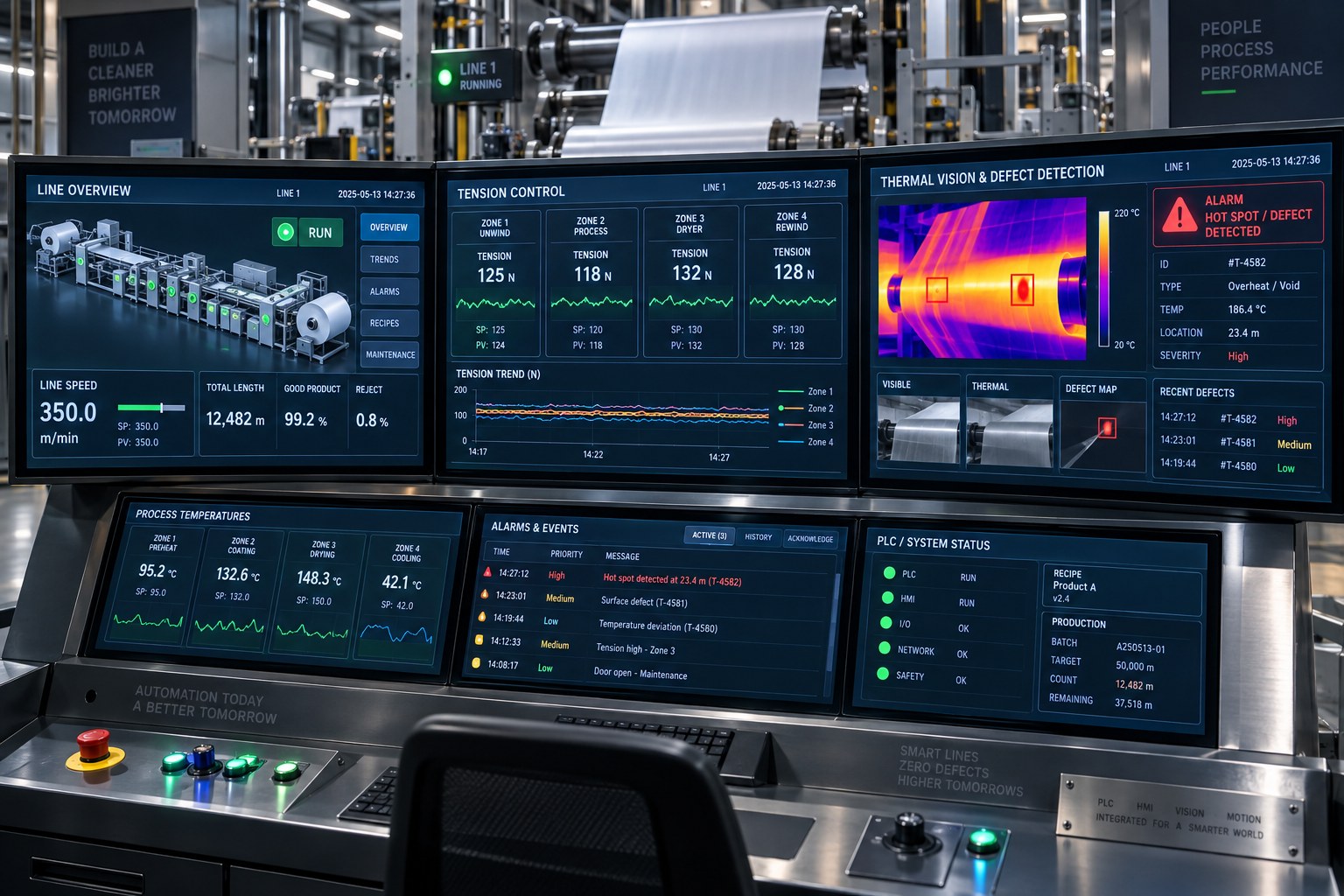
6. Automated High-Density Compression Packaging & Palletizing Integration
A converted diaper exiting the production line at 600 pieces per minute must be rapidly counted, stacked, compressed, and packaged into retail polybags without causing bottlenecks. Zuiko’s converting line is directly coupled to fully automated high-speed servo stackers and Optima-style multi-station packaging machinery, forming an unbroken automated production chain from raw material roll to palletized ocean container.
Diapers entering the packaging station are electronically counted and grouped into customer-specified pack counts (e.g., 10, 20, or 40 pieces). A heavy-duty hydraulic compression paddle evacuates ambient air from the open-cell fluff pulp matrix in a controlled 1.5-second pre-compression stroke. This gentle, multi-stage compression nests the softwood fibers compactly while protecting delicate polymer granules against crystalline fracturing. The compressed stack is inserted into pre-formed polyethylene or compostable PLA polybags, which are hermetically heat-sealed and trimmed with zero human contact.
Downstream, automated carton packers load sealed retail polybags into heavy-duty 5-ply corrugated export master cartons, which are weighed on inline checkweighers to verify exact piece count. Serialized QR barcodes and GS1-128 shipping labels are applied automatically, encoding production line ID, roll lot numbers, shift timestamp, and destination port data.
The downstream automation includes robotic case palletizing equipped with specialized vacuum grippers that handle corrugated master export cartons without denting or crushing outer box corners. Interlocking pallet stacking algorithms maximize container space utilization while ensuring pallet column stability under dynamic maritime ocean conditions. Automated orbital stretch-wrapping machines apply multi-layer polyethylene stretch film under programmed tension, incorporating integrated top-sheet dispensers that seal pallet tops against rain, humidity, and maritime salt spray.
Each wrapped pallet is tagged with dual GS1-128 logistics labels applied by robotic print-and-apply applicators. These labels encode the unique Serial Shipping Container Code (SSCC), production lot numbers, net/gross weights, and destination container stowage location, interfacing directly with our warehouse management system for automated forklift staging.
Robotic vacuum palletizers stack cartons onto heat-treated ISPM-15 wooden pallets in optimized interlocking patterns, securing each pallet load with automated stretch film wrapping. This packaging automation enables Shenghongda to achieve container loading densities exceeding 94,000 adult briefs and 410,000 baby diapers per 40HQ container, delivering decisive freight savings for our international distribution partners.
7. Private Label Production Allocation: How International Brands Secure Zuiko Dedicated Capacity
With the successful commissioning of our three new Zuiko converting platforms, Shenghongda has opened dedicated manufacturing allocation windows for qualified international private-label brand owners, supermarket retail syndicates, and institutional hospital suppliers. Securing dedicated capacity on world-class converting machinery provides brand owners with guaranteed delivery lead times, fixed unit manufacturing costs, and complete proprietary customization.
Our structured onboarding roadmap for new private label brand partners encompasses:
- Phase 1: Specification Engineering & Teardown Benchmarking: Clients provide target product samples and commercial price requirements. Shenghongda’s R&D laboratory performs a complete physical teardown (SAP loading, pulp fiber length, nonwoven tensile strength, and Rothwell absorbency) to engineer an optimized specification that exceeds competitor performance at lower unit cost.
- Phase 2: Digital Prototyping & Pilot Tooling Trial: Within 14 days, pilot prototype samples are produced on our automated converting lines for client laboratory validation, clinician feedback, and packaging art sign-off.
- Phase 3: Formal Regulatory Dossier Preparation: Shenghongda’s regulatory affairs team compiles complete technical compliance files—including CE MDR technical documentation, FDA device listing confirmation, ISO 13485 quality certificates, and Sinosure trade credit underwriting.
- Phase 4: Full-Scale Commercial Production & Logistics Booking: Dedicated Zuiko converting lines are scheduled for high-speed production runs. Finished goods are loaded into 40HQ containers directly at our Quanzhou cleanroom docks and transported to Xiamen Port for immediate vessel departure.
From an international equipment maintenance and lifecycle management perspective, Shenghongda’s agreement with Zuiko Corporation includes direct digital telemetry linking line PLCs with Zuiko’s Osaka technical support headquarters. Real-time vibration sensors and automated lubricant injection systems monitor tungsten carbide cutting dies and rotary drums around the clock. Replacement tooling components—including customized leg-contour rotary dies and ultrasonic horn anvils—are maintained in local bonded consignment stock, ensuring that tooling changeovers and scheduled maintenance proceed with zero interruption to active export replenishment orders.
Shenghongda invites global personal care brand executives and medical procurement directors to contact our engineering desk to schedule a technical consultation, request physical sample verification kits, and reserve dedicated production capacity on our newly commissioned Zuiko converting fleet.